Blockchain technology has transformed the way we exchange value, enabling decentralized, secure transactions without the need for traditional intermediaries. But as adoption grows, so do the challenges. One of the most critical issues facing blockchain ecosystems today is blockchain network congestion, a problem that can dramatically slow down transaction speeds and drive up transaction fees.
Blockchain network congestion happens when the number of transactions exceeds the network’s processing capacity, leading to bottlenecks, higher costs, and frustrating delays. This congestion doesn’t just affect users; it also impacts developers, businesses, and entire decentralized ecosystems built on blockchain platforms. By understanding the root causes of blockchain congestion, its ripple effects, and the most effective strategies to reduce it, we can create more efficient, scalable networks that deliver on blockchain’s original promise of fast, borderless value transfer.
Key factors behind blockchain network congestion
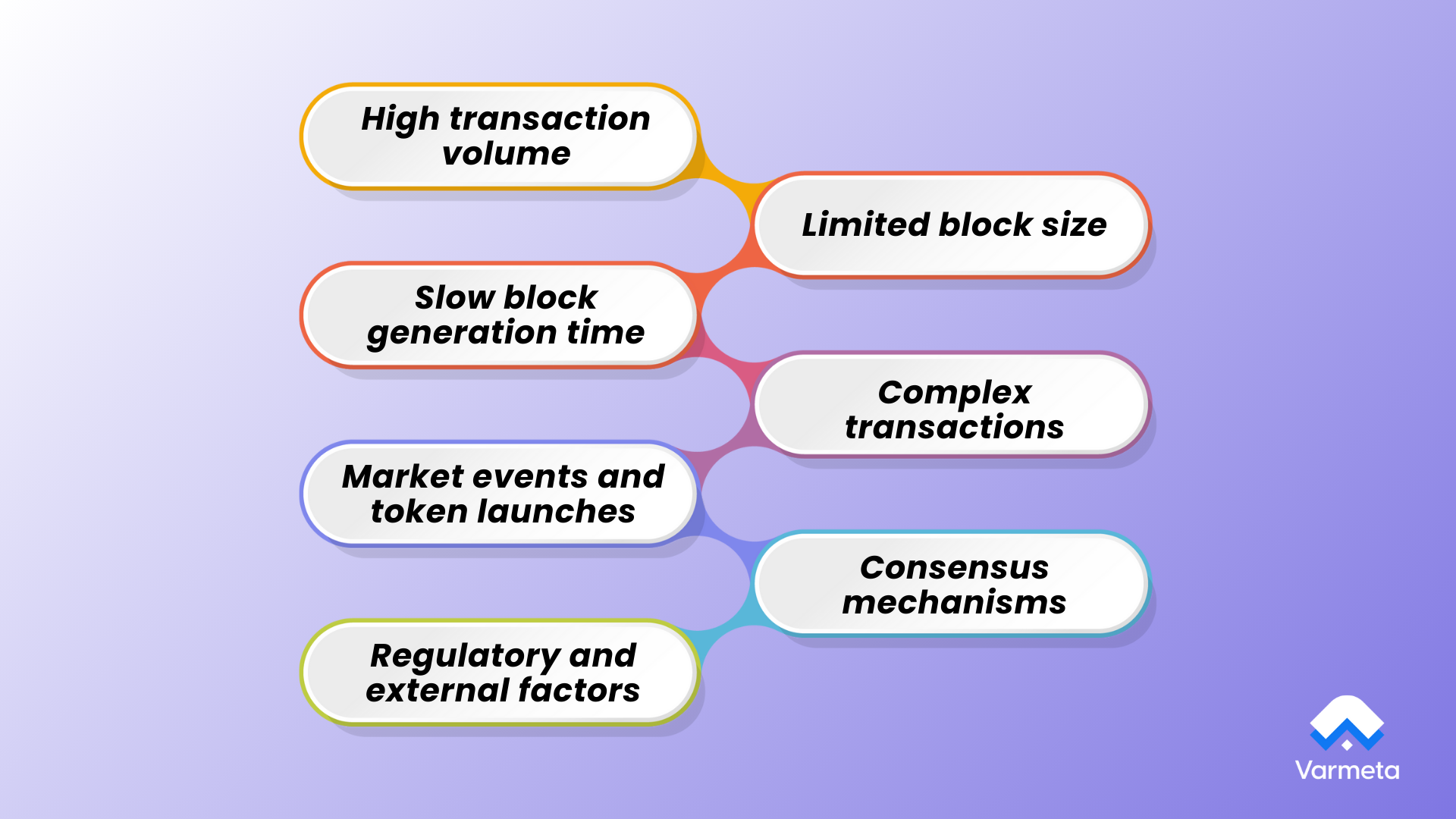
Understanding the causes of blockchain network congestion is essential to tackling it effectively. Several critical factors contribute to slowdowns and transaction bottlenecks across major blockchain ecosystems:
- High transaction volume: As blockchain adoption rises and trading activity intensifies, networks often experience a flood of transactions that outpaces their processing capacity. This surge leads to longer wait times and higher fees.
- Limited block size: Every blockchain has a maximum block size, limiting how many transactions can fit into a single block. When the block size is too small for growing demand, unconfirmed transactions pile up in the mempool, causing congestion.
- Slow block generation time: Some blockchains naturally have longer intervals between block creation. Slower block production means fewer transactions are confirmed over time, worsening blockchain network congestion during high-traffic periods.
- Complex transactions: Not all transactions are simple. Smart contracts, NFT minting, and other data-heavy activities require more computational resources, slowing down transaction processing speeds across the network.
- Market events and token launches: Big events like token launches, NFT drops, or sharp market moves often create sudden transaction spikes. These bursts can overwhelm even well-optimized blockchains, leading to temporary but severe congestion.
- Consensus mechanisms: The method a blockchain uses to validate transactions whether its Proof of Work (PoW) or Proof of Stake (PoS) directly impacts processing efficiency. Some mechanisms are faster and more scalable than others.
- Regulatory and external factors: New regulations, technological upgrades, or mass adoption waves can strain decentralized networks, contributing indirectly to blockchain network congestion by shifting user behavior.
Recognizing these underlying causes is the first step toward designing smarter, more scalable blockchain systems capable of meeting future demand.
The real effects of blockchain network congestion
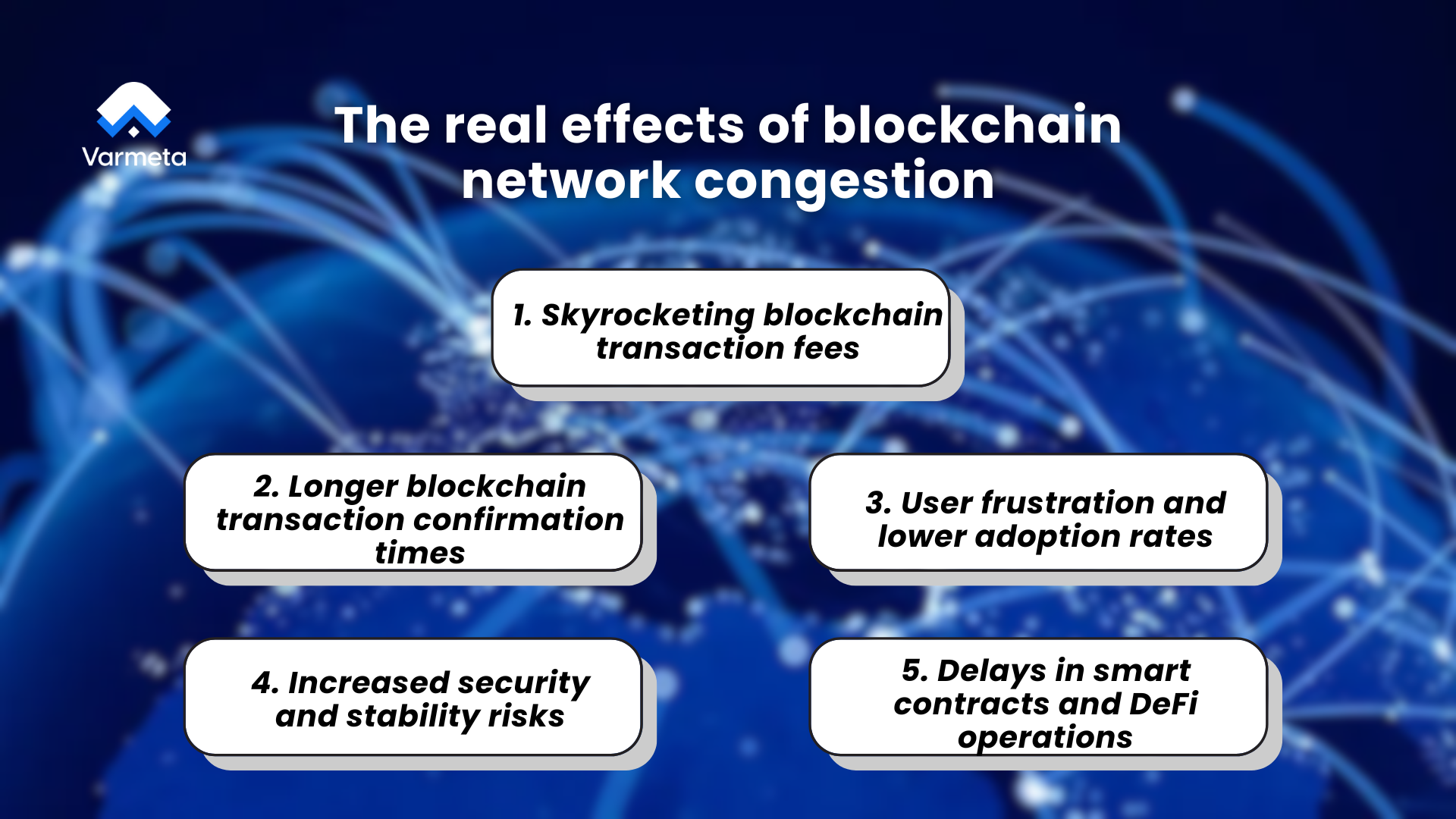
When blockchain network congestion strikes, it doesn’t just slow things down, it can ripple across the entire ecosystem, creating serious challenges for users, businesses, and developers alike. Here are some of the major consequences to watch out for:
1. Skyrocketing blockchain transaction fees
One of the first and most painful signs of congestion is a surge in gas fees. Since blockchains typically prioritize transactions offering higher fees, users often find themselves in bidding wars just to get confirmed. For example, during peak periods of congestion, Ethereum gas fees have spiked above $100 per transaction, making even simple activities expensive and frustrating.
2. Longer blockchain transaction confirmation times
With the network overloaded, transactions sit stuck in the mempool, sometimes for minutes or even hours before getting processed. Activities that should be near-instant, like trading or interacting with DApps, suddenly become painfully slow, especially during periods of high network activity.
3. User frustration and lower adoption rates
Persistent blockchain network congestion can seriously damage user trust. High fees and slow confirmation times discourage both new users and businesses from relying on blockchain platforms. If congestion becomes the norm, users may migrate to faster, more scalable alternatives, reducing adoption and hurting network growth.
4. Increased security and stability risks
Heavy congestion can expose networks to new threats. Attackers can exploit clogged networks through spam attacks or denial-of-service (DoS) attempts, overwhelming nodes and further destabilizing blockchain performance during critical periods.
5. Delays in smart contracts and DeFi operations
Decentralized Finance (DeFi) platforms and smart contracts thrive on fast, reliable blockchain transactions. Blockchain network congestion slows everything down lending, staking, trading all become risky and inefficient. Failed or delayed smart contract executions can cause major financial losses and frustrate users expecting quick DeFi interactions.
Real-world examples of blockchain network congestion
- CryptoKitties craze (2017): The viral success of CryptoKitties clogged the Ethereum network, highlighting early scalability limitations.
- Bitcoin mempool overflows (2017-2021): Multiple Bitcoin bull runs saw transaction backlogs grow, creating major fee hikes and slower confirmations.
- Ethereum gas fee explosion (2021-2022): The NFT and DeFi boom pushed Ethereum fees to record highs, limiting accessibility for everyday users.
- BRC-20 token traffic (2023): Bitcoin’s network faced severe congestion with the rise of BRC-20 tokens, showing that even legacy chains aren’t immune to bottlenecks.
Blockchain network congestion remains one of the biggest hurdles to mainstream adoption but understanding its causes and effects is the first step toward designing better, faster, and more resilient blockchain ecosystems.
Powerful solutions to reduce blockchain network congestion
As blockchain technology continues to grow in adoption and complexity, solving the problem of blockchain network congestion has become a top priority for developers, researchers, and businesses alike. Without effective solutions, high fees, slow transactions, and user frustration could severely limit the potential of decentralized systems. Fortunately, a variety of innovative strategies are being developed to ensure blockchain networks stay fast, scalable, and accessible.
Here’s a closer look at the leading solutions designed to ease blockchain network congestion:
1. Layer-2 scaling solutions: Moving traffic off-chain
One of the most effective ways to tackle blockchain network congestion is through Layer-2 scaling solutions. These technologies operate on top of the main blockchain (Layer-1), processing transactions off-chain while still relying on the main network for security.
Key examples include:
- Lightning network (Bitcoin): A second-layer payment system that enables almost instant and low-cost Bitcoin transactions.
- Optimistic rollups and ZK-rollups (Ethereum): These methods batch thousands of transactions together and settle them as a single transaction on the Ethereum mainnet, greatly easing congestion.
- Sidechains (Polygon, Arbitrum, Avalanche): Independent blockchains running parallel to major chains like Ethereum, which help spread transaction load and boost overall crypto transaction speed.
By reducing on chain traffic, Layer-2 solutions significantly enhance transaction throughput without compromising security.
2. Increasing block size and speed: Expanding network capacity
Another way to reduce blockchain network congestion is by increasing block size or accelerating block creation times.
- Larger block sizes: More transactions can fit into each block. Bitcoin Cash (BCH), for instance, expanded its block size to allow for more transactions per block compared to Bitcoin, aiming to handle surges in user activity more efficiently.
- Faster block times: Shortening the interval between new blocks from 10 minutes (Bitcoin) to just 2 minutes or even seconds (some newer blockchains) dramatically improves transaction throughput and minimizes crypto transaction delays.
However, developers must balance scalability with decentralization, as larger blocks can require more powerful nodes, potentially reducing network participation.
3. Transitioning to more efficient consensus mechanisms
The consensus method a blockchain uses has a direct impact on its speed and scalability. Moving from Proof of Work (PoW) to Proof of Stake (PoS) has shown real benefits.
- Ethereum’s merge to PoS: Ethereum’s transition to PoS with Ethereum 2.0 lowered energy consumption by over 99% and paved the way for greater transaction efficiency.
- PoS advantages: Faster validation, lower network congestion, and a greener blockchain ecosystem.
Switching to more efficient consensus models helps networks process more transactions with less environmental and economic cost.
4. Transaction batching: Doing more with less
Transaction batching groups multiple transactions into a single on-chain action. Instead of submitting hundreds of separate transfers, applications like exchanges batch them together, which:
- Reduces the total number of on-chain transactions
- Lowers gas fees
- Improves overall blockchain throughput
This simple but powerful practice can dramatically reduce blockchain network congestion during peak periods.
5. Encouraging off-peak transactions: Timing is everything
Another practical solution to congestion is encouraging users to transact during off-peak hours. Networks often see heavy traffic during business hours and lighter loads overnight. Educating users to schedule non-urgent transactions during quieter times can:
- Minimize transaction fees
- Speed up confirmation times
- Help naturally distribute network demand
Over time, smarter transaction timing can reduce pressure during peak congestion waves.
6. Sharding: Breaking the blockchain into pieces
Sharding is one of the most anticipated scalability upgrades for major blockchains like Ethereum. It works by dividing the network into smaller segments (shards), each capable of processing transactions independently.
- Parallel processing: Different shards handle different sets of transactions simultaneously.
- Massive scalability: Instead of one chain doing all the work, many shards operate together, reducing bottlenecks.
Once fully implemented, sharding could significantly lower blockchain network congestion and support the next generation of decentralized applications at scale.
Blockchain network congestion is a serious challenge but it’s not an unsolvable one. With Layer-2 scaling, efficient consensus models, batching, sharding, and smarter user behavior, blockchain networks are evolving to become faster, cheaper, and more user-friendly. As innovation accelerates, these solutions will be critical in building a decentralized future that can support millions if not billions of users around the world.
Conclusion
Blockchain network congestion continues to be one of the most pressing challenges in the world of crypto and blockchain scalability. As transaction demand grows across decentralized ecosystems, understanding what causes congestion, how it impacts blockchain transaction speed, and what solutions exist has become essential for developers, users, and businesses alike.
Tackling blockchain network congestion requires a multi-layered approach. Innovations like Layer-2 scaling solutions, more efficient consensus mechanisms, increasing block sizes, and next-generation upgrades like sharding are already helping blockchains move toward faster, cheaper, and more reliable transactions. Each advancement brings us closer to networks that can scale seamlessly with rising global adoption.
Looking ahead, continuous research, development, and real-world testing will be crucial to overcoming congestion issues. By focusing on smarter architecture and sustainable scaling strategies, the blockchain industry can ensure that this transformative technology remains viable, efficient, and accessible for the next generation of users and beyond.