Artificial intelligence is transforming how organizations recruit, manage, and support their workforce. While AI for Human Resources helps automate tasks, improve decision-making, and enhance efficiency, it also introduces risks related to data privacy, bias, compliance, transparency, and employee trust. Understanding these challenges is essential for organizations looking to adopt AI responsibly.
In this article, we’ll explore the biggest risks of AI for Human Resources and how businesses can mitigate them effectively.
What is AI for HR?
AI for Human Resources refers to the use of artificial intelligence technologies to automate, enhance, and support human resource functions across the employee lifecycle. Instead of relying solely on manual processes, HR teams can use AI to analyze data, generate insights, streamline repetitive tasks, and assist with decision-making in areas such as recruitment, onboarding, employee engagement, performance management, learning and development, and workforce planning.
How it works
Unlike traditional HR automation, which follows predefined rules and workflows, AI for Human Resources can understand natural language, recognize patterns, generate content, and continuously improve its performance based on data. Modern AI solutions powered by large language models (LLMs) and AI agents are also capable of handling more complex tasks, such as screening resumes, answering employee questions, summarizing interview feedback, drafting job descriptions, and providing personalized learning recommendations.
Why businesses are rapidly adopting AI in HR
As organizations continue to embrace digital transformation, AI for Human Resources is evolving from a productivity tool into a strategic business capability. Rather than simply reducing administrative workloads, AI enables HR professionals to focus on higher-value activities such as talent strategy, employee experience, leadership development, and workforce planning. Here are some powerful use cases AI is helping for a more efficient HR process:
| HR Function | How AI Helps |
| Recruitment | Screen resumes, rank candidates, schedule interviews |
| Employee Onboarding | Answer FAQs, automate document processing |
| Performance Management | Analyze feedback and generate performance insights |
| Learning & Development | Recommend personalized training programs |
| HR Support | Power HR chatbots for employee inquiries |
| Workforce Planning | Forecast hiring needs and workforce trends |
However, because AI increasingly supports decisions involving employees and candidates, organizations must also understand the risks associated with its adoption.
The Biggest Risks of Using AI for HR
Data Privacy and Security
According to SHRM‘s research involving 1,323 HR professionals who use AI in the workplace, privacy and security risks were identified as the leading technical barrier limiting the expansion of AI for Human Resources across organizations of all sizes. HR departments manage highly sensitive information, including resumes, payroll records, performance reviews, and personal employee data. As AI systems process and analyze this information, organizations face increased risks of unauthorized access, data leakage, cyberattacks, and third-party security vulnerabilities if appropriate safeguards are not in place.
These risks become even more significant as AI solutions are integrated into cloud platforms, HR software, and enterprise applications that continuously process confidential employee information. Protecting this data requires more than standard cybersecurity practices, it demands robust access controls, encryption, secure infrastructure, and careful vendor management.
To reduce security risks, organizations should adopt enterprise-grade AI solutions, implement strong data governance policies, restrict access to sensitive HR information, and regularly monitor AI systems for potential vulnerabilities. Protecting employee data should remain a foundational requirement for every AI for human resources initiative.
AI Bias in Hiring and Performance Evaluation
While AI for Human Resources can improve recruitment and employee evaluation, it also raises concerns about fairness and bias. AI systems learn from historical data and may unintentionally inherit biases from past hiring decisions, performance reviews, or promotion records. As a result, qualified candidates may be overlooked, and employees may receive unfair evaluations or promotion recommendations.
Beyond ethical concerns, biased AI can reduce workforce diversity, damage employee trust, and expose organizations to legal and regulatory risks as governments introduce stricter requirements for transparency and fairness in AI-assisted decision-making.
To reduce these risks, organizations should use AI as a decision-support tool rather than a decision-maker. Regular bias testing, diverse and representative training data, human review of AI-generated recommendations, and clear governance policies are essential to ensure that AI for human resources supports fair, transparent, and objective HR decisions.
Lack of Transparency and Explainability
Another significant challenge of AI for Human Resources is the lack of transparency and explainability in AI-driven decision-making. Many AI models can generate recommendations without clearly explaining how they reached a conclusion. This becomes a major concern when AI supports hiring, promotions, performance evaluations, or employee development.
For example, an AI system may reject a qualified candidate or assign a lower performance rating without providing sufficient justification. If HR professionals cannot understand or explain these recommendations, it becomes difficult to verify their accuracy, fairness, or potential bias. This lack of transparency can also reduce employee trust and confidence in AI-assisted decisions.
In addition, many AI regulations now require greater accountability and transparency for high-impact decisions. To address these challenges, organizations should adopt explainable AI (XAI), maintain human oversight, and ensure that AI-generated recommendations are transparent, traceable, and regularly reviewed before influencing critical HR decisions.
Compliance and Regulatory Risks
As AI for Human Resources becomes more widely adopted, organizations must navigate an increasingly complex regulatory landscape. AI-assisted HR processes, such as hiring, promotions, compensation, and performance evaluations, must comply with employment laws, data protection regulations, and emerging AI governance frameworks.
Regulations such as the GDPR and the EU AI Act place greater emphasis on transparency, accountability, human oversight, and the responsible use of personal data. Failure to comply can result in legal disputes, financial penalties, reputational damage, and a loss of employee trust.
Compliance goes beyond choosing a secure AI solution. Organizations should establish clear AI governance policies, document how AI is used in HR, maintain audit trails, and regularly assess potential risks. Human oversight should remain a core requirement, especially for high-impact decisions affecting employees or job candidates. By embedding compliance into every stage of AI adoption, businesses can reduce regulatory risks while building greater trust in AI-assisted HR decisions.
Over-Reliance on AI Decision-Making
One of the most overlooked risks of AI for Human Resources is over-reliance on AI-generated recommendations. As AI becomes more capable, organizations may begin to treat its outputs as objective facts rather than informed suggestions. While AI can analyze large volumes of data and identify patterns efficiently, it cannot fully understand organizational culture, individual circumstances, or the human context behind HR decisions.
This can lead to poor outcomes when AI recommendations are accepted without critical review. For example, an AI system may reject a qualified candidate based on historical hiring patterns or flag an employee as a low performer based solely on quantitative metrics, overlooking factors such as role changes, team dynamics, or personal circumstances. Such decisions can be inaccurate, unfair, and misaligned with business objectives.
Over-reliance on AI also weakens accountability, making it unclear who is responsible for employment decisions. To reduce these risks, organizations should treat AI for human resources as a decision-support tool rather than a decision-maker. Human oversight should remain essential, especially for high-impact decisions involving recruitment, promotions, compensation, and performance management, ensuring that AI improves efficiency without compromising fairness, accountability, or employee trust.
Shadow AI and Unauthorized AI Usage
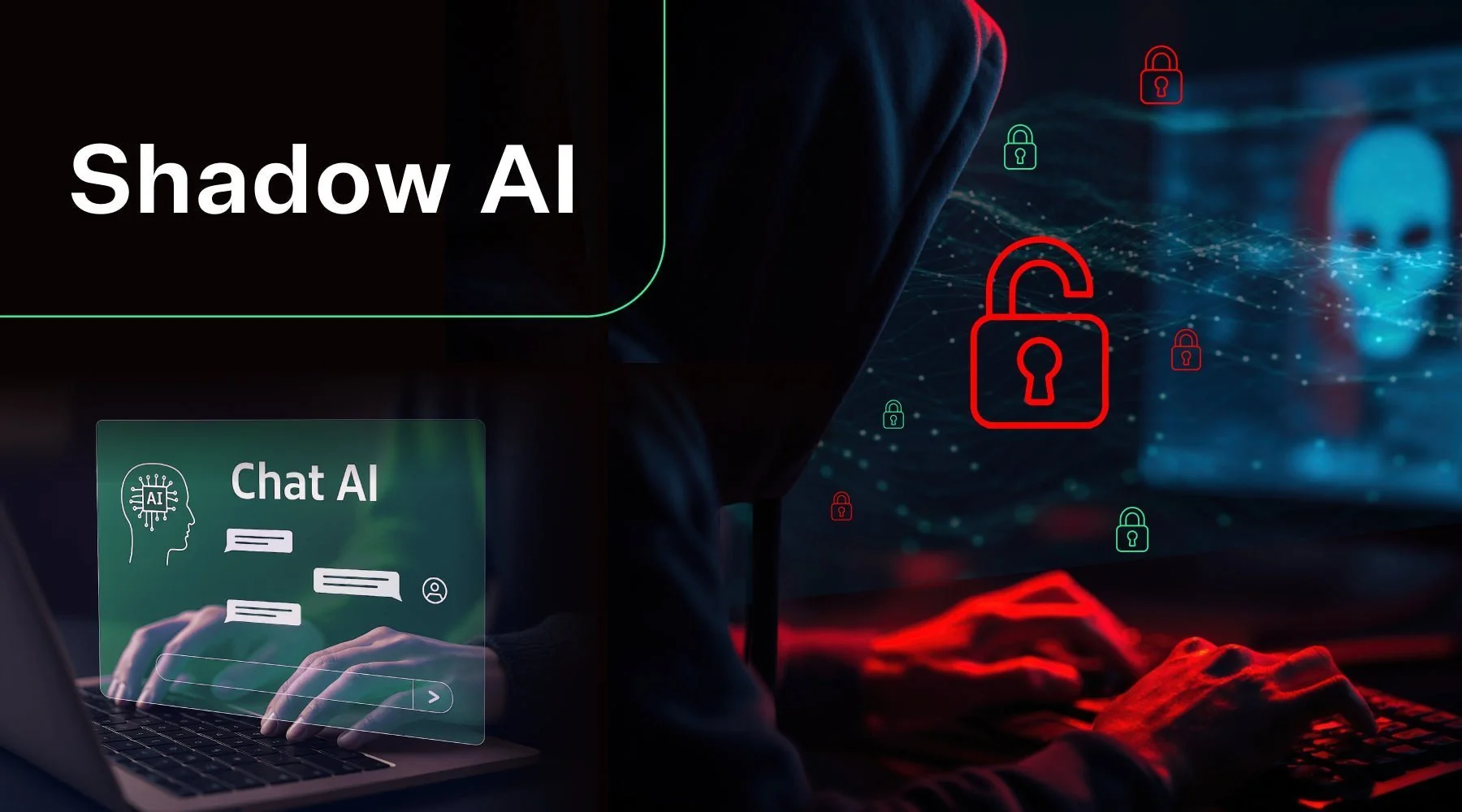
While organizations are investing in AI for Human Resources, many overlook the growing risk of Shadow AI, the use of AI tools without organizational approval or oversight. According to SHRM, 52% of organizations report that HR is not directly involved in shaping their overall AI strategy and vision. As a result, HR teams may lack clear governance, approved AI tools, and guidance on how AI should be used in daily operations. This increases the likelihood that employees will rely on public AI platforms to summarize resumes, analyze interview notes, draft performance reviews, or generate HR documents.
Unlike traditional cybersecurity risks, Shadow AI is driven by employee behavior rather than technical vulnerabilities. Because these tools operate outside official IT controls, organizations often have limited visibility into what information is being shared, where it is stored, or how external providers may use it. This lack of oversight increases the risk of data exposure, inconsistent AI usage, and violations of internal security policies.
To reduce Shadow AI risks, businesses should establish clear AI usage policies, provide approved enterprise AI solutions, deliver regular AI awareness training, and continuously monitor AI adoption across HR workflows.
How to Reduce the Risks of AI for HR
While the risks associated with AI for Human Resources are real, they can be effectively managed through the right combination of governance, technology, and human oversight. Rather than avoiding AI altogether, organizations should focus on implementing it responsibly to maximize business value while minimizing operational, legal, and ethical risks.
The first step is to establish a clear AI governance framework that defines how AI can be used within HR processes. Organizations should develop policies covering data handling, employee privacy, acceptable AI usage, and accountability for AI-assisted decisions. Clear governance helps ensure that AI is deployed consistently and in compliance with both internal standards and external regulations.
Human oversight should remain a core principle throughout the AI adoption journey. AI can analyze large volumes of data and generate valuable recommendations, but final decisions involving recruitment, promotions, compensation, or employee performance should always be reviewed by qualified HR professionals. Maintaining human involvement helps improve fairness, accountability, and employee trust.
Organizations should also prioritize enterprise-grade AI solutions that offer robust security, access controls, audit logs, and compliance capabilities. In addition, regular monitoring and periodic audits are essential to identify model bias, validate AI performance, and ensure that systems continue to operate as intended over time.
Finally, successful AI adoption depends not only on technology but also on people. Providing HR teams with training on responsible AI usage, data privacy, and governance enables employees to use AI confidently while reducing the risks associated with Shadow AI and inappropriate AI-assisted decision-making.
By combining strong governance, secure technology, and continuous human oversight, businesses can reduce the risks of AI for Human Resources while building a more trustworthy, compliant, and effective HR function.
Conclusion
Artificial intelligence is transforming the way organizations recruit, manage, and develop their workforce. From improving operational efficiency to enhancing employee experiences, AI for Human Resources offers significant opportunities for businesses seeking to modernize their HR functions. However, realizing these benefits requires more than simply adopting the latest AI technologies.
Businesses that combine AI for Human Resources with strong governance, human oversight, and a clear implementation strategy will be better positioned to improve productivity while maintaining employee trust and regulatory compliance. As enterprise AI continues to evolve, responsible adoption will become a key competitive advantage for organizations looking to build a smarter, more resilient workforce.
At Varmeta, we help organizations design, deploy, and govern enterprise AI solutions that improve HR operations while ensuring security, compliance, and measurable business outcomes.
👉 Contact our AI experts to explore how AI can transform your HR processes responsibly.
FAQs
1. Can AI replace HR professionals?
No. AI can automate repetitive tasks and provide recommendations, but it cannot replace human judgment, empathy, or decision-making. HR professionals remain essential for managing sensitive employee matters and making final hiring or performance decisions.
2. Is it safe to use AI for handling employee data?
Yes, but only when appropriate security measures are in place. Organizations should use enterprise-grade AI solutions, protect sensitive data, and comply with applicable privacy regulations to reduce security and compliance risks.
3. Can AI make unbiased hiring decisions?
Not always. AI models can inherit biases from the data they are trained on. Regular audits, diverse training data, and human oversight are essential to ensure fair and objective hiring outcomes.
4. What are the biggest risks of using AI for HR?
The most common risks include data privacy and security issues, AI bias, lack of transparency, regulatory compliance challenges, over-reliance on AI decisions, and unauthorized AI usage by employees.
5. How can businesses implement AI for HR responsibly?
Businesses should establish AI governance policies, keep humans involved in high-impact decisions, regularly monitor AI performance, and train HR teams on responsible AI usage.