Nowadays education feels very different from what it did just a few years ago. Teachers face increasing workloads, while students demand more personalized learning experiences, and institutions are under pressure to improve outcomes with limited resources. If you are still relying solely on traditional teaching methods and manual administrative processes, you may already feel these challenges. This is where AI in Education comes in. In this article, Varmeta will explore how AI is reshaping the learning experience, helping both educators and students achieve better outcomes through smarter and more efficient processes.
1. What Is AI in Education?
At its most basic level, AI in Education is the use of artificial intelligence to support teaching, learning, and academic administration. This means that smarter tools can be applied so that educators can work more efficiently and students can have a more personalized learning experience.
How Artificial Intelligence Supports Education
Through technologies such as machine learning, natural language processing, and data analytics, AI can process large amounts of educational data and transform it into practical insights. From recommending learning materials to tracking student performance, AI helps make education more adaptive and responsive.
From Standardized Learning to Personalized Learning
For many years, the education systems have solely followed a one-size-fits-all model, applying the same curriculum and teaching pace to all students. Nevertheless, this approach overlooks the fact that every student has unique strengths, weaknesses and learning style.
The integration of AI in education is helping close this gap by tailoring learning experiences through the analysis of student behaviors. For instance, a student struggling with mathematics can be provided with some additional exercises, while another learning more quickly can move on to the advanced topics. Besides, teachers also benefit from automated performance tracking, gaining meaningful insights into student progress without spending endless hours manually reviewing data.
2. Key Technologies Behind AI in Education
To understand how education is transformed by AI, we need to look at the technologies that make it possible. Each technology plays a different role, but together they create a more personalized and efficient learning experience.
Machine Learning
Machine Learning is the foundation of many AI-powered educational platforms. It works by analyzing learning data to identify patterns and predicting student needs.
- Personalized learning paths based on student performance.
- Early detection of students at risk of falling behind.
- Adaptive quizzes and exercises for students at different levels automatically.
- More accurate recommendations for learning resources.
Natural Language Processing (NLP)
Natural Language Processing enables computers to understand and process human language. In education, NLP powers many tools that help both students and teachers communicate more effectively.
- AI chatbots that answer student questions instantly.
- Automated essay evaluation and feedback.
- Language learning applications with real-time corrections.
- Smart search functions that help students find relevant information faster.
Generative AI
Generative AI has become one of the most influential technologies in modern education. It can create new content, provide explanations, and support both teaching and learning activities.
- Generate lesson plans and teaching materials.
- Create practice questions, quizzes, and assignments.
- Provide personalized tutoring and step-by-step explanations.
- Support brainstorming, writing, and research activities.
Computer Vision
Computer Vision allows AI systems to interpret images and videos. While often associated with industries such as healthcare and manufacturing, it also has valuable applications in education.
- Automated attendance tracking through image recognition.
- Interactive learning experiences using visual analysis.
- Digital grading of handwritten assignments.
- Enhanced accessibility tools for students with disabilities.
3. Core Benefits of AI in Education
The growing adoption of AI in Education is not just about introducing new technology into classrooms. It is about solving long-standing challenges in teaching, learning, and academic administration. Here are some of the most significant benefits.
Personalized Learning
Every student learns differently. Some grasp concepts quickly, while others need additional support and practice. Traditional classrooms often struggle to accommodate these differences. With AI in Education, learning experiences can be tailored to individual needs. AI systems analyze student performance, identify strengths and weaknesses, and recommend appropriate learning materials. This allows students to progress at their own pace while receiving support where it matters most.
Reduced Teacher Workload
Teachers spend a significant amount of time on administrative and repetitive tasks. Grading assignments, tracking attendance, and preparing learning materials can take valuable time away from teaching. AI helps automate many of these responsibilities, allowing educators to focus more on student development and classroom engagement.
- Automated grading for quizzes and assessments.
- AI-generated lesson plans and teaching materials.
- Faster attendance and performance tracking.
- Reduced administrative burden across educational institutions.
Better Student Engagement
Keeping students motivated and engaged is one of the biggest challenges in modern education. AI-powered tools make learning more interactive, responsive, and accessible. From intelligent tutoring systems to conversational chatbots, AI provides immediate feedback and support that encourages active participation.
- Interactive learning experiences.
- Instant feedback on assignments and exercises.
- Virtual tutors available anytime.
- Increased motivation through personalized learning activities.
Data-Driven Insights
Educational institutions generate large amounts of data every day. Without the right tools, much of this information remains underutilized. AI transforms raw educational data into actionable insights that help teachers, administrators, and institutions make better decisions.
- Monitor student performance trends.
- Identify learning gaps early.
- Measure the effectiveness of teaching strategies.
- Support evidence-based decision-making across schools and universities.
4. Real-World Applications
The impact of AI in Education can already be seen in many widely used learning platforms. From personalized tutoring to language learning and professional development, these tools demonstrate how AI is making education more accessible and effective.
| Tool | Best For | Available On | Ideal Users |
| ChatGPT | Personalized Learning Support | Web, Mobile, Desktop | Students, researchers, self-learners |
| Khan Academy (Khanmigo) | AI-Assisted Tutoring | Web, Mobile | K-12 students and teachers |
| Duolingo | Language Learning | Web, Mobile | Language learners of all levels |
| Coursera | Professional Development | Web, Mobile | University students and working professionals |
| Quizlet | Exam Preparation & Flashcards | Web, Mobile | Students preparing for tests and certifications |
| Grammarly | Academic Writing Support | Web, Desktop, Browser Extensions | Students and content writers |
| Notion AI | Note-Taking & Knowledge Management | Web, Mobile, Desktop | Students and project-based learners |
| Photomath | Mathematics Learning | Mobile | Students needing step-by-step math solutions |
ChatGPT
ChatGPT has become one of the most popular AI-powered learning assistants. Students can use it to explain complex concepts, summarize reading materials, generate study notes, and receive instant answers to academic questions. Its biggest strength is the ability to provide personalized explanations based on a learner’s current level of understanding. Instead of giving a generic answer, ChatGPT can simplify difficult topics, offer examples, and guide users through problem-solving processes step by step.
- Pros: Provides instant explanations across a wide range of subjects; adapts responses to different learning levels; supports brainstorming, writing, coding, and research; available 24/7.
- Cons: Can occasionally generate incorrect information; requires fact-checking for academic work; does not always provide source citations.
Khan Academy
Khan Academy has integrated AI through its learning assistant, Khanmigo, to provide more interactive educational experiences. Rather than simply giving answers, the platform encourages students to think critically and discover solutions independently. One of its greatest strengths is its structured educational approach. The AI acts more like a tutor than a search engine, helping students develop problem-solving skills while tracking their learning progress.
- Pros: Designed specifically for education, encourages critical thinking instead of simply giving answers; integrates with structured learning paths; useful for both students and teachers.
- Cons: Primarily focused on school-level education; less flexible than general-purpose AI tools; some advanced features may require paid access.
Duolingo
Duolingo uses AI to personalize language-learning experiences for millions of users worldwide. The platform continuously analyzes learner performance and adjusts lesson difficulty based on strengths and weaknesses. Its biggest advantage is maintaining user engagement through gamification. Features such as streaks, rewards, and adaptive exercises make learning a new language feel less like studying and more like an interactive experience.
- Pros: Highly engaging learning experience; personalized lesson difficulty; excellent for building daily learning habits; supports many languages.
- Cons: Limited focus on advanced fluency; speaking and real-world communication practice can be insufficient; gamification may prioritize streaks over deep learning.
Coursera

Coursera leverages AI to recommend courses, personalize learning pathways, and help learners discover content aligned with their career goals. The platform partners with leading universities and companies to provide high-quality online education. This tool has the combination of AI-driven personalization and industry-recognized credentials. Learners can acquire practical skills while earning certificates that enhance their professional profiles.
- Pros: Courses from top universities and companies; offers recognized certificates; AI helps recommend relevant learning paths; suitable for career advancement.
- Cons: Many certificates require payment; completion rates can be low without self-discipline; some content quality varies between instructors.
Quizlet
Quizlet is an AI-powered study platform designed to help learners retain information more effectively. Instead of reading notes repeatedly, students can transform study materials into flashcards, quizzes, and interactive learning activities. One of Quizlet’s most valuable features is its ability to automatically generate study sets using AI. Students can upload notes, documents, or key concepts, and the platform will create flashcards and practice questions within seconds. Quizlet also uses spaced repetition techniques, ensuring that learners review information at optimal intervals to improve long-term retention.
- Pros: AI-generated flashcards save time; supports active recall and spaced repetition; accessible across web and mobile devices; effective for quick revision sessions.
- Cons: Focuses primarily on memorization; less effective for developing critical thinking skills; user-created content may contain inaccuracies.
Grammarly
Grammarly leverages AI and Natural Language Processing (NLP) to help users improve their writing quality. Beyond correcting spelling and grammar mistakes, the platform analyzes clarity, tone, engagement, and overall readability. Its greatest strength lies in providing real-time writing suggestions. Students can receive immediate feedback while writing essays, reports, emails, or research papers. Grammarly also explains many of its corrections, helping users learn from their mistakes rather than simply fixing them.
- Pros: Real-time grammar and spelling corrections; improves clarity and readability; easy integration with browsers and writing platforms; helpful explanations for suggested changes.
- Cons: Premium features require a subscription; suggestions may occasionally alter intended meaning; limited support for subject-specific academic content.
Notion AI
Notion AI combines note-taking, project management, and artificial intelligence into a single workspace. It helps students and professionals organize information, summarize content, and manage complex projects more efficiently. One of its most powerful capabilities is content summarization. Students can quickly convert lengthy lecture notes into concise summaries, generate action items, create study plans, and organize information across multiple subjects. This makes Notion AI particularly valuable for learners handling large volumes of information.
- Pros: Centralizes notes, tasks, and resources; generates summaries and study materials; supports collaboration and project management; highly customizable workspace.
- Cons: Learning curve for new users; requires consistent organization habits; some advanced AI features require paid plans.
Photomath
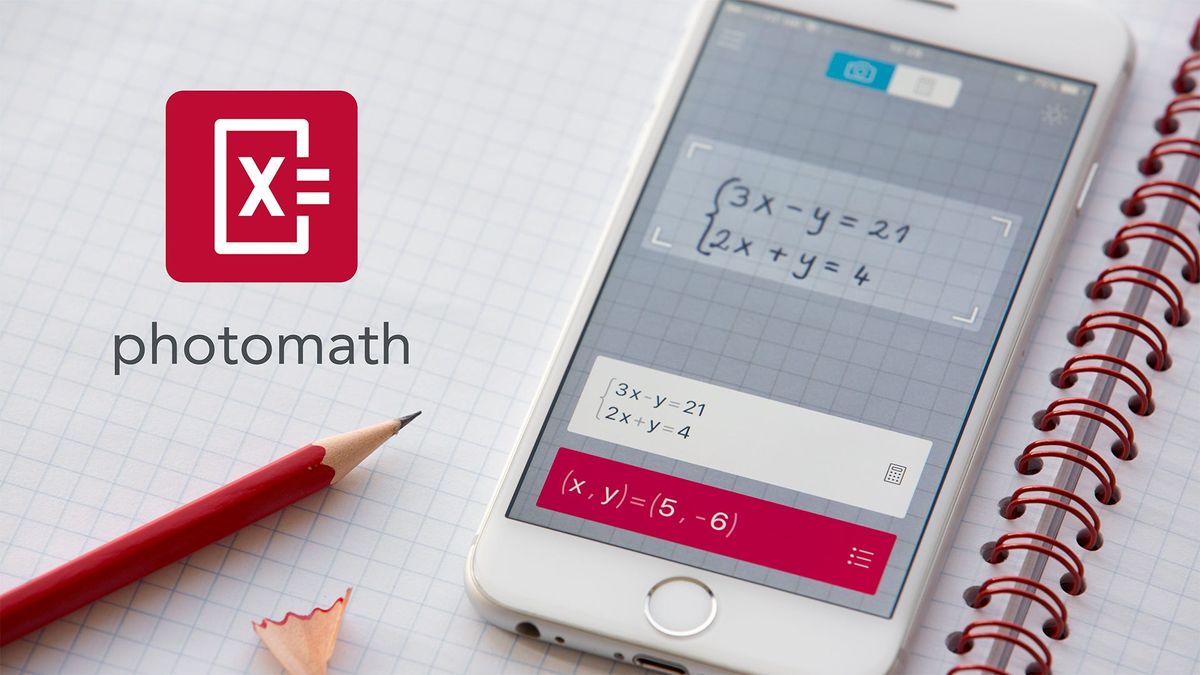
Photomath uses Computer Vision and AI to help students solve mathematical problems. Users simply point their smartphone camera at a math equation, and the app provides a detailed, step-by-step solution. Unlike traditional calculators that only provide answers, Photomath focuses on explaining the solving process. This allows students to understand the logic behind mathematical concepts rather than memorizing solutions. The platform supports topics ranging from basic arithmetic to advanced algebra and calculus.
- Pros: Instant step-by-step explanations; easy-to-use camera-based interface; supports a wide range of mathematical topics; encourages understanding of problem-solving methods.
- Cons: Limited primarily to mathematics; may reduce independent problem-solving if overused; some advanced solution explanations require premium access.
5. The Future of AI in Education
In the coming years, AI is expected to become more deeply integrated into educational environments. According to a survey report conducted jointly by Access Partnership and Amazon Web Services (AWS), involving 117 educators in Tennessee, United States, including teachers from grades 6–12 and higher education institutions, 69% of educators believe that AI skills will become essential for securing high-paying jobs in the future. Additionally, 59% believe that foundational AI skills should be taught throughout the education system, from grade 6 through higher education.
Intelligent tutoring systems will provide increasingly personalized support, adaptive learning platforms will continue to improve, and educators will gain access to more powerful tools for monitoring student progress and designing effective learning experiences.
Emerging technologies such as virtual reality (VR), augmented reality (AR), and AI-powered simulations may further transform how students learn by creating immersive and interactive educational experiences. As technology continues to evolve, the most successful educational institutions will be those that combine the strengths of AI with the expertise, empathy, and guidance that only human educators can provide.
Let’s Build the Future of Education Together
Don’t let outdated learning systems limit educational potential. The future of education is becoming more personalized, accessible, and data-driven through AI. If you’re looking to explore how AI can enhance teaching, learning, or educational operations, Varmeta can help turn that vision into reality.
Talk to our experts today and start building the next generation of learning experiences.
FAQs
1. Will AI eventually replace teachers?
No. AI is designed to support educators rather than replace them. While AI can automate administrative tasks, provide personalized recommendations, and assist with grading, teachers remain essential for mentorship, critical thinking development, emotional support, and classroom interaction.
2. Is AI in Education suitable for younger students?
Yes, when implemented responsibly. AI-powered learning platforms can help younger students receive personalized support and immediate feedback. However, teacher supervision remains important to ensure content accuracy, appropriate usage, and healthy learning habits.
3. How can schools ensure student data remains secure?
Educational institutions should work with trusted technology providers, follow data protection regulations, and implement strong cybersecurity measures. Transparency regarding how student data is collected and used is also essential.
4. What is the biggest challenge when adopting AI in Education?
The biggest challenge is often implementation rather than technology itself. Schools need proper infrastructure, teacher training, clear AI policies, and a strategy that balances technological innovation with educational goals.
5. What should students avoid when using AI for learning?
Students should avoid copying AI-generated content without understanding it, relying on AI for every assignment, or using AI in ways that violate academic integrity policies. AI works best when used as a learning companion rather than a shortcut.