How To Grow The Crypto Wallet Users Effectively?In 2024, global supply chains have faced unprecedented challenges, underscored by significant events such as the ongoing geopolitical tensions in the Red Sea and the Russia-Ukraine conflict, which have severely disrupted shipping routes. These crises have led to skyrocketing freight rates—up to five times higher than pre-COVID levels.
Such disruptions highlight the fragility of traditional logistics networks and the urgent need for enhanced resilience. This is where AI in supply chain management comes into play, transforming supply chain analytics by converting vast amounts of data into actionable insights. By leveraging AI, businesses can better predict and mitigate disruptions, optimize logistics, and improve demand forecasting. This article will explore the pivotal role of AI in supply chain analytics and the significant benefits it offers to modern organizations.
The Importance of Supply Chain Analytics
Supply chain analytics is essential for organizations aiming to optimize their operations and make informed decisions. It involves analyzing data related to various components, such as demand forecasting, inventory management, logistics, and supplier performance. According to a 2023 report by McKinsey, companies that effectively leverage supply chain analytics can achieve up to a 15% reduction in logistics costs and a 20% improvement in service levels. However, traditional analytics methods often encounter challenges, including data silos, reliance on outdated systems, and the inability to process large volumes of data efficiently. These limitations can lead to inefficiencies and missed opportunities in today’s fast-paced market.
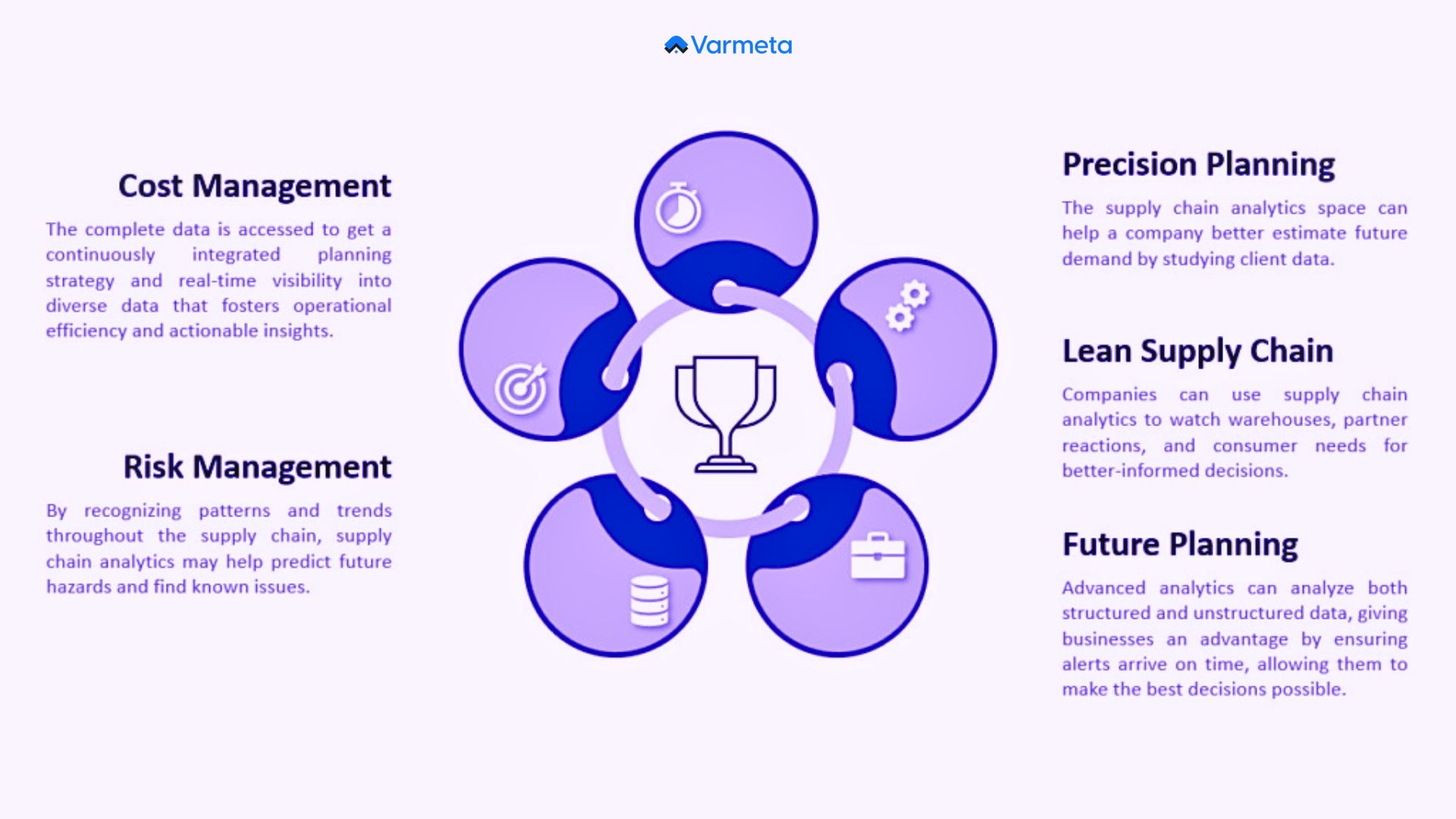
This is where AI in supply chain management becomes a transformative solution. By employing advanced algorithms and machine learning techniques, AI can analyze vast amounts of data from multiple sources to identify patterns and trends that human analysts might overlook. This capability allows businesses to enhance their operational efficiency and respond proactively to potential disruptions.
What is the Role of AI in Supply Chain Analytics?
AI is revolutionizing supply chain analytics by providing advanced capabilities that go beyond traditional methods. One common traditional approach is time-series forecasting, where businesses rely solely on historical sales data to predict future demand. This method assumes that past trends will continue into the future, making it difficult to adapt to sudden changes in market conditions or unexpected disruptions, such as economic shifts or new consumer trends.
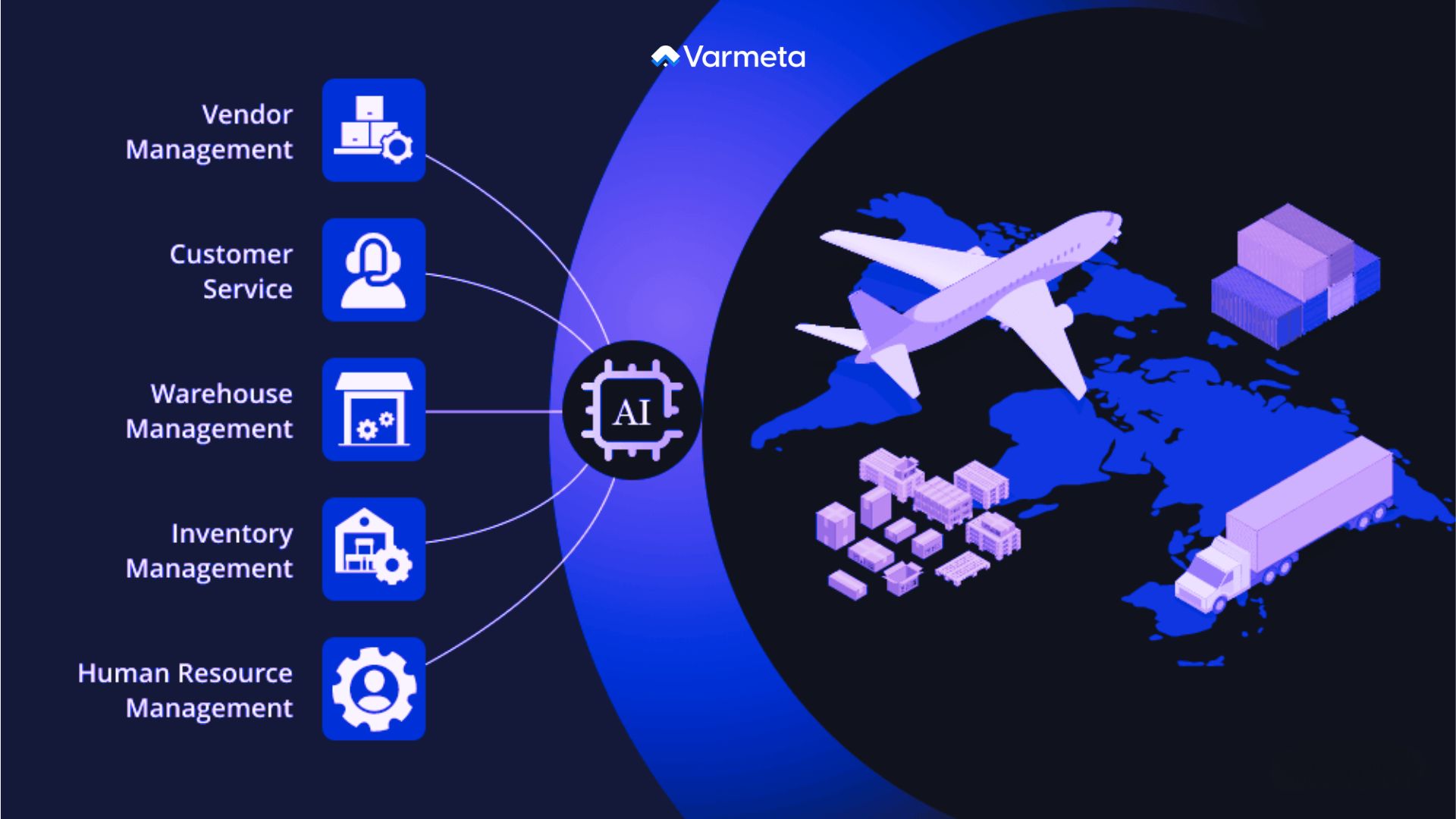
However, with AI, demand forecasting has become far more dynamic and accurate. AI can analyze not just historical sales data but also real-time market trends, social media activity, weather patterns, and even economic indicators. For instance, while traditional methods might predict seasonal demand based only on past sales patterns, AI can detect emerging trends in consumer behavior or market conditions that might signal a sudden change in demand. A study by Gartner found that organizations using AI for demand forecasting saw a 30% improvement in accuracy, helping to better align inventory levels with actual market demand and reduce the risk of stockouts.
What are the Key Applications of AI in Supply Chain Management?
While AI offers many benefits, some of its most impactful applications in the supply chain focus on Demand Forecasting and Logistics Optimization:
Demand Forecasting
AI significantly improves the accuracy of demand forecasting. By analyzing historical data and real-time market trends, businesses can better anticipate customer needs. For example, Walmart employs machine learning algorithms that analyze over 600 million transactions daily to optimize inventory management practices, ensuring they have the right products available at the right time.
Logistics Optimization
AI plays a crucial role in logistics optimization by streamlining transportation processes. A report from Deloitte indicates that companies using AI for logistics optimization have experienced up to a 25% reduction in operational costs. AI algorithms can calculate the most efficient routes for transporting goods, taking into account various factors such as delivery windows and potential disruptions.
Successful Usecase Turning Data into Actionable Insights
The transition from raw data to actionable insights is facilitated by AI’s ability to process large volumes of information quickly and accurately. Organizations can utilize predictive analytics to uncover hidden patterns that inform strategic decision-making. For instance, companies that have integrated AI into their supply chain analytics have reported an average increase of 15% in operational efficiency.
Real-world examples demonstrate the effectiveness of AI in transforming data into insights. For example, Coca-Cola has implemented AI-driven analytics to optimize its production schedules based on real-time demand signals, leading to a 20% reduction in excess inventory.
What are the challenges of implementing AI in the supply chain?
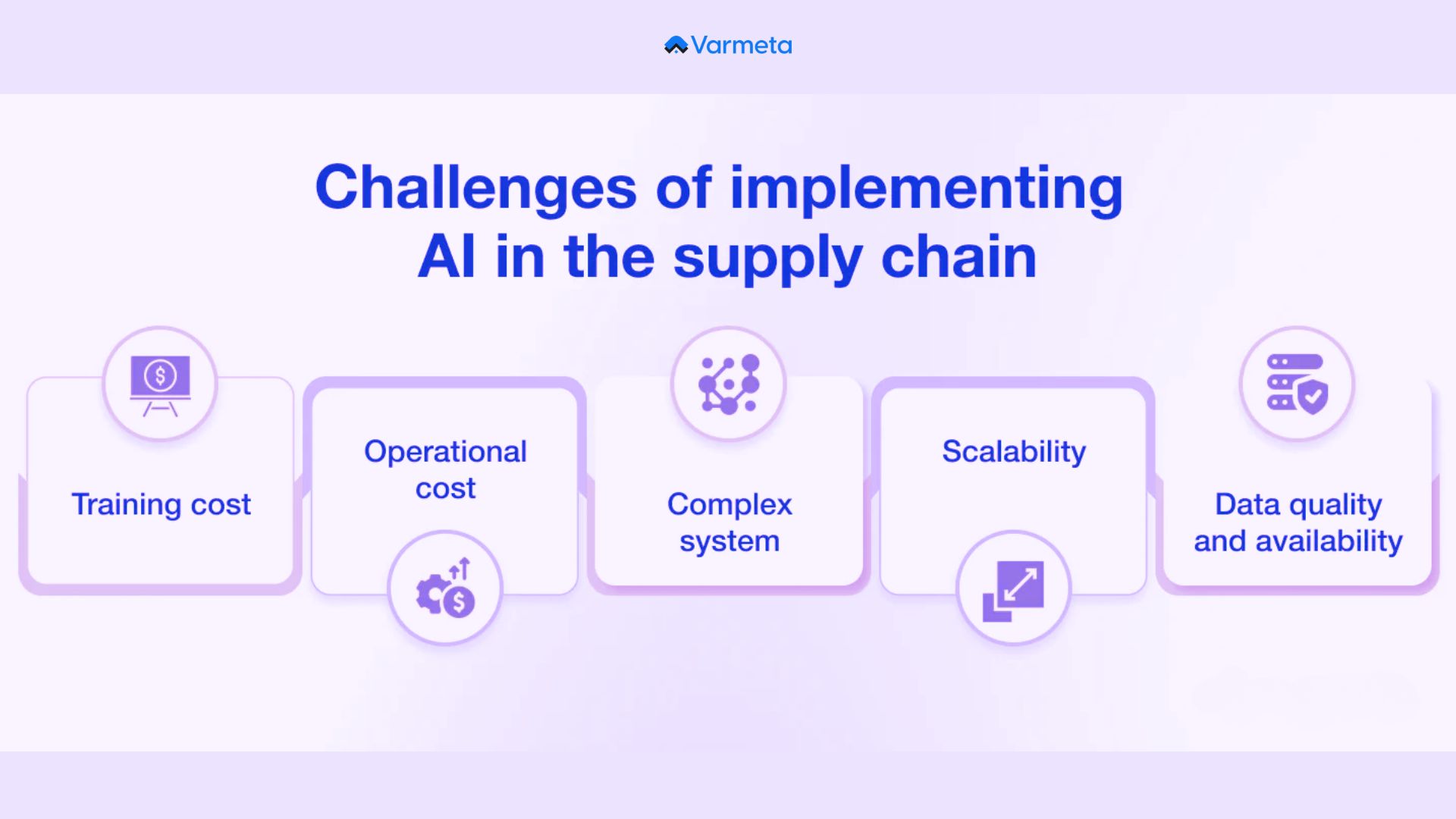
Despite its advantages, implementing AI in supply chain analytics presents several challenges:
- Data Quality Issues: Poor data quality is a common barrier, making it difficult to draw accurate insights from AI.
- Integration Difficulties: Integrating AI with existing legacy systems can be complex and time-consuming.
- Lack of Skilled Personnel: There is often a shortage of staff with the skills to interpret AI-generated insights effectively.
According to a survey by PwC, 54% of executives cited data quality as the biggest obstacle to successful AI implementation. Organizations must develop strategies to overcome these challenges by investing in technology and training staff to fully leverage the benefits of AI.
Varmeta – Harnessing AI in supply chain
Looking for a partner with deep expertise in implementing AI solutions? Varmeta is here to help. We offer strategic consulting, seamless implementation, and ongoing support to help small to medium-sized businesses and enterprises boost productivity by leveraging the latest advancements in AI technology.
Conclusion
The integration of AI in supply chain analytics is essential for businesses seeking to thrive in an increasingly complex environment. By leveraging AI technologies for demand forecasting and logistics optimization, organizations can enhance their operational efficiency and resilience. As the landscape continues to evolve, embracing AI will be key to navigating future challenges and seizing new opportunities in supply chain management.