Creating a well-designed interior has traditionally been a time-consuming process that relies on inspiration, technical expertise, and countless design decisions. From planning layouts to selecting furniture and finishes, every step requires careful consideration to achieve a space that is both functional and visually appealing. Today, artificial intelligence is transforming that experience. AI Interior Design enables homeowners, designers, architects, and businesses to generate design concepts, visualize renovations, and personalize spaces with greater speed and confidence. In this guide, Varmeta will explore how AI Interior Design works, where it delivers the most value, and the tools that are shaping the future of intelligent interior design.
1. What Is AI Interior Design?
AI interior design refers to the use of artificial intelligence to assist with planning, visualizing, and optimizing interior spaces. Instead of relying solely on manual sketches or traditional design software, AI-powered tools analyze room images, user preferences, and design styles to generate personalized interior concepts within minutes. Whether you’re redesigning a living room, planning an office layout, or staging a property for sale, AI can recommend furniture arrangements, color palettes, décor, and lighting ideas tailored to your specific needs. By combining technologies such as computer vision, machine learning, and generative AI, these platforms help users explore multiple design possibilities faster than ever before.
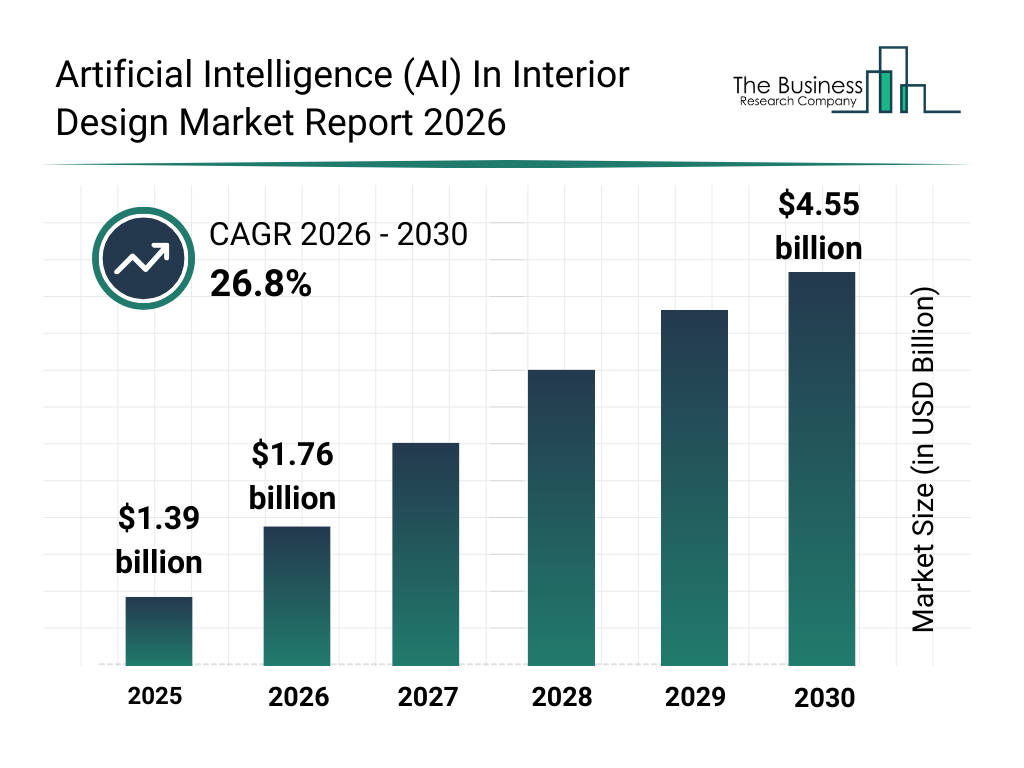
The rapid adoption of AI is transforming this landscape. According to The Business Research Company, the global AI in interior design market is expected to grow from USD 1.39 billion in 2025 to USD 1.76 billion in 2026, representing a 27.1% CAGR, with continued strong growth projected through 2030.
Why AI Is Becoming a Game Changer in Interior Design
Designing an interior isn’t simply about choosing attractive furniture. Every decision, from lighting and color palettes to furniture placement and room flow, affects how comfortable and functional a space feels.
Traditionally, creating the perfect design often involves:
- Browsing hundreds of inspiration images
- Building mood boards
- Creating multiple design concepts
- Revising layouts after client feedback
- Producing expensive 3D renderings
Artificial intelligence dramatically shortens this process.
Instead of starting from scratch, AI analyzes room dimensions, architectural features, user preferences, and design styles to instantly generate multiple design concepts. Designers spend less time on repetitive tasks and more time refining creative ideas, while homeowners gain confidence before making costly purchasing decisions.
Rather than replacing professional designers, AI acts as a creative partner that accelerates decision-making.
2. How AI Interior Design Actually Works
While AI-generated room transformations may seem almost instantaneous, they are powered by several advanced technologies working together behind the scenes. Each technology plays a distinct role in helping AI understand a space, generate design ideas, and deliver recommendations that are both visually appealing and practical.
Rather than replacing professional designers, these technologies automate repetitive tasks and accelerate the early stages of the design process, allowing designers to focus on creativity, client communication, and final refinements.
Computer Vision: Understanding the Space Before Designing It
Every successful interior design project starts with understanding the space itself. Computer vision enables AI to analyze room photos by recognizing architectural features such as walls, windows, doors, ceilings, flooring, and existing furniture.
Instead of treating an uploaded image as a simple picture, AI converts it into a structured representation of the room. This allows the system to estimate dimensions, identify functional zones, detect obstacles, and understand how different elements relate to one another.
For designers and businesses, this means less time manually measuring or recreating existing layouts before exploring new design concepts. It also enables faster renovation planning and more accurate visualization.
Generative AI: Turning Ideas into Design Concepts
Once AI understands the room, generative AI creates entirely new interior concepts based on user preferences.
Rather than producing a single design, modern AI models can generate multiple design directions from the same room, each reflecting different styles, materials, layouts, or furniture arrangements. A user might simply describe a vision such as:
“Transform this living room into a modern Japandi space with warm oak furniture, soft natural lighting, and minimalist décor.”
Within seconds, AI can produce several photorealistic concepts that would traditionally require hours of manual rendering.
This dramatically shortens the concept development phase, making it easier for designers to present alternatives, gather client feedback, and iterate without starting from scratch each time.
Machine Learning: Delivering Smarter Design Recommendations
Generating attractive images is only part of the process. AI also learns from large collections of professionally designed interiors, user interactions, and design preferences to improve its recommendations over time.
Instead of suggesting random furniture or color combinations, machine learning identifies patterns that have proven effective in similar spaces. It can recommend layouts that improve functionality, color palettes that complement natural lighting, or furniture arrangements that better utilize available space.
As more users interact with AI-powered platforms, these recommendations become increasingly relevant, helping both homeowners and design professionals make more informed decisions.
Natural Language Processing: Making Design Accessible to Everyone
One of the biggest barriers to interior design software has traditionally been its complexity. Natural language processing (NLP) removes that barrier by allowing users to communicate with AI in everyday language instead of learning complicated design tools.
Rather than adjusting dozens of technical settings, users can simply describe the atmosphere or style they want to achieve. AI interprets these instructions and translates them into visual design concepts.
This conversational approach not only makes AI interior design more accessible for homeowners but also enables designers to collaborate with clients more efficiently. Instead of interpreting vague descriptions manually, AI can instantly visualize client ideas, making discussions faster and reducing misunderstandings during the design process.
3. What Can AI Design?
AI interior design has evolved far beyond generating attractive room images. Today, AI supports multiple stages of the design workflow, from early concept development to client presentations, helping businesses deliver projects faster while improving design quality and customer experiences.
Whether designing a private residence, a commercial property, or a hospitality space, AI enables professionals to visualize ideas, test alternatives, and make informed design decisions with greater speed and confidence.
Designing Residential Spaces
For homeowners and residential designers, AI simplifies renovation planning by generating personalized concepts for living rooms, bedrooms, kitchens, bathrooms, home offices, and dining areas.
Instead of imagining how a space might look after renovation, users can instantly compare multiple design styles, furniture arrangements, and color palettes before committing to expensive purchases or construction work. This reduces uncertainty and helps clients make decisions with greater confidence.
Supporting Commercial Projects
Commercial interior design often involves tighter deadlines, multiple stakeholders, and stronger branding requirements. AI helps businesses quickly generate concepts for offices, hotels, restaurants, cafés, retail stores, and coworking spaces while maintaining visual consistency across locations.
By accelerating concept development and visualization, AI allows teams to present proposals earlier, gather stakeholder feedback more efficiently, and shorten overall project timelines.
Optimizing Design Decisions
Beyond visualization, AI assists with practical design decisions that traditionally require significant manual effort.
For example, AI can recommend furniture placement based on room dimensions, suggest layouts that improve traffic flow, generate color palettes aligned with specific design styles, and recommend materials that complement both aesthetics and functionality.
Many platforms also support virtual staging and renovation visualization, enabling designers, real estate agencies, and property developers to showcase completed spaces before construction or furnishing begins.
These capabilities transform AI from a simple image-generation tool into a decision-support system that improves efficiency throughout the entire interior design workflow.
4. Best AI Interior Design Tools in 2026
Interior AI
Best for: Homeowners, real estate agents, and designers who need instant room transformations.
Interior AI is one of the most well-known AI-powered interior design platforms for generating room transformations from a single photo. Users simply upload an image of an existing room, choose a preferred design style, and the platform produces multiple redesigned versions within seconds.
The tool supports dozens of design aesthetics, including Scandinavian, Modern, Japandi, Industrial, Luxury, and Minimalist, making it ideal for exploring different visual directions before committing to a renovation or furniture purchase.
Because of its simple workflow, Interior AI is especially suitable for homeowners, real estate professionals, and designers looking to create quick concept presentations without spending hours building 3D models.
| Strengths | Limitations |
| Extremely fast room redesign generation | Limited control over fine design details |
| Supports multiple interior styles | Results depend on photo quality |
| Useful for virtual staging and presentations | Not designed for technical floor planning |
Homestyler

Best for: Residential interior designers and homeowners planning renovations.
Homestyler is one of the most comprehensive AI interior design platforms available today. It combines AI-generated room ideas with powerful 3D modeling capabilities, allowing users to create highly detailed interiors using real furniture products from well-known brands.
Interior designers frequently use Homestyler to build presentation-quality visualizations that clients can easily understand before construction or renovation begins.
Its balance between ease of use and professional functionality makes it an excellent option for users who have some design experience but do not require advanced CAD software.
| Strengths | Limitations |
| Large furniture and decoration library | Advanced features require a premium plan |
| Supports floor planning and 3D rendering | Less suitable for complex commercial projects |
| Beginner-friendly interface | Limited BIM/CAD integration |
Planner 5D
Best for: Beginners, homeowners, and small design businesses.
Planner 5D combines AI assistance with traditional floor-planning software, allowing users to design entire homes from scratch. Unlike image-based AI generators, Planner 5D gives users greater control over room dimensions, furniture placement, and architectural layouts while still benefiting from AI-powered recommendations.
The platform supports both 2D floor plans and immersive 3D visualizations, making it useful for homeowners planning renovations as well as students and interior designers working on more detailed projects.
| Strengths | Limitations |
| Simple and intuitive interface | Advanced tools require subscription |
| Supports AI room generation | Less detailed than professional CAD software |
| Includes 2D and 3D visualization | Rendering quality is not industry-leading |
RoomGPT
Best for: Homeowners seeking quick inspiration and style exploration.
RoomGPT focuses on one task: quickly generating fresh design ideas from existing room photos. Instead of offering extensive editing tools, it emphasizes speed and simplicity. This makes it perfect for homeowners looking for inspiration before beginning a renovation or purchasing new furniture. Although customization options are more limited than professional software, RoomGPT excels at helping users visualize multiple styles within minutes.
| Strengths | Limitations |
| Very fast and easy to use | Limited customization options |
| Great for design inspiration | Not intended for professional documentation |
| Requires minimal technical knowledge | May produce inconsistent results across styles |
Foyr Neo

Best for: Professional interior designers, studios, and commercial projects.
Foyr Neo is designed for professional interior designers who need to create detailed layouts, photorealistic renderings, and client-ready presentations efficiently. Its AI-powered workflow accelerates tasks such as furniture placement, lighting adjustments, and material selection while maintaining the precision expected in commercial design projects.
Compared with beginner-oriented AI tools, Foyr Neo provides significantly greater customization and rendering quality, making it well suited for architecture firms and professional studios.
| Strengths | Limitations |
| Professional-grade rendering quality | Higher cost than beginner-focused tools |
| Integrated floor planning and 3D modeling | Steeper learning curve |
| Efficient for multi-project workflows | Best value for professional users |
Canva Magic Design
Best for: Interior designers, marketers, and businesses creating presentations.
While Canva is widely known as a graphic design platform, its AI-powered Magic Design feature has also become a valuable tool for interior designers and creative professionals. Instead of creating complete room layouts, Canva helps users quickly develop mood boards, design presentations, color palettes, and visual concepts using AI-assisted templates and content generation.
Interior designers often use Canva Magic Design during the early stages of a project to present design directions, organize inspiration images, and communicate ideas more effectively with clients. Its intuitive drag-and-drop interface makes it particularly suitable for beginners and small design businesses that need polished presentations without learning complex design software.
| Strengths | Limitations |
| Excellent for mood boards and presentations | No floor planning capabilities |
| Fast AI-assisted content creation | Limited interior-specific AI features |
| Seamless integration with Canva ecosystem | Less suitable for technical design work |
5. Where Businesses Are Using AI Interior Design
AI interior design is no longer just a tool for homeowners experimenting with room makeovers. Today, businesses across a wide range of industries are integrating AI into their design workflows to improve efficiency, enhance customer experiences, and accelerate decision-making. From property marketing to workspace planning, AI is helping organizations transform how spaces are designed, presented, and optimized.
Real Estate
For real estate developers and agents, one of the biggest challenges is helping buyers visualize the potential of an empty or outdated property. AI-powered virtual staging addresses this by generating fully furnished, photorealistic interiors without the time and cost of physical staging.
Beyond improving listing presentations, AI enables agents to showcase multiple design styles for the same property, appealing to different buyer preferences and helping accelerate purchasing decisions.
Furniture Retail
Furniture retailers are increasingly using AI to create more personalized shopping experiences. Instead of imagining how a sofa or dining table might look in their homes, customers can upload a room photo and instantly preview different products, layouts, or color combinations.
This interactive experience helps customers make more confident purchasing decisions while reducing product returns and increasing engagement with online retail platforms.
Hospitality
Hotels, resorts, and serviced apartments use AI to explore various interior concepts before committing to renovations or new developments. Designers can quickly compare layouts, materials, furniture selections, and decorative styles while ensuring they remain aligned with the brand’s visual identity.
By shortening the concept development process, AI also enables hospitality businesses to respond more quickly to changing guest expectations and market trends.
Workplace Design
Modern workplaces continue to evolve as organizations adopt hybrid work models and place greater emphasis on employee wellbeing. AI assists workplace designers by evaluating space utilization, suggesting more efficient layouts, and supporting environments that encourage collaboration while maximizing available office space.
For businesses, this leads to more flexible workplaces, improved space efficiency, and data-informed design decisions rather than relying solely on assumptions.
6. The Future of AI Interior Design
As AI continues to evolve, its role in interior design is expected to expand beyond generating design concepts. Future AI-powered tools will become more intelligent, collaborative, and personalized, helping both homeowners and professionals make faster, more informed design decisions.
Some key trends shaping the future of AI interior design include:
- Hyper-personalized design recommendations: AI will better understand users’ lifestyles, preferences, and budgets to create spaces that reflect individual needs rather than relying on generic design templates.
- Integration with AR and VR: By combining AI with augmented and virtual reality, users will be able to explore and refine interior designs in immersive environments before purchasing furniture or starting renovations.
- Smarter space optimization: AI will analyze room dimensions, natural lighting, and traffic flow to recommend layouts that improve both functionality and comfort.
- More sustainable design solutions: AI can suggest eco-friendly materials, optimize furniture placement, and reduce material waste, helping homeowners and businesses make more sustainable design choices.
While AI will continue to enhance efficiency and creativity, it is unlikely to replace professional interior designers. Instead, it will serve as a powerful design assistant, allowing professionals to focus more on creativity, client collaboration, and strategic decision-making.
Let’s transform design ideas into reality with AI
AI interior design is making professional-quality design more accessible than ever before. Whether you’re refreshing a single room or planning an entire commercial space, artificial intelligence helps you move from inspiration to visualization in a fraction of the traditional time.
At Varmeta, we help businesses explore practical AI solutions that improve creativity, streamline workflows, and deliver better customer experiences. If you’re ready to integrate AI into your design process, our team is here to help.
Talk to our experts today and start creating smarter, more inspiring interior spaces with AI.
FAQs
1. What is AI interior design?
AI interior design uses artificial intelligence to generate design ideas, optimize room layouts, recommend furniture, and create realistic visualizations based on photos or text prompts.
2. Can AI create complete interior design projects?
AI can generate impressive concepts and visualizations, but detailed construction drawings and technical planning still require professional designers or architects.
3. Is AI interior design suitable for beginners?
Yes. Most AI design tools are built for users with little or no design experience, making it easy to experiment with different styles and layouts.
4. Which industries benefit most from AI interior design?
Real estate, hospitality, furniture retail, architecture, commercial property management, and residential interior design all benefit from AI-powered design workflows.
5. Will AI replace interior designers?
No. AI enhances creativity and efficiency, but human designers remain essential for understanding client needs, solving complex spatial challenges, and delivering personalized design solutions.