The logistics world is moving fast and if you are still using clipboards or basic spreadsheets, you are falling behind. This article explains how an AI warehouse works, the tech involved, and why your business needs to adapt right now. We want to help you understand this digital shift so you can make better decisions for your company’s future. If you need help building these systems, Varmeta specializes in these high-tech integrations.
1. What is an AI Warehouse?
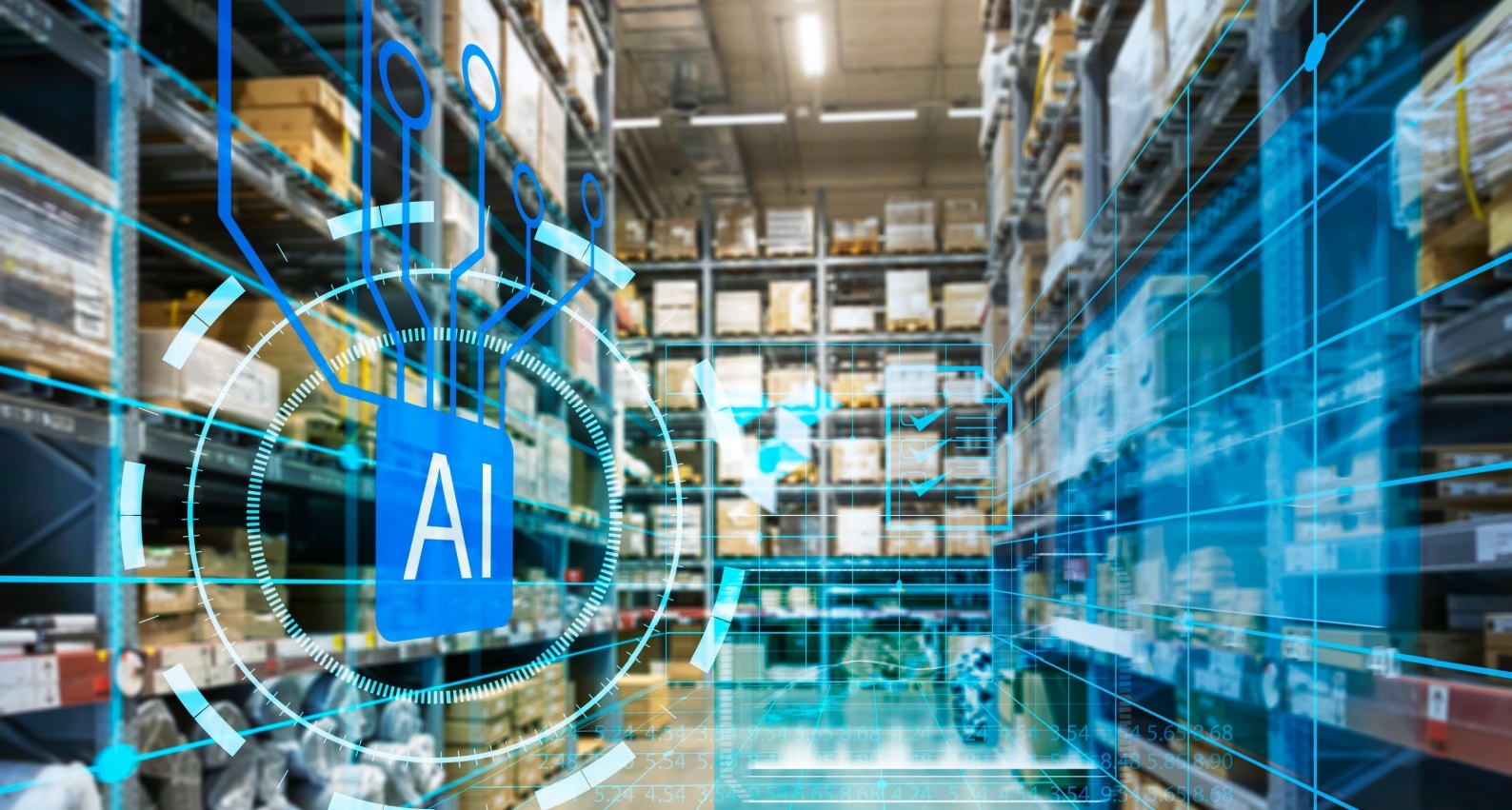
At its simplest, an AI warehouse is a storage facility that uses artificial intelligence, the Internet of Things (IoT), and automation to handle goods with minimal human intervention. It’s a connected ecosystem where data flows seamlessly between every shelf, sensor, and software system.
An AI warehouse is a facility that uses artificial intelligence, the internet of things, and robotics to create a connected environment where data flows between systems and processes. It is a massive upgrade over traditional storage because it does not just hold boxes; it thinks about how to move them better.
From Traditional to Smart Warehouses
Traditional warehouses rely on manual labor and semi-automated processes. These old systems have many limits like inventory mistakes, slow processing, and poor use of space. A smart facility fixes this by using software to handle the heavy lifting of data. The shift happened because e-commerce grew so fast that humans could no longer keep up with the demand for speed and accuracy.
Core Characteristics of an AI Warehouse
A true AI warehouse has four main pillars that make it work. First is information connectivity, which means every device is on a wireless network sharing data. Second is equipment automation like robots and conveyors. Third is process integration where the software makes sure the inbound and outbound tasks match up perfectly. Finally, environmental sustainability is now a big part of the design to save energy and reduce carbon footprints.
The Central Nervous System: Warehouse Execution Systems (WES)
The Warehouse Execution System or WES is the brain of the whole operation. It unifies different subsystems like robotic storage and conveyors into one synchronized platform. Instead of having five different programs that do not talk to each other, a WES coordinates everything in real time. It allows managers to run simulations and change workflows without stopping the actual production line.
2. How Artificial Intelligence Powers the Modern Warehouse
AI is the engine that makes a warehouse “smart.” It takes the raw data collected from the floor and turns it into useful instructions for robots and humans.
AI as the Force Multiplier
In 2026, AI is essential rather than experimental. It acts as a force multiplier by turning reactive processes into predictive ones. Instead of waiting for a machine to break, AI uses sensors to predict when it needs maintenance. It also optimizes task assignments on the fly so robots are never sitting idle.
Demand Forecasting and Inventory Optimization
One of the best uses for an AI warehouse is demand forecasting. Machine learning models like Long Short-Term Memory (LSTM) networks analyze past sales and current trends to guess what customers will buy next. For example, Walmart improved its forecast accuracy by 20% using these models. This helps keep inventory levels perfect so you do not have too much money tied up in unsold stock.
The Synergy of AI and IoT
The Internet of Things (IoT) provides the eyes and ears of the warehouse. IoT sensors track temperature, humidity, and location for every pallet. While IoT collects this data, AI is the part that makes sense of it. This combination creates total transparency. You can see exactly where a product is and what condition it is in at any second.
3. Key Technologies and Robotics Inside an AI Warehouse
The physical part of an AI warehouse involves a lot of cool machinery that works much faster than any human crew.
Autonomous Mobile Robots (AMRs) and AGVs
AMRs are the robots you see scooting around the floor. Unlike old Automated Guided Vehicles (AGVs) that needed magnetic strips on the floor, AMRs use LiDAR and cameras to find their own way. They help with collaborative picking where the robot carries the heavy bin and the human just drops the item in. Companies like Locus Robotics have these in over 350 sites worldwide.
AI-Powered Robotic Arms
Robotic arms are getting much smarter because of deep learning. In the past, you had to program every single movement. Now, robots like those from Covariant can “see” irregular items and figure out how to pick them up on their own. They can handle things like clothes, electronics, and medicine without needing a human to tell them what the object is.
Smart Imagers and Edge Intelligence
Vision technology is now “neural.” Modern cameras have Neural Processing Units (NPUs) built inside them. This is called edge intelligence because the camera processes the image right there instead of sending it to a far away server. It allows for millisecond verification of product conditions and barcodes, which stops errors before they happen.
| Technology | Primary role in warehouse | Key enefit |
| AMRs | Transporting goods autonomously | Reduces worker walking time |
| Robotic Arms | Picking and packing individual items | Handles high SKU diversity |
| WES Software | Orchestrating hardware and tasks | Real-time synchronization |
| IoT Sensors | Real-time status monitoring | Improves inventory visibility |
| AI Vision | Quality and barcode inspection | Near-perfect accuracy |
4. Top Benefits of Operating an AI Warehouse
Why spend the money? Because the ROI (Return on Investment) in an AI warehouse is becoming impossible to ignore, especially with labor being so hard to find lately.
Unprecedented Speed and Accuracy
Human pickers make mistakes when they get tired. Robots do not. In an AI warehouse, robots can run 24/7 without stopping. Amazon currently uses over 750,000 robots to get near-perfect accuracy while moving millions of items. This speed is why your packages can arrive the same day you order them.
Cost Reduction and Operational Efficiency
Even though the robots are expensive, they save money on labor and energy over time. AI systems optimize storage space so you can fit more products in a smaller building. For instance, Amazon reduced its storage costs by 15% using AI-driven inventory management. It also makes the workplace safer because robots do the dangerous jobs like reaching high shelves or moving heavy pallets.
Resilience Against Supply Chain Disruptions
The last few years showed us that supply chains can break easily. An AI warehouse is more resilient because it uses predictive analytics to see trouble coming. If there is a shipping delay or a sudden spike in demand, the AI adjusts the warehouse layout and task priority immediately. This helps businesses stay profitable even when the global market is messy.
5. The Future of AI Warehouses: Trends and Adoption
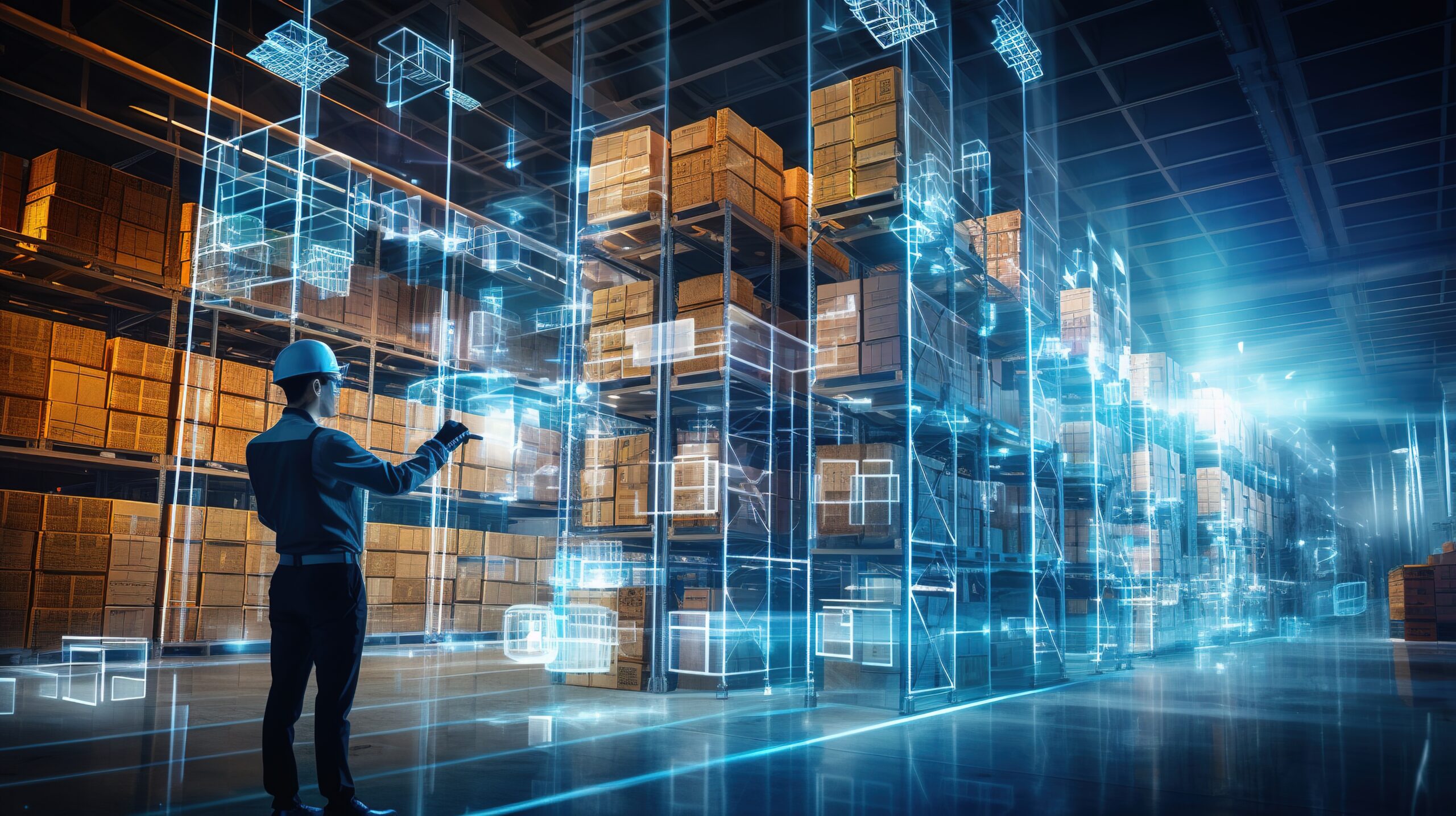
The “barrier to entry” is falling. You don’t have to be Amazon to start automating anymore.
Robotics-as-a-Service (RaaS)
This is a game changer for mid-sized shops. Instead of buying a robot for $50k, you “subscribe” to it. The provider handles the maintenance and updates, and you just pay a monthly fee. It makes the AI warehouse accessible to everyone.
Overcoming Implementation Challenges
Look, it’s not all sunshine and rainbows. High initial investment is still a hurdle for many. Also, “Bad Data” in means “Bad Decisions” out. You need a solid data governance strategy and a team that knows how to work with the AI, not against it.
Moving Towards Industry 5.0
The future isn’t just about replacing humans; it’s about Human-Centric automation. Industry 5.0 focuses on sustainability, employee well-being, and using AI to handle the “dull, dirty, and dangerous” jobs so humans can focus on creativity and strategy.
Ready to Build Your AI Warehouse?
The AI warehouse is no longer a sci-fi dream; it is the new standard for global trade. By using AI for forecasting and robots for picking, you turn a slow cost center into a fast competitive advantage. The tech is becoming more affordable every day through RaaS and no-code platforms.
If you want to start your journey into automation but do not know where to begin, Var-meta is here to help. We build the custom AI and IoT frameworks that make these smart systems work for real businesses. Contact us today to see how we can transform your operations.
Frequently Asked Questions (FAQ)
1. Is an AI warehouse too expensive for small businesses?
Not necessarily! With Robotics-as-a-Service (RaaS), companies can now rent or subscribe to robot fleets, avoiding huge upfront capital costs.
2. Will robots replace all human workers?
Nope. The trend is moving toward collaborative robotics (cobots) and Industry 5.0, where robots do the repetitive tasks and humans handle complex decision-making.
3. What is the main difference between WMS and WES?
A WMS manages inventory data (what you have), while a WES orchestrates the real-time movement of robots and people (how it moves).
4. How long does it take to see ROI on warehouse automation?
It varies, but many companies see significant operational savings within 12 to 24 months due to reduced labor costs and improved accuracy.
5. What is “Edge Intelligence” in a warehouse?
It’s when cameras or sensors process data locally (on the device) rather than sending it to a cloud server, allowing for instant actions like stopping a conveyor if an error is spotted.