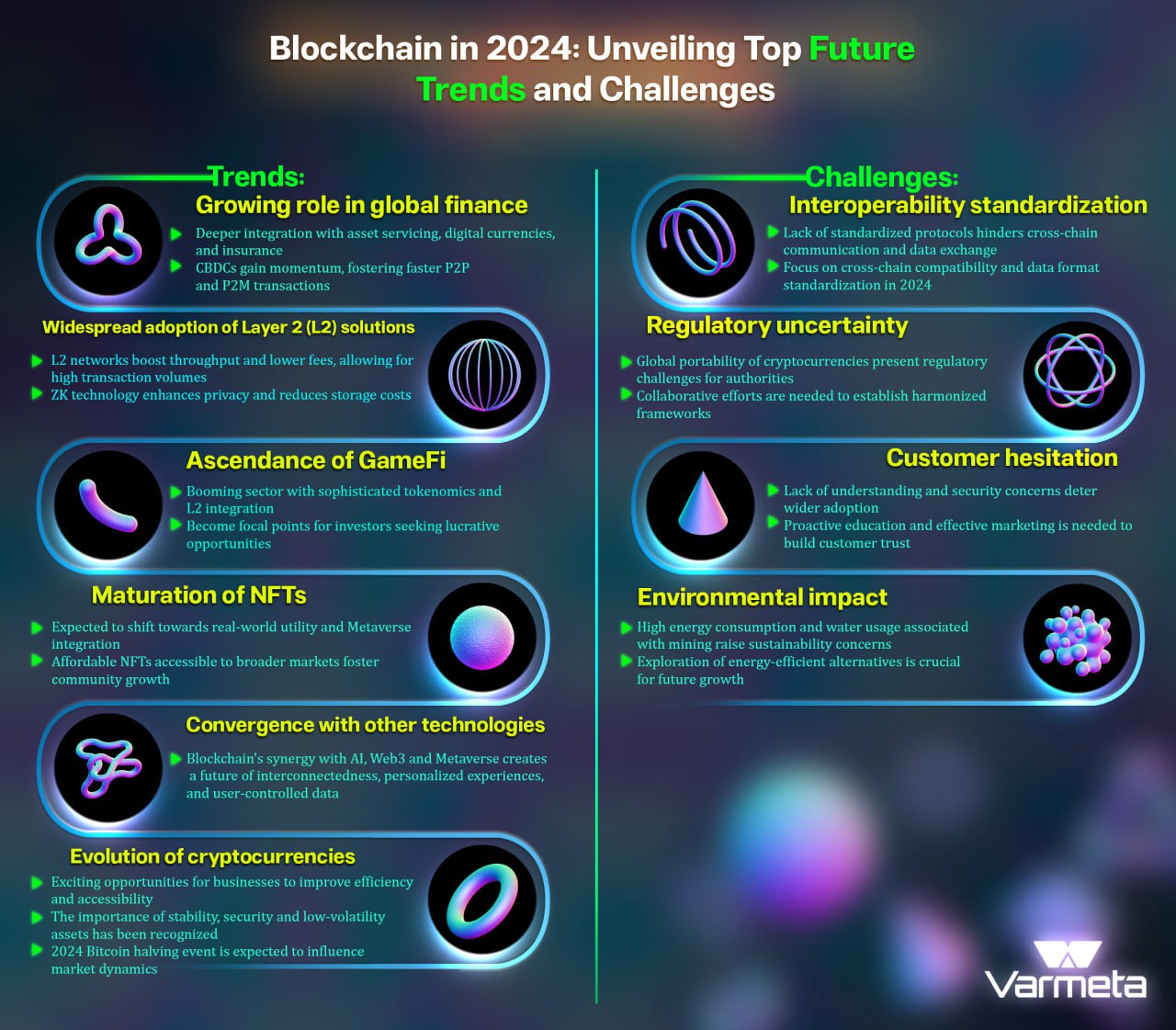
As 2023 draws to a close, the world of blockchain technology stands poised for unprecedented growth.
No longer a fringe concept, blockchain is gradually evolving into a mainstream force with the power to revolutionize sectors from finance to supply chains.
Let’s take a deeper dive into the most transformative blockchain trends expected to dominate 2024 and some potential challenges that are hindering this technology from broader business adoption.
Key Takeaways
- Growing Role in Global Finance: Blockchain’s increasing significance in the financial sector, notably in digital currencies, asset servicing, and insurance. Decentralized finance (DeFi) is poised to offer innovative services like cross-border transactions and decentralized lending.
- Widespread Adoption of Layer 2 Solutions: Enhanced interest in Ethereum’s Layer 2 networks for improved scalability and throughput, reducing transaction costs and time.
- Ascendance of GameFi: The rise of GameFi, combining gaming and DeFi, with increased investment and innovation leading to more sophisticated tokenomics.
- Maturation of NFTs: Shift in NFTs towards real-world utility like event ticketing and real estate ownership, moving away from speculative trading.
- Convergence with Other Technologies: Integration of blockchain with AI, Web3, and the Metaverse, unlocking new possibilities in data analytics, customer experience, and digital identity security.
- Evolution of Cryptocurrencies: Continued exploration of cryptocurrencies in business for streamlining payments, loyalty programs, and the anticipated impact of the Bitcoin halving event in April 2024.
- Interoperability Standardization: The need for improved interoperability among diverse blockchain systems for efficient cross-platform transactions and data transfer.
- Regulatory Uncertainty: Challenges in navigating the legal and regulatory landscape, especially in the cryptocurrency sector.
- Customer Hesitation: Overcoming customer hesitation towards cryptocurrencies through education, transparency, and effective marketing strategies.
- Environmental Impact: Concerns over the environmental footprint of blockchain technology, with a focus on more sustainable approaches like the proof-of-stake consensus mechanism.
Blockchain Technology in 2024: 6 remarkable trends
1/ Growing Role in Global Finance
Once relegated to the fringes of cryptocurrency, blockchain is now expected to have an increasingly significant role in the 2024 global financial landscape.
Data suggests that the financial banking industry alone spends around USD 1-2 billion on blockchain solutions annually.
Strategic focus on blockchain integration into asset servicing, digital currencies, and insurance are among the key market trends.
In the realm of finance, decentralized finance (DeFi) has shown great resilience to dramatic events in the 2023 crypto market, evidenced by the development of Layer 2 solutions and the emergence of new DeFi protocols.
DeFi remains a promising candidate for businesses that seek to develop digital financial services in 2024, focusing on swift cross-border transactions, decentralized borrowing and lending, and flexible insurance options – those that cannot be offered by traditional finance.
Monetary authorities of many countries are also navigating Central Bank Digital Currencies (CBDCs), with more than 100 nations currently in the exploration stage.
In 2024, we expect to see continued progress and experimentation with the technology.
Retail CBDCs, designed for use by individuals and businesses, can facilitate instant settlement and lower transaction fees for P2P and P2M payments; thus helping businesses improve efficiency and expand potential customer reach.
2/ Widespread Adoption of Layer 2 (L2) Solutions
Layer 2 networks have become the center of attention in the cryptocurrency space, considering how far they have come.
The Ethereum L2 network stands out, with over 800,000 daily active users – a testament to growing interest and adoption.
Besides existing protocols such as Arbitrum, Optimism, and zkSync, other L2 solutions on the way are expected to improve scalability and drive blockchain throughput to unprecedented levels.
By processing transactions off-chain, L2 solutions allow business adopters to handle higher transaction volumes, with faster speed and lower fees.
In 2024, we also anticipate the trend of more L2 networks gravitating toward Zero-knowledge (ZK) technology.
The appeal of ZK lies in its ability to drastically reduce storage costs and enhance privacy.
ZK ensures that sensitive financial data on the public blockchain remains confidential, reducing the risk of data breaches and unauthorized access; thereby helping businesses maintain privacy while complying with global regulations.
3/ Ascendance of GameFi
As we peer into the horizon of 2024, GameFi – the fusion of gaming and DeFi is emerging as a pivotal element in the evolving landscape of blockchain.
According to DappRadar, Q3 2023 saw Web3 gaming projects secure USD 600 million, pushing 2023 total investments to USD 2.3 billion.
As more players enter the market, GameFi projects become focal points for investors seeking lucrative opportunities.
Tokenomics, which lies at the heart of GameFi, is also predicted to become more sophisticated in the upcoming year, promoting higher profits for adopters and transparency for gamers.
As the innovation proceeds in the L2 ecosystem, more games are expected to opt for such networks, thanks to their high throughput and low gas fees.
4/ Maturation of NFTs
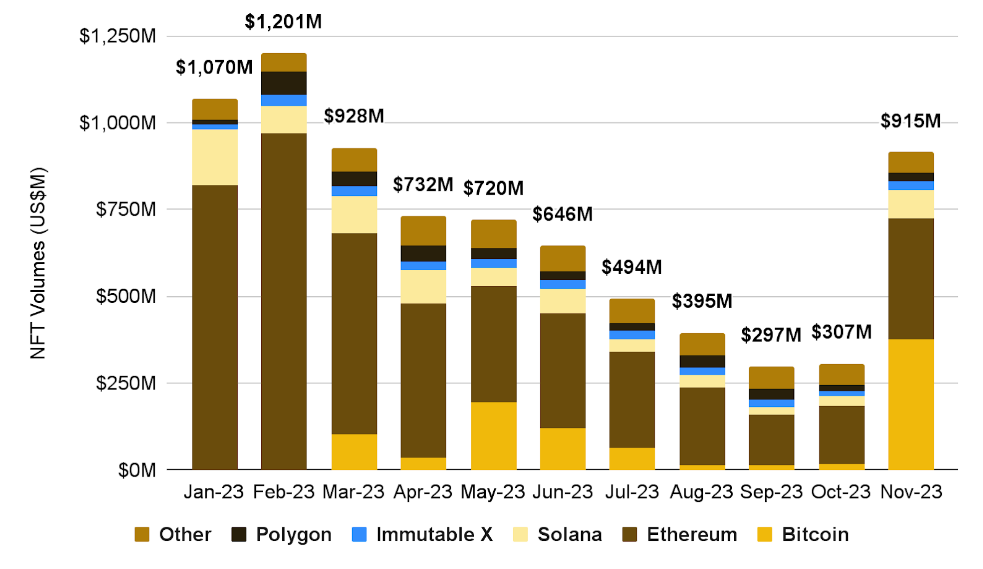
The close of 2023 witnesses a resurgence of interest in NFTs.
The next wave of successful NFT products, however, will likely be quite different from much of what we’ve seen before.
As speculative trading dwindles, customers are finding NFTs with real-world utility, such as event ticketing and real estate ownership, more attractive.
The demand for blockchain-based games and Metaverse integrating NFTs is also on the rise.
Axie Infinity and The Sandbox are prime examples of platforms successfully utilizing NFTs for in-game assets and virtual land ownership.
Towards 2024, business adopters are encouraged to develop NFT products with tangible benefits in large quantities and sell at affordable prices to make them accessible to a broader consumer market.
Strategic implementation of NFTs can effectively grow a community and keep members connected within the brand’s digital ecosystem.
5/ Convergence with Other Technologies
Blockchain’s synergy with Artificial Intelligence (AI), Web3, and the Metaverse, is expected to pave the way for a new era of interconnectedness, efficiency, and user empowerment.
We can’t wait to see what else will emerge from the intersection of these cutting-edge technologies.
AI and Blockchain:
The combination of AI’s analytical prowess and blockchain’s tamper-proof ledger unlocks possibilities of enhancing data analytics, improving customer experience, and even fraud detection.
For example, Fetch.ai is a platform that integrates AI with blockchain to build decentralized, autonomous AI networks capable of carrying out complex coordination tasks for individuals and organizations.
Among its building blocks, the AI Engine is where human input meets AI efficiency to transform commands into actionable tasks.
Web3 and Blockchain:
In 2024, the fusion of Web3 and blockchain is poised to accelerate, promising a fundamental shift in how we interact with the internet.
An outstanding candidate from this collaboration would be SocialFi.
Positioned to redefine social interactions, SocialFi adapts to individual users’ need to control their presence online, and even derive tangible financial benefits from it, all without worrying about how third parties process their data.
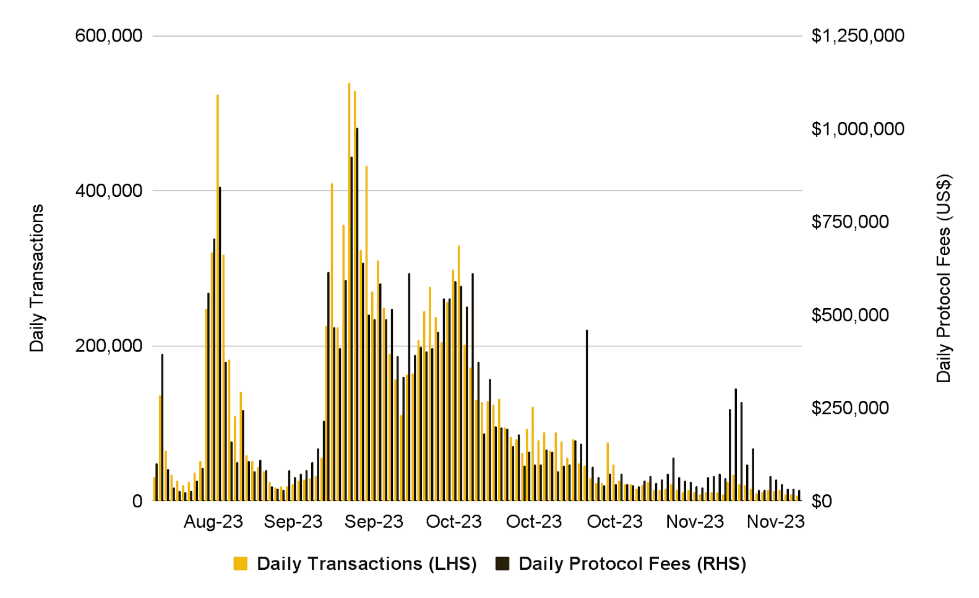
2023 saw a product-driven uptick in this subsector, with friend.tech generating over USD 25m in protocol fees by the end of November.
This is compelling evidence for the potential of Web3 social apps in the coming year.
Metaverse and Blockchain:
Another trend to expect in 2024 is the increased involvement of blockchain technology in Metaverse projects.
As businesses from different industries are tapping into Metaverse solutions to revolutionize customer experience, we might see more projects adopting blockchain to secure digital identities for users, facilitate cross-platform asset compatibility, and ensure transparent transactions within the Metaverse ecosystem.
In addition, Blockchain-based Decentralized Autonomous Organizations (DAOs) can be used to manage virtual communities within Metaverse, allowing for collaborative decision-making and shared ownership of assets.
6/ Evolution of Cryptocurrencies
The cryptocurrency landscape in 2023 presents a complex picture.
After a chaotic year marked by the TerraUSD collapse and subsequent marketwide downturn, Bitcoin (BTC) and Ethereum (ETH) remain significantly below their all-time highs.
Yet, amidst the volatility, glimpses of promising potential for business adoption shine through.
For businesses considering cryptocurrency adoption in 2024, exciting opportunities lie ahead.
Streamlining international payments through cryptocurrencies can reduce transaction fees and settlement times, improving efficiency and accessibility in global commerce.
Many retailers accept cryptocurrencies as a legitimate form of payment, such as online travel agency Expedia and beauty retailer Lush.
Moreover, exploring crypto-based loyalty programs and rewards systems can foster deeper customer engagement and unlock new revenue streams.
Of course, a thorough understanding of the landscape and consideration of applicable legal and regulatory frameworks is needed beforehand.
As the cryptocurrency market continues to mature, end-users and businesses alike are also recognizing the importance of stability, security, and low-volatility assets in transactions – all can be offered by stablecoins.
The dominance of stablecoins pegged to the USD, or other stable currencies like the Euro, will persist in 2024.
However, local currency stablecoins might be preferred, as it is more desirable too, for example, have a loan in one’s local currency and avoid more expensive loans associated with a devalued local currency.
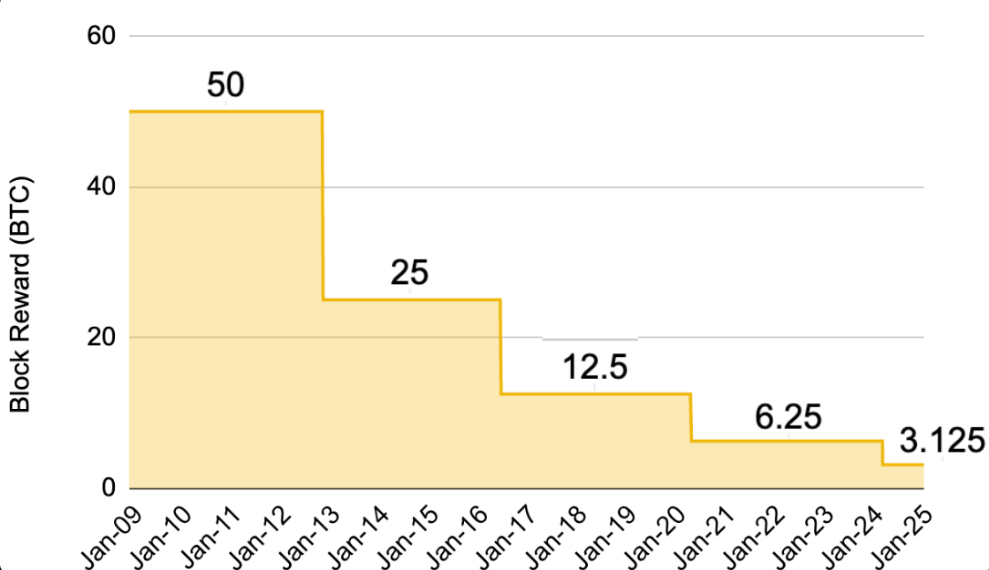
Notably, the anticipated Bitcoin halving event in April 2024 is expected to influence market dynamics, as it historically has in previous cycles.
This event, which reduces the block rewards for miners to 3.125 BTC per block, could potentially impact supply and demand dynamics, leading to price volatility and renewed interest in Bitcoin.
Blockchain Challenges 2024
While the technology’s potential to revolutionize industries in the upcoming year is undeniable, and the advantages sound promising, the road to mainstream blockchain adoption is not without its twists and turns.
Let’s have a closer look at some remaining stumbling blocks to the widespread adoption of blockchain.
1/ Interoperability Standardization
By far, the most widely recognized technical challenge of blockchain is interoperability.
As more organizations begin adopting blockchain, many tend to develop their own systems with distinctive protocols and standards.
This lack of interoperability can lead to inefficiencies, as individuals and companies need to navigate multiple platforms and use a number of tokens or cryptocurrencies to interact with different networks, making the field fragmented and compromising its scalability.
In the current business environment where collaboration across functions and between different stakeholders is increasingly important, blockchain interoperability is critical for businesses to get the most value out of their blockchain investments.
In 2024, it is expected that more blockchain initiatives will place a higher priority on cross-chain compatibility, including the development of cross-chain communication protocols and standardized data formats.
This will provide a more seamless transfer of assets and data between different blockchain ecosystems.
2/ Regulatory Uncertainty
Regulation issues are perhaps most evident within the crypto sector, as the global portability of cryptocurrencies presents legal and regulatory challenges for authorities.
Indeed, the world witnessed tons of hacks within the crypto space in 2023 – the amount of theft and scams led to a global increase of 79% in crypto-related losses from the previous year (Chainanalysis, 2023).
As a result, regulators are facing the delicate task of balancing between industry growth and the interests of investors.
As the technology matures, there is a growing need for concerted efforts to address cross-border challenges and establish harmonized legal frameworks.
Partnerships like Mastercard and Feedzai’s, aimed at monitoring and blocking crypto fraud, exemplify this necessary collaborative spirit.
For businesses who wish to adopt crypto solutions, they should consult with experienced lawyers to grasp a better understanding of applicable regulations; conduct a comprehensive risk assessment; and develop a strong compliance framework, including KYC/AML (Know Your Customer/Anti-Money Laundering) measures.
3/ Customer Hesitation
Customer hesitation towards cryptocurrency remains a hurdle in 2023, driven by factors like volatility, security concerns, and lack of understanding.
This hesitation presents a challenge for businesses looking to leverage the advantages of blockchain technology.
In 2024, businesses can overcome this hurdle by prioritizing proactive education and clear communication.
Building trust starts with demystifying cryptocurrency, explaining its potential benefits, and showcasing real-world use cases relevant to your customers.
Transparency is key: highlight potential risks associated with security vulnerabilities, while emphasizing your commitment to robust security measures and customer protection.
Effective marketing plays a crucial role in demystifying cryptocurrency and driving adoption.
Employ campaigns that resonate with targeted customer segments by highlighting how cryptocurrency integrations can enhance convenience, security, and value for them.
By building trust and educating customers, businesses can bridge the gap and pave the way for wider cryptocurrency adoption in 2024 and beyond.
4/ Environmental Impact
Blockchain is known to exert a considerable impact on the environment through the energy consumption of ‘mining’, which involves solving complex mathematical algorithms to verify transactions and create new blocks.
On top of that, activities related to certain blockchain transactions can incur vast amounts of water consumption (to cool off equipment and power plants).
Digiconomists estimate that the Bitcoin network accounts for roughly 73 million tons of carbon dioxide per year—equal to the amounts generated by Oman.
If Bitcoin was a country, its average annual energy consumption level would be ranked as follows:
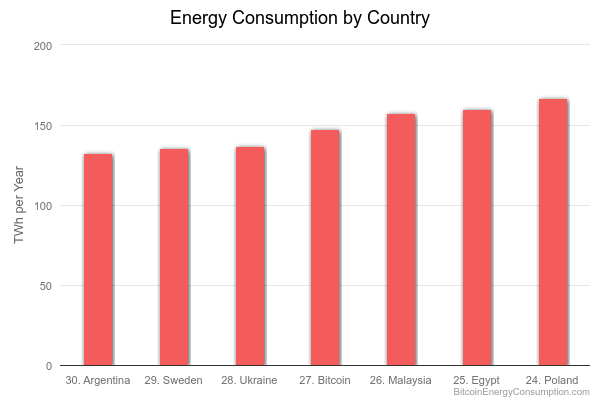
As concerns about environmental damage and climate change are spreading all over the world, the trend of developing more eco-friendly blockchain solutions is expected to gain more attention in 2024, as businesses seek to incorporate sustainability into their development strategy.
We expect a shift from the existing energy-consuming ‘proof-of-work’ consensus mechanism to greener alternatives such as ‘proof-of-stake’.
For example, Ethereum 1.0 uses proof-of-work but Ethereum 2.0 uses proof-of-stake.
Web 3.0 is at the forefront of the change, presenting a range of environmentally conscious and sustainable blockchains that mitigate the environmental consequences of the blockchain revolution.
Conclusion
As we stand at the threshold of 2024, several trends in the blockchain world are expected to emerge in the upcoming year, all of which surround the technology’s efficiency, transparency, and security.
Despite certain challenges that remain, the evolving landscape of blockchain presents intriguing opportunities for businesses with a forward-thinking vision.
Navigating this technology requires thoughtful consideration of the business’s short and long-term objectives, its existing security protocols, and the local regulatory frameworks to craft an effective implementation roadmap.
We hope this article has provided you with valuable insights into the potential of blockchain technology for your business, given the status quo.
If you are interested in exploring blockchain solutions to enhance your company’s competitiveness, please contact us for collaborative consulting sessions.
Var Meta would love to hear from you and help you tailor solutions specifically aligned with your unique goals.
References
- Binance (2023). Binance Research: Top Crypto Trends to Follow in 2024, available at: https://www.binance.com/en/blog/ecosystem/binance-research-top-crypto-trends-to-follow-in-2024-6158465596294182392
- Blockworks (2023). 2024 will be the year for stablecoins, available at: https://blockworks.co/news/2024-stablecoins-crypto-volatility
- CoinDesk (2023). How NFTs Will Make a Comeback in 2024, available at: https://www.coindesk.com/consensus-magazine/2023/12/22/how-nfts-will-make-a-comeback-in-2024/
- CoinTelegraph (2023). Hashing It Out: 2024 narratives — Layer-2 networks, available at: https://cointelegraph.com/news/hashing-it-out-2024-narratives-layer2-networks
- Datawallet (2023). Best AI Crypto Projects, available at: https://www.datawallet.com/crypto/best-ai-crypto-coins
- Digiconomist (2023). Bitcoin Energy Consumption Index, available at: https://digiconomist.net/bitcoin-energy-consumption
- ELITEX (2023). Exploring the Blockchain Trends and Innovations in 2024, available at: https://elitex.systems/blog/blockchain-technology-benefits/
- GegoSoft (2023). The Rise of SocialFi and PFP NFTs: Key Trends to Watch in 2024, available at: https://gegosoft.com/the-rise-of-socialfi-2024/
- Hattingh, S. (2023). Navigating the Blockchain Revolution in Banking: A 2023 Perspective, available at: https://www.linkedin.com/pulse/navigating-blockchain-revolution-banking-2023-stephan-hattingh-hrelc/
- Investopedia (2023). Bitcoin Has a Regulation Problem, available at: https://www.investopedia.com/news/bitcoin-has-regulation-problem/
- McKinsey & Company (2023). What is proof of stake?, available at: https://www.mckinsey.com/featured-insights/mckinsey-explainers/what-is-proof-of-stake
- Statista (2023). Number of cryptocurrencies worldwide from 2013 to December 2023, available at: https://www.statista.com/statistics/863917/number-crypto-coins-tokens/
- Tradedog (2023). Unveiling the Future of GameFi: Trends and Outlook for 2024, available at: https://tradedog.io/unveiling-the-future-of-gamefi-trends-and-outlook-for-2024/
Blockchain trends and challenges in 2024: Infographic