In March 2021, Christie’s sold a digital collage by the artist Beeple for $69.3 million, the third highest price ever paid at auction for a living artist’s work. The sale set off a stampede into NFTs, non fungible tokens that promised to fix something the art world had struggled with for centuries: proving who actually owns a piece, and where it came from.
Four years later, the numbers tell a different story. Art NFT trading volume has fallen more than 90 percent from its 2021 peak, Christie’s shut down its dedicated digital art department in September 2025, and the once prominent NFT Paris fair was cancelled outright. Yet at the same fairs and auction houses pulling back from speculative tokens, digital art now ranks third in collector spending, behind only painting and sculpture.
Why Blockchain and Art stopped meaning just NFTs
For most of the last five years, blockchain and art was shorthand for buying a JPEG and hoping someone would pay more for it later. That framing missed what blockchain is actually built to do. At its core, a blockchain is a shared ledger maintained by a distributed network of computers rather than a single company or institution. Every entry is timestamped, linked to the one before it, and extremely difficult to alter after the fact.
SMU’s Meadows School of the Arts frames this well: the decentralized nature of the technology removes the need for a central gatekeeper while making tampering far harder to pull off. For a market that has historically run on paper certificates, word of mouth, and gallery reputation, that combination of permanence and transparency has obvious uses well beyond minting collectibles, especially for proving where a piece came from and who has owned it since.
How blockchain verifies an artwork’s history
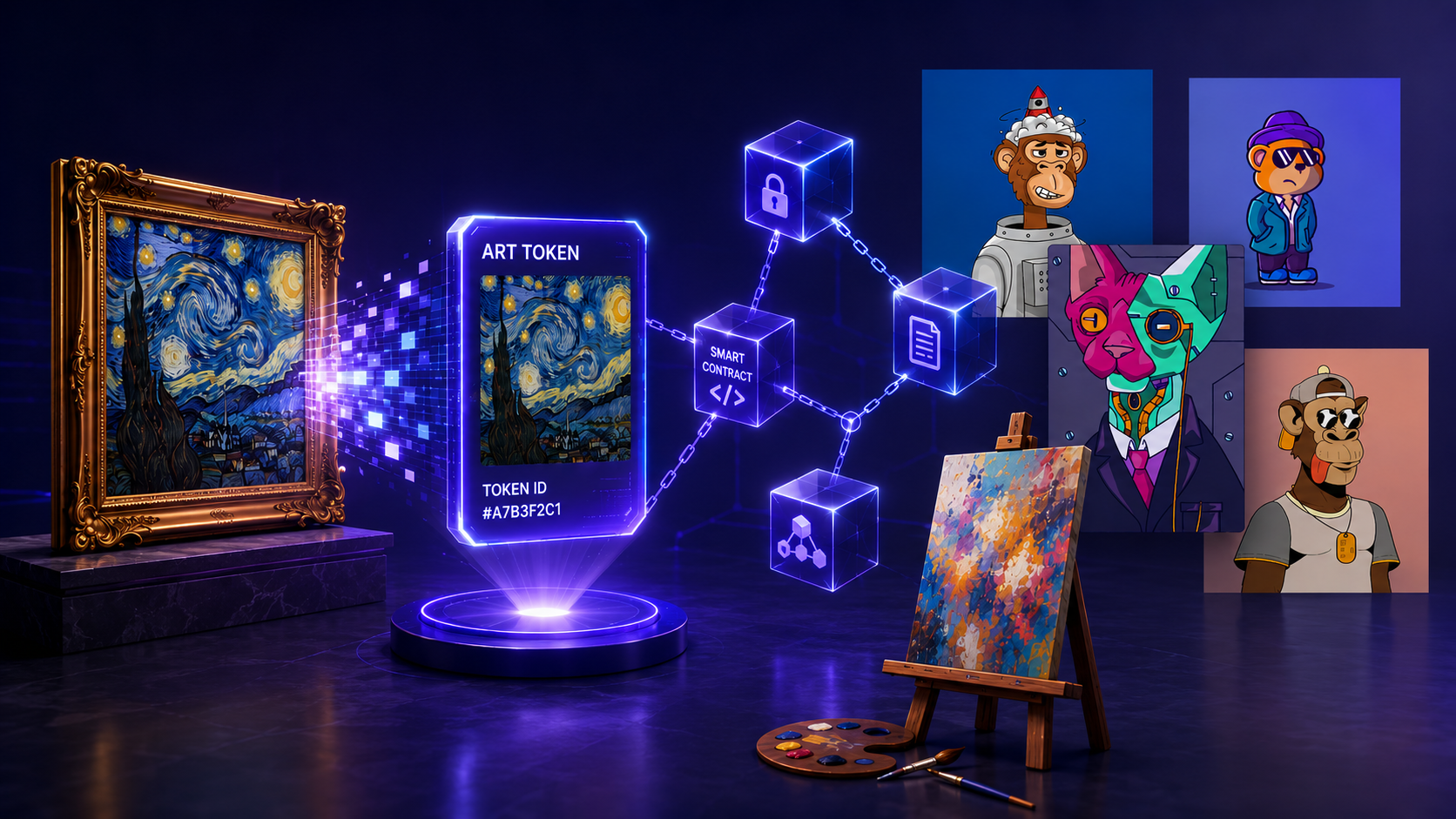
Provenance, the documented history of who created and owned a piece, is what separates a multimillion dollar painting from a worthless forgery. Paper records get lost, altered, or never created in the first place, which is part of why art fraud remains such a persistent problem.
Several platforms have spent close to a decade building blockchain based alternatives. Verisart, launched in 2015, lets artists and collectors generate permanent certificates of authenticity recorded on the Bitcoin blockchain, combining museum cataloguing standards with image recognition to flag potential fakes. Artory runs a similar registry aimed at galleries and auction houses. This certification layer, more than minting collectibles, is where blockchain and art actually intersect for collectors and insurers.
The approach has moved well past startups experimenting on the fringes. The State Hermitage Museum has used blockchain to record ownership and exhibition history for select works, the Metropolitan Museum of Art has paired blockchain certificates with AI image analysis to verify provenance, and Sotheby’s has used blockchain platforms to create tamper resistant transaction records. The print platform Avant Arte went a step further and partnered with Verisart so every limited edition print ships with a QR code linking to a blockchain timestamped certificate, alongside the physical paperwork collectors already expect.
None of this requires an artwork to exist only as a digital file. A two hundred year old oil painting can have its modern ownership chain recorded on a ledger just as easily as a piece created natively in code, which is the part of blockchain and art that has quietly outlasted the NFT crash.
Two kinds of tokenized art
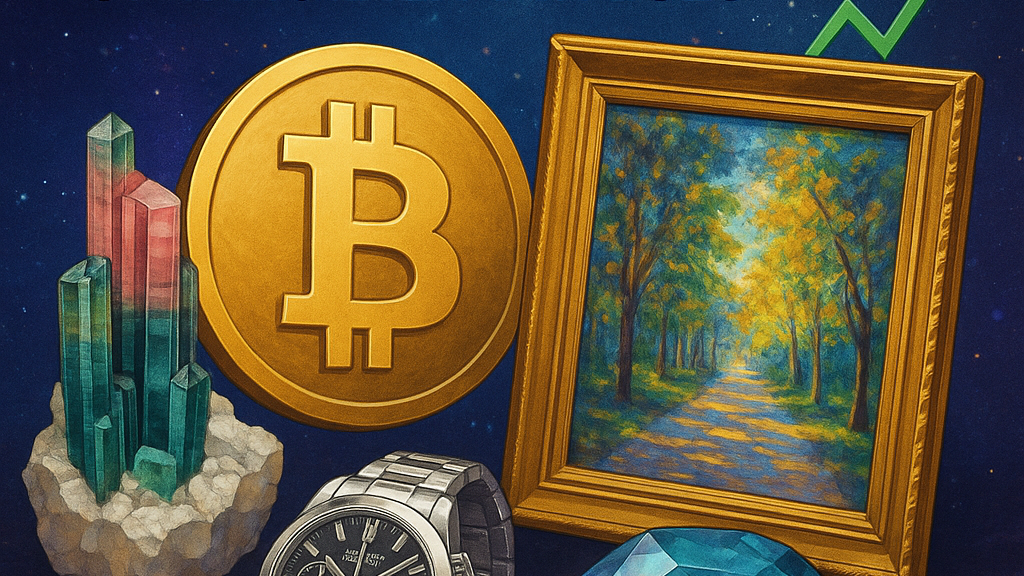
Tokenizing art covers two genuinely different ideas, and mixing them up is where a lot of confusion comes from.
The first is minting the artwork itself as a token, an NFT, where the token and the piece are effectively the same thing in digital form. This is what most people picture when they hear the term, and it’s also the version that crashed hardest after 2021.
The second is tokenizing ownership of a physical or high value piece, splitting a single artwork into tradeable shares the way a company splits equity into stock. A painting worth several million dollars becomes accessible to collectors who could never afford the whole piece, and the underlying asset gains a liquid secondary market it never had as a single illiquid object. Of the two models, this fractional version is the more commercially durable use of blockchain and art once speculative trading dies down.
This second model overlaps heavily with general asset tokenization work happening across real estate and other illiquid markets. It’s also where firms building blockchain infrastructure, including Varmeta’s tokenization platform, tend to spend their engineering time: designing the token standards, custody arrangements, and compliance layers that let an asset be split and traded without the legal ambiguity that has historically kept fine art a buy and hold, full ownership market.
The NFT art market in numbers
Numbers cut through the noise better than sentiment does.
| Year | Art NFT trading volume | What was happening |
| 2021 | $2.9 billion | Beeple’s “Everydays” sells for $69.3M at Christie’s, triggering the boom |
| 2022 | ~$2.4 billion (sales count up 31% year over year) | Active traders peak at over 529,000 |
| 2023 | Down 63% from the 2022 peak | Average art NFT price bottoms out around $475 |
| 2024 | $197 million | Trading volume down 93% from the 2021 high |
| Q1/2025 | $23.8 million | Active traders fall 96% from the 2022 peak, to under 20,000 |
Source: Dappradar’s 2025 art NFT market analysis
The broader NFT market followed a similar curve. Total NFT transaction volume across all categories fell to $5.5 billion in 2025, down 37 percent from 2024, and total market value dropped from roughly $9 billion to about $2.4 billion. Art specific NFTs, the speculative collectibles that made headlines in 2021, were hit hardest of all. Set side by side, these figures show blockchain and art splitting into two separate markets moving in opposite directions.
None of that erased blockchain’s role in the art world, though. The Art Basel and UBS Survey of Global Collecting found that 51 percent of high net worth collectors bought digital artwork in 2024 or 2025, and that digital art now ranks third in total collecting spend, behind only painting and sculpture. The two trends aren’t contradictory. Collectors backed away from speculative tokens and toward digital art with the curatorial backing of galleries and fairs, while the blockchain infrastructure underneath kept running.
Smart contracts and the royalty problem
In most art markets, an artist earns money once, at the first sale. If that piece later resells for ten times the price at auction, the original creator typically sees none of it. France and a handful of other countries enforce a resale royalty right by law, but the United States and most of Asia do not.
Smart contracts, code that executes automatically when predefined conditions are met, give artists a way to build royalty payments directly into a token rather than waiting on legislation. As SMU’s overview puts it, artists can embed a royalty percentage into the contract itself, so a cut of every resale routes back to them automatically, without a gallery, auction house, or government program in between.
Hedera’s token service goes a step further by enforcing royalty and fallback fee configurations at the network level rather than inside a smart contract a buyer could theoretically bypass, which is why creator marketplaces built on the network advertise immutable royalties as a core feature. It’s a small mechanical change with a real effect: a working artist gets paid every time their piece changes hands, not just the first time. Royalty enforcement like this is one of the clearest commercial arguments for combining blockchain and art in the first place.
Why the underlying network matters
Not all blockchains are equal for this kind of work, and the difference shows up in cost and environmental impact long before it shows up in headlines. Minting a single NFT on early Ethereum could burn over 140 kilowatt hours of energy, which is a large part of why NFTs picked up a reputation as an environmental liability. Energy cost remains one of the most debated tradeoffs in any serious discussion of blockchain and art.
Networks built around more efficient consensus mechanisms tell a different story. A University College London study found Hedera to be the most sustainable public ledger measured by energy consumed per transaction, and the network has committed to running carbon negative through quarterly carbon credit purchases. Minting an NFT collection on Hedera costs around a dollar, minting an individual piece costs five cents, and transferring it costs a fraction of a cent, with fees that stay fixed regardless of network congestion.
That combination of low, predictable cost and a carbon negative footprint is why LG built its Art Lab platform on Hedera rather than a proof of work chain, citing sustainability as the deciding factor. For galleries and creators weighing where to build, the underlying network’s fee structure and energy profile end up mattering as much as the art itself. It’s also why teams designing NFT and tokenization products, including those working with Varmeta’s blockchain development services, increasingly pick infrastructure based on these economics rather than brand recognition alone.
What blockchain doesn’t solve
None of this fixes art’s older problems, and a few new ones have been layered on top.
Buying an NFT does not automatically transfer copyright. Most marketplace terms make clear that purchasers acquire a token, not the underlying intellectual property, a distinction that has confused plenty of collectors who assumed ownership meant the same thing it does for a physical painting. Tax treatment, securities classification, and consumer protection rules for tokenized art remain unsettled in most jurisdictions, which is why regulatory clarity still shows up as an open challenge rather than a solved one in most serious reviews of the technology. These are the unresolved edges of blockchain and art that no certificate or token can paper over.
Wash trading, where the same trader buys and sells a token between their own wallets to inflate apparent demand, was rampant during the 2021 to 2022 boom, which is part of why volume figures from that period should be read with some skepticism. And tokenizing a record of ownership does nothing to verify that the underlying physical object hasn’t been damaged, restored, or swapped. The blockchain entry is only as accurate as the person who made it. Treating the technology as a fraud proof system rather than a transparency tool is the most common way people get burned.
The practical takeaway for 2026
It helps to treat blockchain and art as two separate questions that happen to share infrastructure. The first question, can a token’s price go up, is speculation, and the last four years answered it clearly enough. The second question, can a shared ledger make ownership, authenticity, and royalty payments harder to fake, is closer to settled, and it’s the version of blockchain and art that museums, galleries, and platforms keep building on quietly while the market figures out what NFTs are actually worth.
For artists and collectors deciding where to spend time in 2026, the more useful question isn’t whether to buy a token. It’s whether the platform behind it is solving an actual provenance, royalty, or access problem, or just repackaging the same speculation that already crashed once.
FAQs
1. What is the connection between Blockchain and Art?
Beyond digital collectibles, blockchain acts as a permanent, digital ledger for the art world. It creates unchangeable digital certificates that track an artwork’s history, origin, and ownership, making fraud and forgery much harder to pull off.
2. Is blockchain art only for digital JPEGs?
No. While it started with digital art (NFTs), blockchain is now widely used for physical art. A centuries-old oil painting can have its ownership and exhibition history recorded on a blockchain just as easily as a digital file.
3. How does fractional art ownership work?
Fractional ownership splits a high-value artwork into digital shares, much like company stock. This allows multiple collectors to own a piece of a million-dollar painting, making the fine art market accessible to everyday investors.
4. Can artists actually make money from resales using blockchain?
Yes, through smart contracts. Artists can embed a permanent royalty percentage into the digital record. Whenever the artwork is resold in the future, a cut of the sale is automatically sent directly to the artist’s wallet.
5. Does buying an art NFT mean you own the copyright?
No. Buying an NFT usually means you own the token representing the artwork, not the intellectual property (IP) itself. The artist typically retains the copyright and commercial rights unless stated otherwise in a legal contract.