If you are a retailer, you know that it generates enormous amounts of data as products move through manufacturers, distributors, warehouses, logistics providers, and stores before reaching customers.
Unfortunately, these records often live in separate systems that do not communicate effectively, which creates delays, mismatched data, and time-consuming reconciliation work. This challenge is exactly what blockchain in retail aims to solve.
By introducing a shared digital ledger, blockchain allows supply chain partners to record transactions in a single verified system that everyone can trust. Growing interest and expanding investment across the blockchain in retail industry show how retailers are adopting blockchain to improve traceability, transparency, and coordination.
What is Blockchain in Retail and How It Works
Blockchain in retail is a distributed ledger system that records product movements, transactions and supply chain events in a shared digital database.
In simple terms, it helps to look at how retail data normally moves between companies. A product may pass through manufacturers, distributors, logistics providers, warehouses, and stores before reaching the customer. Each participant records its own version of events, which often leads to fragmented information and time-consuming reconciliation between partners.
Blockchain introduces this shared ledger where supply chain participants record transactions and product movements in a consistent format. Every entry is verified and linked to previous records, creating a transparent and tamper-resistant history of events. Here is how it works in practice:
- A supplier records a shipment on the blockchain network.
- A logistics provider updates transportation and delivery status.
- Warehouses record inventory arrivals or transfers.
- Retailers record sales or product distribution.
- Each update becomes a new verified block in the shared ledger.
Because all authorized partners access the same system, retailers gain reliable visibility into product movement and transaction history across the supply chain.
Blockchain in Retail Market: Growth, Investment, and Industry Value
Interest in the blockchain in retail sector has grown significantly as retailers search for ways to improve transparency and coordination across complex supply chains. Retail operations often involve dozens of organizations that must exchange information reliably, which makes distributed ledger systems particularly useful.
According to experts, the global blockchain in retail market is expected to reach about $62.6 billion by 2029, reflecting growing investment in supply chain transparency, digital payments and retail data coordination systems.
Industry analysts expect strong growth in the blockchain in retail market as companies invest in solutions for product traceability, payment processing, compliance monitoring, and inventory coordination. According to Gartner, blockchain technology could generate more than $3.1 trillion by 2023, as adoption expands across industries, including supply chain management and retail.
As the blockchain industry worth continues increasing globally, retailers are recognizing blockchain as a practical infrastructure technology rather than an experimental concept.
Benefits of Blockchain Retail Solutions

Retailers experimenting with blockchain technology usually discover improvements across several operational areas simultaneously. Blockchain improves how information flows between suppliers, logistics providers, payment systems, and retail platforms. These improvements strengthen coordination between partners while reducing disputes and fraud risks.
Supply Chain Transparency and Product Traceability
Supply chain traceability represents one of the most valuable benefits of blockchain in retail. Every stage of the supply chain can be recorded on the ledger with timestamps and verification signatures. Research highlighted by McKinsey reveals that blockchain-based tracing systems reduce product investigation from days to seconds through a shared, verifiable record across supply chain partners.
Retailers gain a detailed record of where products originated and how they moved through distribution networks. If a quality issue or contamination occurs, companies can quickly identify the source and isolate affected products.
Stronger Fraud and Counterfeit Protection
Counterfeit goods represent a major challenge in many retail sectors, especially in luxury goods, electronics, and pharmaceuticals. Blockchain assigns products digital identities stored on a secure ledger, which makes it easier to verify authenticity.
Retailers and customers can scan digital identifiers connected to the blockchain record, confirming that the product matches its original manufacturing details.
Faster and More Transparent Transactions
Retail payment systems often involve multiple intermediaries, including banks, clearing services, and payment processors. Blockchain networks enable direct transactions between participants on a peer network.
These transactions become permanently recorded on the ledger, improving transparency while reducing settlement delays.
Better Inventory Visibility and Coordination
Retailers frequently struggle to maintain consistent inventory records across warehouses, fulfillment centers, and stores. Blockchain systems allow inventory updates to appear as shared events across the network.
Because all participants reference the same ledger, inventory discrepancies decrease, and retailers gain clearer visibility into product movement.
Improved Customer Engagement and Loyalty Programs
Blockchain also introduces new possibilities for loyalty systems. Retailers can issue tokenized rewards stored in blockchain wallets rather than isolated databases.
Customers gain transparent access to reward balances while retailers gain better insight into engagement patterns.
Major Blockchain Applications in Retail
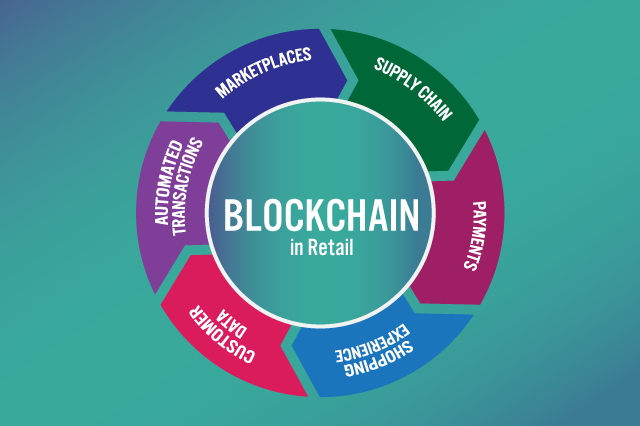
Retailers usually adopt blockchain for specific operational purposes rather than broad technology experimentation. The most common applications involve supply chain transparency, payment coordination, loyalty systems, and product authentication.
Supply Chain Transparency
Supply chain transparency represents one of the earliest blockchain implementations within retail. Companies use distributed ledgers to record each step of product movement, allowing partners to track goods from origin to store shelves.
Large retailers such as Carrefour use blockchain traceability systems that allow customers to scan QR codes on food products and view information about farms, harvest dates, transportation routes, and quality checks. The system helps the company monitor supplier activity while giving shoppers more transparency about where their food comes from.
Another example comes from Nestlé, which has implemented blockchain tracking for several food products through the OpenSC platform. By recording supply chain data on blockchain networks, Nestlé can verify sourcing information and improve visibility across global distribution operations.
Anti-Counterfeiting and Product Authentication
Counterfeit goods remain a major concern in luxury retail, electronics, and pharmaceuticals. Research explains that blockchain can help reduce fraud and counterfeiting by creating verifiable digital records of product origin, ownership, and activity across multiple organizations. So, blockchain systems help address this problem by assigning each product a digital identity that records manufacturing details and history.
Luxury brands such as LVMH, Prada, and Cartier launched the Aura Blockchain Consortium, which provides digital product passports for luxury goods. Each item receives a blockchain-based identifier that stores information about origin, materials, and production history. Customers can verify authenticity by scanning product identifiers linked to the blockchain record.
Payment Processing and Digital Transactions
Blockchain networks also support digital payments and supplier settlements across retail ecosystems. Instead of relying entirely on traditional financial intermediaries, distributed ledger systems allow businesses to record payments and financial transactions on shared networks.
American Express has experimented with blockchain systems that allow merchants to create blockchain-enabled reward programs connected to cardholder transactions. These systems record payment information securely while allowing retailers to track reward activity and transaction data.
Loyalty Programs and Customer Data
Retail loyalty programs often operate across fragmented databases, which makes it difficult for customers to track rewards and redemption activity across multiple brands. Blockchain-based loyalty platforms allow companies to record reward points on a shared ledger that multiple partners can access.
Singapore Airlines developed a blockchain-based loyalty wallet called KrisPay, which allows customers to convert frequent flyer miles into digital tokens. These tokens can be spent instantly with participating retail partners, creating a more flexible rewards ecosystem.
Another example involves Starbucks, which experimented with blockchain-based payment and loyalty systems through its partnership with the Bakkt digital asset platform. The system explored how blockchain infrastructure could support digital payments and customer rewards within retail environments.
Inventory and Logistics Tracking
Inventory coordination improves significantly when logistics partners record stock movements on a distributed ledger. Each time products move between warehouses, distribution centers, or stores, the event can be written to the blockchain ledger.
Shipping and logistics companies such as Maersk have experimented with blockchain systems that track cargo movements across international supply chains. Retailers benefit from these systems because shipment updates become visible across partners in real time.
Another example comes from Walmart Canada, which uses blockchain technology to track freight shipments and automate payment reconciliation for trucking partners. Recording logistics data on blockchain networks helps reduce disputes between carriers and improves visibility across transportation operations.
In these systems, questions such as who stores blockchain data become easier to answer because each participating node maintains a copy of the ledger. This distributed structure improves transparency and prevents a single organization from controlling the historical record of product movement across the supply chain.
Real-World Examples of Blockchain in Retail
Retailers are increasingly applying blockchain in retail to practical operational challenges rather than treating the technology as an experimental pilot. Companies are using distributed ledger systems to improve product traceability, manage supplier relationships, verify sustainability claims, and create new digital commerce models. These real deployments show how blockchain can support transparency and coordination across complex retail ecosystems.
One example comes from Alibaba, which uses blockchain technology to help verify product authenticity across its global e-commerce platforms. Through the company’s AntChain blockchain network, Alibaba records product information and supply chain data for certain imported goods. Customers can scan product codes to confirm origin information and verify that items entering the marketplace match their manufacturing records.
Another notable implementation comes from Nike, which launched a blockchain-based system called CryptoKicks. The platform links physical sneakers to digital blockchain tokens that verify product ownership and authenticity. When customers purchase certain limited edition footwear, the blockchain record stores ownership information and product details. This approach helps reduce counterfeit goods in resale markets while giving buyers a verifiable digital certificate tied to the product.
Provenance, a technology company working with retail brands, has also partnered with companies such as Unilever to track ethically sourced products. Using blockchain records, the platform documents sourcing information for ingredients such as palm oil and tea. Retailers can then provide verified sustainability data to consumers who want transparency regarding how products were produced.
Finally, fashion retailer H&M has tested blockchain-based supply chain transparency through partnerships with technology providers that record supplier information and manufacturing data on distributed ledgers. These systems allow the company to monitor sourcing practices and improve visibility into production networks.
These examples show how blockchain in retail sector deployments are expanding across ecommerce, fashion, food retail, and consumer goods industries. Instead of replacing existing infrastructure, blockchain systems often operate alongside traditional retail platforms to verify product data, improve transparency, and strengthen trust between companies and customers.
Step-by-Step Blockchain Implementation Process for Retailers
If you plan to adopt blockchain in retail, implementation works best when approached in structured stages.
- Identify a business problem where shared data verification provides measurable value.
- Decide which data belongs on the chain and which information remains in traditional databases.
- Define network participants, permissions, and governance responsibilities.
- Select a blockchain platform aligned with operational requirements.
- Map supply chain workflows and define events that will be recorded on the ledger.
- Launch a pilot project connected to existing retail systems.
- Introduce smart contract automation carefully and test operational scenarios.
- Expand the network gradually as partners join the ecosystem.
Challenges and Criticism of Blockchain in Retail
Despite growing enthusiasm around blockchain adoption, retailers still face practical challenges when implementing distributed ledger systems. Many organizations evaluate both benefits and limitations before committing to large-scale deployments.
Why Blockchain Is Bad for Some Retail Use Cases
In certain situations, traditional databases perform the same functions faster and at lower cost. This explains why debates around why blockchain is bad appear in technology discussions.
If a workflow does not involve multiple independent organizations requiring shared verification, the decentralization offered by blockchain may introduce unnecessary complexity.
Technical and Organizational Barriers
Retail systems already depend on ERP platforms, logistics software, and payment networks. Integrating distributed ledger technology into those environments requires significant engineering work.
Another challenge involves ecosystem participation. Blockchain supply chain systems only work when multiple partners contribute data. Questions about who owns blockchain technology networks and governance structures can slow adoption.
Blockchain Security and Data Integrity in Retail Systems
Security and data integrity are major reasons retailers explore blockchain in retail adoption. Retail supply chains generate large volumes of transactional data that must remain accurate and tamper-resistant.
Blockchain records each transaction with cryptographic verification and timestamps. Once written, altering the record requires consensus from the network rather than access to a central database.
Because data is distributed across nodes, the system remains resilient even if one server fails. This architecture provides retailers with stronger protection against fraud, manipulation, and accidental data loss.
Conclusion
Retail operations depend on accurate information, moving slowly between suppliers, logistics providers, warehouses and stores. When those systems operate separately, it becomes harder to verify product origins, track inventory or manage transactions across partners. Blockchain in retail provides a shared record that helps retailers maintain transparency and consistency across these processes.
As more companies experiment with blockchain based solutions for traceability, payments and loyalty systems, the technology is becoming a practical infrastructure layer for connected retain ecosystems.
So, if your company is exploring blockchain in retain industry solutions, our blockchain services can help you design and implement systems that improve supply chain visibility, security and operational coordination.
FAQs
1. How expensive is it to implement blockchain in retail systems?
The cost of implementing blockchain in retail depends on the size of the network and the complexity of the use case. Small pilot projects that track a limited product category can start with relatively modest investments, especially when retailers use existing blockchain platforms. Larger deployments that connect supplies, logistics providers and retail systems, however, need more development work, integration with ERP and inventory systems, and long-term infrastructure planning.
2. Do retailers need all supply chain partners to adopt blockchain at the same time?
No. Retainers usually begin with a small group of partners instead of attempting full ecosystem adoption immediately. Early blockchain projects often involve a limited number of suppliers or logistics providers participating in a pilot program. After the system proves useful and operational, processes become clearer and additional partners join the network gradually.
3. Can blockchain integrate with existing retail systems like ERP and POS platforms?
Yes. Most blockchain in retail industry deployments are designed to operate alongside existing retail infrastructure rather than replace it. Retailers typically continue using ERP systems, point of sale platforms, warehouse management software and ecommerce systems as their operational backbone. Blockchain acts as a verification layer that records important events such as shipments, payments and product authentication while existing systems continue managing day to day transactions.