Blockchain wallets have become a structural layer of the digital asset economy. They are no longer limited to retail crypto users but increasingly serve fintech platforms, Web3 startups, gaming ecosystems, and enterprise tokenization initiatives. Whenever users interact with a blockchain network, the wallet is the system that authorizes and executes those actions.
For organizations building a blockchain wallet, the challenge extends beyond interface design. A production-grade wallet must integrate cryptographic key control, secure transaction signing, multi-chain compatibility, resilient infrastructure, and compliance awareness. Each architectural decision influences risk exposure, scalability, and long-term maintainability.
This article provides a structured examination of blockchain wallet architecture, from foundational concepts to real-world implementation considerations.
What is a Blockchain Wallet?

A blockchain wallet is a software application or hardware device that enables users to manage cryptographic keys and authorize transactions on a blockchain network. Contrary to common belief, it does not store digital assets directly. Instead, assets are recorded on distributed ledgers, and the wallet controls the private keys that grant access to those assets.
According to the Ethereum Foundation, a wallet allows users to create accounts, sign transactions, and interact with decentralized applications on the Ethereum network.
At its core, a blockchain wallet performs three primary functions:
- It generates and manages private keys.
- It derives public addresses used for receiving assets.
- It constructs and signs transactions for blockchain validation.
This separation between asset storage and key control is critical. If a private key is compromised, access to assets is compromised. If it is lost, access is permanently lost in non-custodial systems. Understanding this principle provides the foundation for examining wallet architecture in greater depth.
Types of Blockchain Wallets and Custody Models
Blockchain wallets differ significantly depending on custody structure, key storage model, and infrastructure design. These differences directly affect security posture, regulatory exposure, and operational complexity.
Below is a detailed architectural comparison.
| Wallet Model | Key Control | Primary Risk Layer | Infrastructure Demand | Best Fit For |
| Non-Custodial | User controls private keys locally | User device & phishing risk | Moderate (RPC + indexing) | Web3-native apps |
| Hybrid Non-Custodial | User-controlled keys with encrypted cloud backup | Shared between device and cloud | High (encryption + sync backend) | Fintech onboarding |
| Custodial | Provider manages keys centrally | Institutional breach risk | Very high (secure server clusters) | Exchanges, trading platforms |
| Multi-Signature | Keys distributed across multiple parties | Governance –
dependent |
High (approval orchestration) | DAOs, treasury management |
Non-Custodial Wallet Architecture
In a non-custodial architecture, users retain exclusive control over their private keys. The provider facilitates interaction with blockchain networks but does not have access to user assets.
Core characteristics:
- Private keys generated and stored on the user’s device
- Seed phrase required for wallet recovery
- Transaction signing executed locally
- No centralized key vault maintained by the provider
This model aligns with decentralization principles and reduces institutional liability, since asset custody remains entirely with the user. However, responsibility shifts toward the end user, making phishing attacks, malicious smart contract approvals, and poor seed phrase management the dominant risk vectors. Although custody is client-side, the wallet still relies on backend RPC providers and indexing services for transaction broadcasting and balance display. Therefore, even non-custodial systems require disciplined infrastructure management to maintain reliability and user trust.
Hybrid Non-Custodial Architecture
Hybrid models seek to reduce user friction while preserving user-controlled key ownership. They introduce encrypted cloud backup or recovery assistance mechanisms without granting direct key access to the provider.
Core characteristics:
- Keys remain user-controlled
- Encrypted key backups stored in secure cloud infrastructure
- Recovery facilitated through authentication mechanisms
- Backend encryption management required
This approach improves accessibility for mainstream users who may not be comfortable managing seed phrases independently. However, it expands the threat model. While providers cannot decrypt keys without user authorization, the cloud storage and authentication layers become part of the attack surface. Infrastructure complexity increases substantially, as backend services must securely manage encrypted data, enforce strict access controls, and implement continuous monitoring. Hybrid models are often chosen by fintech platforms that prioritize onboarding simplicity while maintaining partial decentralization.
Custodial Wallet Architecture
Custodial wallets centralize key management within institutional infrastructure. Users access their accounts through credentials rather than directly managing private keys.
Core characteristics:
- Private keys stored in centralized key management systems
- Access granted via account authentication
- Enterprise-grade security controls required
- Subject to financial compliance frameworks
This model simplifies onboarding and account recovery, making it attractive for exchanges and regulated platforms. However, it concentrates risk at the institutional layer. A breach of centralized key infrastructure can affect a large user base simultaneously. To mitigate this risk, custodial providers must deploy hardened server environments, hardware security modules, role-based access controls, and real-time monitoring systems. Compliance obligations, including AML and KYC procedures, further increase operational overhead.
Multi-Signature Wallet Architecture
Multi-signature architecture distributes signing authority across multiple private keys. Transactions require approval from a predefined threshold of key holders before execution.
Core characteristics:
- Multiple private keys required for authorization
- Threshold-based signing logic
- Governance-defined approval workflows
- Enhanced auditability and control
This model reduces single-point compromise risk by preventing unilateral access to funds. It is particularly suitable for institutional treasury management and decentralized governance systems. However, it introduces operational complexity. Signing coordination, policy enforcement, and audit tracking mechanisms must be carefully implemented. While security resilience improves, workflow latency and governance overhead increase accordingly.
Production Architecture of a Blockchain Wallet
A production blockchain wallet integrates three tightly connected architectural layers: security architecture, multi-chain design, and operational infrastructure. These layers cannot be treated independently because decisions in one layer directly affect the others.
Security Architecture and Key Management
Security architecture begins with cryptographic key generation. Private keys must be generated using secure entropy and stored with hardware-backed encryption wherever possible. On mobile platforms, this typically involves Secure Enclave on iOS and Keystore on Android.
Most modern wallets implement hierarchical deterministic key derivation as described in Bitcoin Improvement Proposal 32. This standard enables multiple addresses to be derived from a single seed phrase while maintaining deterministic structure.
The use of a seed phrase simplifies account recovery but centralizes risk. The seed phrase becomes the master credential capable of regenerating all associated keys. Secure wallet design therefore requires encrypted storage, optional biometric access control, and clear warnings regarding seed phrase exposure.
Transaction signing is equally critical. When users authorize transfers or smart contract interactions, the wallet must present clear transaction summaries. Blind signing remains one of the primary causes of asset loss. Human-readable approval screens reduce this risk.
For enterprise environments, additional security layers such as multi-signature approval flows may be introduced. Multi-signature wallets distribute signing authority across multiple private keys, reducing single-point compromise risk.
Multi-Chain Design and Network Abstraction
Multi-chain support significantly increases architectural complexity. Even EVM-compatible chains differ in gas calculation, node endpoints, and network identifiers. Non-EVM networks require distinct transaction encoding and signature models.
A scalable wallet architecture separates the wallet core from network adapters. The wallet core manages key derivation and signing logic. Network adapters handle chain-specific parameters such as:
- Transaction encoding format
- Fee estimation models
- Chain identifiers
- RPC broadcasting logic
Replay protection and nonce management must be handled accurately for each network. Misconfigured chain identifiers can lead to transaction failures or unexpected behavior.
User interface design must clearly indicate the active network. Many users mistakenly transfer assets across incompatible chains due to unclear network context. Proper validation logic reduces cross-chain errors.
Multi-chain architecture therefore requires modular code structure, extensive testing across networks, and well-defined abstraction boundaries.
Infrastructure and Operational Reliability
Even non-custodial wallets rely on backend infrastructure for functionality. Wallets connect to blockchain nodes through RPC providers. Production deployments typically include multiple RPC endpoints with automated failover mechanisms to reduce downtime risk.
Balance display and transaction history tracking depend on indexing systems. Direct node queries for historical data are inefficient at scale. Teams must either integrate reliable third-party indexing providers or build internal indexing pipelines.
Infrastructure reliability also includes spam token filtering, monitoring dashboards, and rate-limit management. Wallet downtime or inaccurate balance display directly affects user trust.
The U.S. Federal Trade Commission emphasizes the irreversible nature of cryptocurrency transactions and the importance of secure handling practices.
Operational monitoring, incident response planning, and security audits are essential components of production wallet deployment.
Real-World Implementation: Orbit Digital Wallet by Varmeta
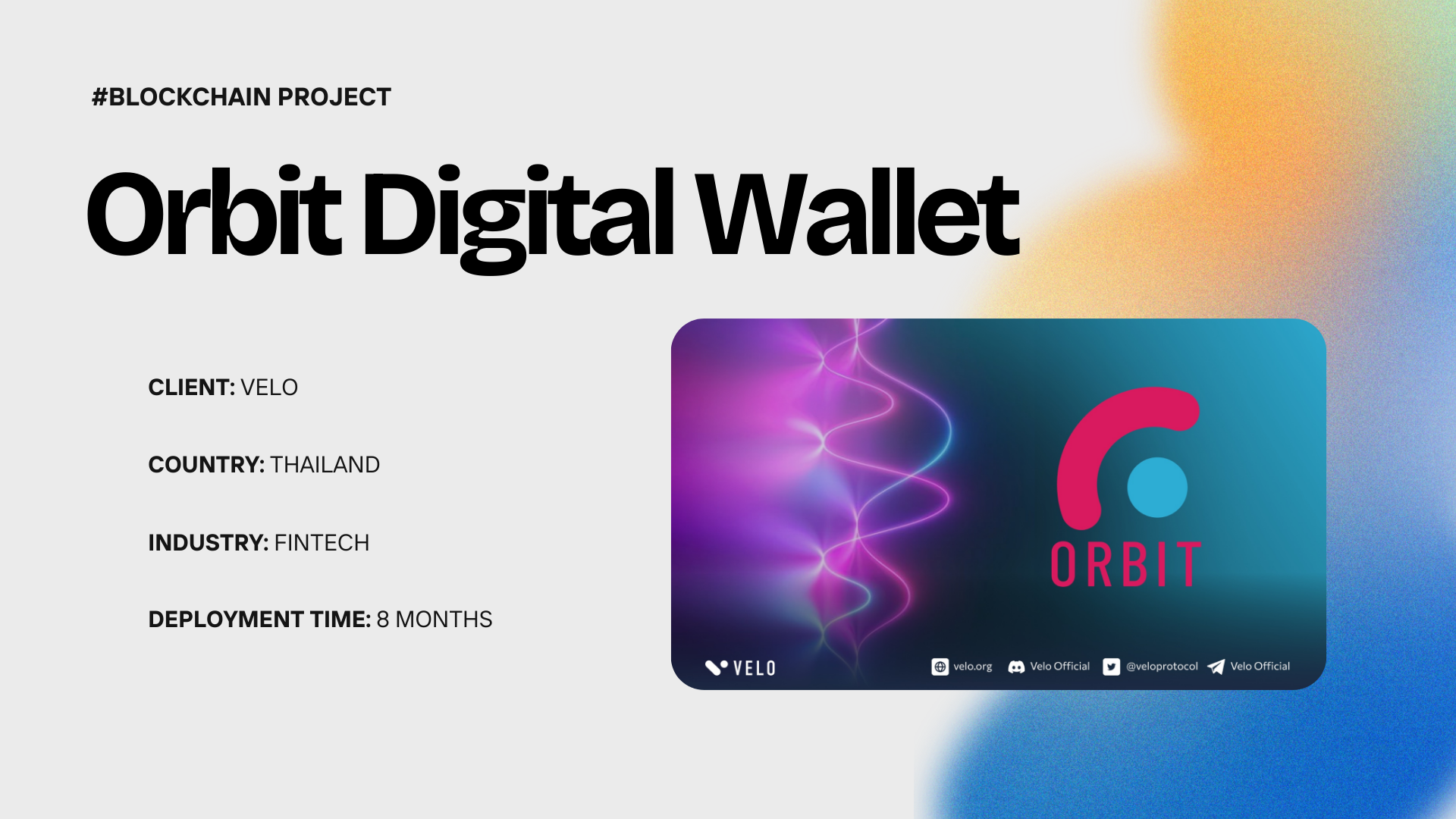
Orbit Digital Wallet, developed by Varmeta, provides a practical illustration of how production-level wallet architecture is implemented beyond theoretical design. The platform was built as a non-custodial, multi-chain wallet capable of managing digital assets across different blockchain networks while supporting smart contract interactions, token swaps, and real-time conversion mechanisms.
According to Varmeta’s blockchain development materials, Orbit enables cross-network asset management and smart contract-based transaction flows.
From an architectural perspective, the relevance of Orbit lies in three aligned decisions.
First, the wallet adopts client-side key management consistent with non-custodial security principles. Asset control remains with users, while transaction signing is executed locally, reinforcing the trust boundary discussed earlier in this article.
Second, multi-chain capability implies a modular separation between wallet core logic and network-specific adapters. Supporting cross-network transfers and smart contract execution requires structured abstraction layers rather than hardcoded integrations.
Third, features such as token swaps and real-time conversion indicate backend orchestration and reliable infrastructure support. Even in a non-custodial system, performance stability depends on resilient RPC connectivity and transaction indexing mechanisms.
Orbit demonstrates that a blockchain wallet becomes production-grade not because of feature count, but because security architecture, network abstraction, and infrastructure reliability operate coherently within a unified system.
Common Pitfalls in Blockchain Wallet Development
Building a blockchain wallet involves layered architectural decisions. When teams underestimate this complexity, recurring structural mistakes appear. These mistakes rarely stem from cryptographic theory; they usually arise from design shortcuts and misaligned priorities.
Treating the Wallet as a Front-End Feature
One common mistake is approaching wallet development as primarily a user interface problem. Teams focus on visual design, onboarding flows, and feature parity while overlooking key generation models, secure storage mechanisms, and transaction signing controls.
When cryptographic architecture is not treated as the core layer, vulnerabilities emerge silently. Weak entropy generation, improper key storage, or poorly designed signing logic can undermine the entire system regardless of how polished the interface appears. A blockchain wallet must be engineered from the key layer upward, not from the UI downward.
Expanding Multi-Chain Support Too Quickly
Multi-chain support is often pursued for marketing advantage. However, each additional chain introduces new transaction formats, fee estimation logic, and network-specific edge cases.
If infrastructure and monitoring are not stabilized first, rapid chain expansion increases operational complexity and testing overhead. Inconsistent nonce handling, gas miscalculations, or incomplete indexing logic can lead to failed transactions and degraded user trust. Multi-chain architecture requires modular abstraction and disciplined rollout, not feature stacking.
Weak Transaction Transparency and Approval Design
Many asset losses occur because users authorize transactions they do not fully understand. Wallet interfaces that display raw hexadecimal data or vague approval prompts create blind signing behavior.
Without clear contract method labeling, allowance visibility, and risk warnings, users may unknowingly grant unlimited token approvals. This issue is not purely technical; it is a UX-security integration failure. Transparent signing interfaces are as critical as secure key storage.
Insufficient Monitoring and Incident Preparedness
Even non-custodial wallets depend on RPC providers, indexing services, and backend infrastructure. When monitoring is minimal, outages can create cascading failures.
Lack of health checks, failover routing, and alert systems leads to delayed response during RPC downtime or network congestion. From a user perspective, a wallet that fails to display balances or broadcast transactions reliably appears insecure, even if cryptography remains intact.
A disciplined architectural approach addresses these pitfalls early. By prioritizing key management integrity, controlled multi-chain expansion, transparent signing interfaces, and resilient infrastructure monitoring, organizations can reduce structural risk before scaling their wallet product.
Frequently Asked Questions
1. What is a blockchain wallet?
A blockchain wallet is a digital wallet that users can use to store and manage Bitcoin, Ether, and other cryptocurrencies. A blockchain wallet allows cryptocurrencies and other digital assets to be transferred and converted back into the user’s local currency.
2. Can I withdraw money from a blockchain wallet?
Yes. You can transfer cryptocurrency to an exchange or payment provider that supports fiat conversion and complete a withdrawal process.
3. What’s the best blockchain wallet?
| Wallet | Type | Best For |
| Ledger Nano X | Hardware (cold wallet) | Security |
| MetaMask | Self-custody (software) | Ethereum |
| Exodus | Self-custody (software) | Beginners |
| Trezor Safe 7 | Hardware (cold wallet) | Advanced security |
4. Is a blockchain wallet safe?
Cryptocurrency wallets are safe when used responsibly. Their technology, including encryption, private keys, and blockchain validation, provides a high level of protection.
Conclusion
Building a blockchain wallet requires rigorous engineering across cryptographic key management, multi-chain abstraction, infrastructure reliability, and compliance awareness. Each architectural layer influences user trust and long-term scalability.
Production implementations such as Orbit Digital Wallet demonstrate how secure wallet architecture can be integrated with performance infrastructure and ecosystem growth features. As digital asset adoption expands across industries, the demand for secure, scalable blockchain wallet solutions will continue to grow.
Organizations that approach wallet development as a comprehensive architectural initiative rather than a simple application feature will be better positioned to deliver secure and resilient Web3 products.