When 4,700 athletes from 90 countries arrive in Danang this May for VNG Ironman 70.3, the event will not only bring international attention to the city but also serve as the setting for a real-world test of Vietnam’s emerging financial infrastructure.
A consortium of seven companies has integrated a blockchain-based cross-border payment system into the event’s sponsorship structure. The system is being deployed within Basal Pay’s Danang People’s Committee-approved payments sandbox, using VNG Ironman Vietnam as the live operational context. The results are designed to serve as a concrete, documented use case for compliant digital payments in Vietnam, and a template that can be replicated and expanded going forward.
Danang’s payments sandbox already has the legal framework and regulatory backing in place. What this pilot sets out to prove is that the infrastructure can operate end to end in practice: capital entering from abroad, circulating within the local economy, and recorded with a clear and verifiable compliance trail.
Why the Danang Sandbox needs this

Danang has been positioning itself as a hub for financial innovation, with sports tourism as its anchor economy. The legal foundation for this came quickly. Resolution No. 222/2025/QH15 came into force on September 1, 2025, establishing a sandbox mechanism that allows companies to test new financial products and business models in a controlled environment. Separately, the Danang People’s Committee approved its first payments sandbox trial for Basal Pay, a digital asset conversion project authorized to convert crypto to VND within the local sandbox environment.
Having a sandbox on paper and having infrastructure that works in practice are two different things. What the Danang sandbox needs is working pilots: real transactions, real compliance trails, and real tax documentation that regulators and global partners can examine. The key is demonstrating that digital currency can enter Vietnam, be processed transparently, meet regulatory requirements, and connect with the existing banking system without legal conflict. VNG Ironman Vietnam 2026 is the test case for exactly that. This pilot is an attempt to produce exactly that.
There is also a compliance dimension that makes this more pressing. Vietnam’s Law on the Digital Technology Industry and Resolution No. 05/2025/NQ-CP mark a significant shift, as digital assets are now legally recognized as property, crypto exchanges require licenses, and service providers must meet AML and counter-terrorist financing obligations aligned with international standards. This is partly driven by Vietnam’s need to exit the Financial Action Task Force (FATF) gray list, which it was placed on in 2023 due to gaps in its AML framework. Being on the gray list means higher due diligence requirements for foreign institutions dealing with Vietnam, resulting in more friction, higher costs, and slower transactions for all parties involved. Documented, compliant payment flows running through a licensed gateway are the most direct way to demonstrate that the system works as regulators require, and the Danang sandbox is the right environment to run them.
According to PwC Vietnam’s December 2025 analysis, total crypto holdings by Vietnamese are estimated at approximately USD 18 billion, projected to grow to USD 48–109 billion depending on how open the regulatory framework becomes, with Vietnam ranking second in ASEAN for crypto penetration after Singapore. The market is significant, the regulatory window is open, and practical use cases running through the sandbox are what will move Vietnam’s digital payments infrastructure forward.
Seven companies, one end-to-end system
Seven companies are involved, each covering a specific part of the stack with no overlap by design.
Sunrise Events Vietnam (SEV) provides the essential operational framework for the pilot’s deployment. As the event organizer, SEV facilitates the sandbox environment by coordinating with regulators, managing local vendor relationships, and ensuring the consortium’s systems integrate seamlessly into the live event infrastructure.
Hedera provides the underlying distributed ledger infrastructure, serving as the trust and settlement layer. The protocol is built for enterprise and regulated financial use cases and has prior experience working with regulators in multiple financial centers. Hedera’s Governing Council includes companies like Google, IBM, and Boeing, and the network has been used in live institutional contexts, including tokenized UK money market funds used as collateral in FX trades between Lloyds Banking Group and Aberdeen.
Animoca Brands is one of the most active investors in the Web3 ecosystem, focused on digital property rights, blockchain gaming, and ecosystem investments. Notably, through its recent joint venture Anchorpoint Financial Limited with Standard Chartered Bank (HK) and HKT, Animoca Brands was one of only two entities granted a stablecoin issuer licence by the HKMA in April 2026. They are contributing to this pilot as a digital assets sponsor, bringing both capital and institutional credibility to the consortium.
Hashpack handles digital asset custody and settlement within the Hedera ecosystem. Its relevance here is primarily technical, as Hashpack supports USDC, the stablecoin used by global banks for institutional settlement, in addition to USDT, giving the consortium access to both the local Vietnamese market standard and the global institutional standard in a single wallet infrastructure.
Basal Pay is the licensed local entity, holding a sandbox approval from the Danang People’s Committee to convert digital currency to VND and operate payments within the Danang sandbox. That license is what makes the flow legally operational rather than only technically possible, and very few companies in Vietnam currently hold an equivalent permission.
Open Campus, an Animoca portfolio company, is part of the consortium and is separately exploring education finance and credential use cases relevant to the IFC’s longer-term agenda. In Vietnam, Open Campus has already partnered with Luvia, in an initiative supported by the Ministry of Education and Training, to give Vietnamese students blockchain-verified credentials, initially targeting around 200,000 students across partner schools.
Varmeta represents a new generation of Vietnamese technology firms defined by strong R&D capabilities and international execution standards. With a strategic focus on emerging technologies such as Blockchain and AI, Varmeta has successfully built and deployed regulated systems across developed markets including Bitkub (Thailand’s largest digital asset exchange) and KLDX (Malaysia’s first SEC-licensed IEO exchange). Driven by a commitment to bring global expertise back to Vietnam, Varmeta is committed to playing a pivotal role in positioning Vietnam as a leading blockchain hub in the region, beginning with its role as the consortium’s primary systems architect for the country’s very first blockchain sandbox pilot.
As the local engineering lead for the Danang sandbox pilot, Varmeta handles the essential integration between global components and the Vietnamese operational environment. By connecting the protocol layer, compliance tooling, and wallet infrastructure directly to the event’s existing systems, Varmeta ensures that frontier technology functions seamlessly within a local context. Beyond the technical build, we serve as the on-the-ground technical authority, ensuring the system’s stability and scalability throughout the event’s lifecycle.
Why VNG Ironman Vietnam is the right test environment
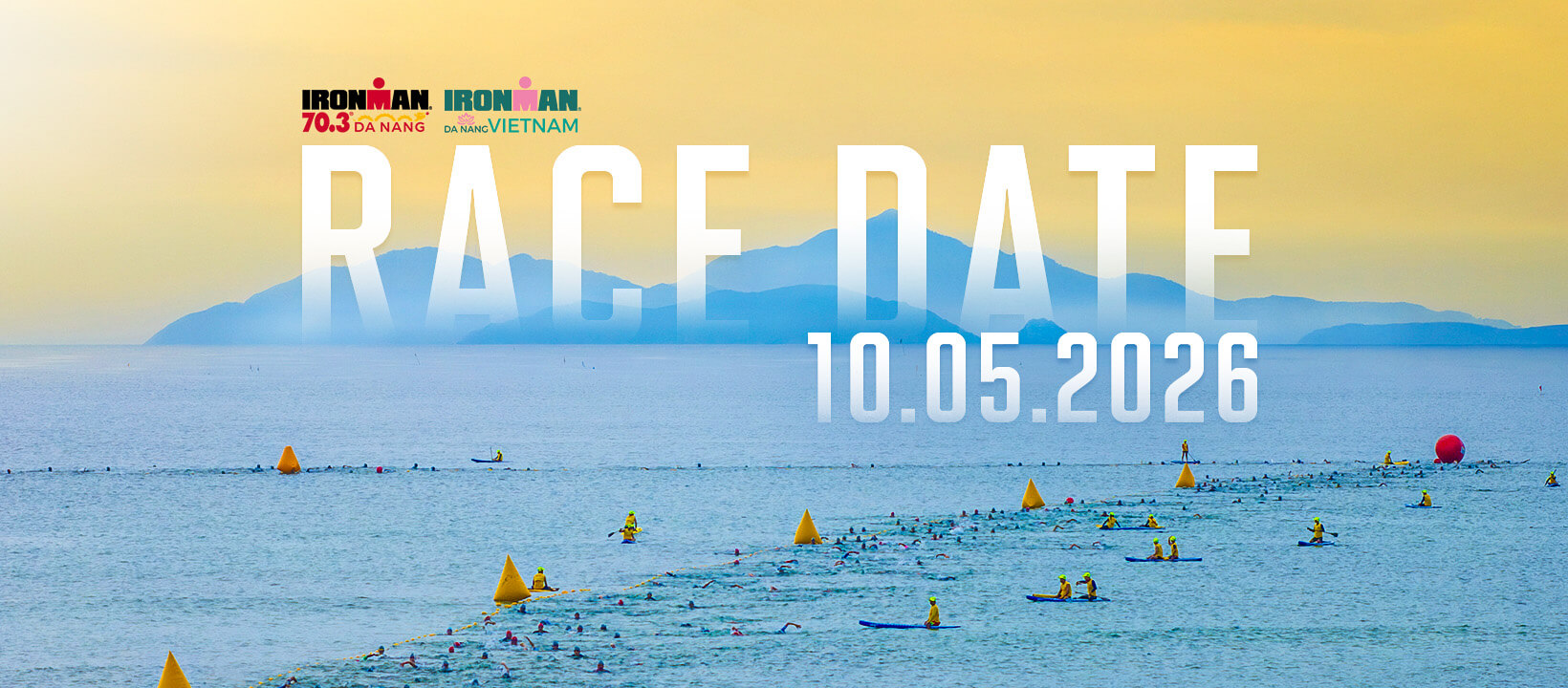
VNG Ironman Vietnam 2026 is a practical choice for this pilot for a straightforward reason: it brings international participants and sponsors with international money into Danang every year, within an established operational structure. It also creates a bounded context, covering a specific weekend, a specific set of vendors, and a specific sponsorship amount, that makes the pilot easy to document and straightforward to replicate.
The same architecture, covering compliant cross-border inflow, purpose-bound giving, and an audit trail for regulators, applies to any event or context where the right licensed entities, compliance infrastructure, and local engineering can be assembled together. VNG Ironman Danang is simply where that assembly is happening first. As Duane Morris Vietnam’s legal analysis of Decree 323 notes, Danang explicitly prioritizes digital infrastructure, digital assets, and payment connectivity for cross-border transactions, and this pilot demonstrates those capabilities running in a live setting.
Sports events also tend to attract the right audience for this kind of demonstration. VNG Ironman participants generally skew toward high-income, internationally mobile professionals, and the race weekend draws government officials, tourism partners, and corporate sponsors into the same space. Having live infrastructure running in the background while the relevant stakeholders are present makes for a more credible demonstration than a closed-door pilot would.
Additional use cases being explored beyond the pilot
The race weekend includes a 5k charity run associated with Newborns Vietnam, an organization that has spent over a decade reducing neonatal mortality across Vietnamese hospitals, beginning with a pilot at Danang’s Women and Children’s Hospital that reduced infant mortality by over 50% in its first two years. The consortium is exploring whether a portion of the sponsorship flow can be routed as a charitable donation using the same compliant infrastructure, adding a further documented use case for purpose-bound digital giving within the Danang sandbox.
Open Campus’s lending and credentialing infrastructure is also relevant to the longer-term agenda for digital finance in Vietnam, particularly for university students and early-career professionals in Danang who need access to education finance.
These are directions being explored rather than commitments for this event, and they become more feasible once the core infrastructure has been demonstrated to work reliably.
Conclusion
The race will be over in a matter of hours. The compliance trail will last considerably longer, and that is precisely the point.
The Danang payments sandbox now has its first live pilot: two flows of real money, moving through a licensed gateway, with full KYC, AML, and tax documentation attached at every step. This is what a working sandbox looks like in practice, not a policy document or a proof of concept presentation, but a complete and auditable record of compliant digital asset payments running end to end.

“What matters most is not how sophisticated the technology is, but whether it can actually work in real-world conditions. Ironman Danang was an opportunity for us to validate this with real capital flows, real international partners, and executing it successfully on the ground.” — Nha Tran, Founder & CEO, Varmeta
Jeffrey Tchui, Executive Director of Hashgraph, noted that running a compliant cross-border digital asset payment trial inside a licensed sandbox is proof that Danang is ready to welcome international capital and partners.
The architecture is built to be replicable. The same compliant inflow, purpose-bound giving, and audit trail can be applied to other events, other sponsors, and other contexts wherever the right licensed entities and local engineering are available. VNG Ironman Danang is where it runs first, and the goal is for it to become a reference that others can study and build on.