In 2026, protecting your data is more important than ever. Your databases hold your most valuable information, but traditional security often misses what’s happening inside. This is where data analytics in business intelligence changes the game for Database Activity Monitoring (DAM). By using smart analytics, you can spot risks in real-time and stop threats before they cause damage. In this post, we’ll show you how this powerful combination keeps your business safe and fast.
1. What is Database Activity Monitoring (DAM) and Why It Matters?
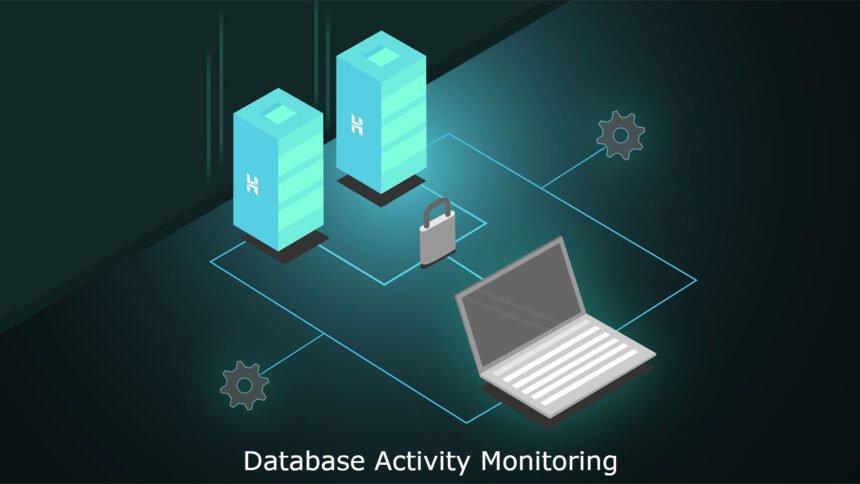
Database Activity Monitoring (DAM) is a security technology that observes, records, and analyzes everything happening inside your database. Think of it like a high-tech security camera that doesn’t just record video but also understands if someone is doing something they shouldn’t.
In the past, many companies relied on simple “auditing.” But auditing is reactive. It only tells you what went wrong after the hacker has already left with your data. DAM is different because it works in real-time. It watches every query and every login attempt as they happen.
Real-Time Surveillance for Modern Data Assets
Today, data is moving faster than ever. DAM provides a constant “motion sensor” for your data. It tracks who is accessing sensitive files, what they are doing with them, and where that data is going. This is vital because many of today’s biggest breaches come from stolen credentials that look “normal” to basic security tools.
Without DAM, your database is basically a black box. You might know people are logging in, but you don’t know if a disgruntled employee is slowly downloading your entire customer list. DAM shines a light into that box, giving you total visibility.
Emerging DAM Architectures: From eBPF to Memory-Based Monitoring
Not all monitoring is the same. In 2026, we use advanced ways to watch databases without slowing them down. For example, some systems use eBPF (Extended Berkeley Packet Filter). This is a fancy way of saying we watch the “nervous system” of the computer (the Linux kernel) to see data access without actually touching the database itself.
Other methods include Memory-based monitoring, which looks at the system’s memory to catch “hidden” commands. These modern architectures are great because they provide 100% visibility but only use about 1-3% of your CPU. It’s security that doesn’t get in the way of your work.
2. Core Concepts: Data Analytics in Business Intelligence vs. Traditional BI
To really secure a business today, you need to understand the difference between just “having data” and “using analytics.” This is where the concept of data analytics in business intelligence comes into play. It’s the engine that turns raw logs into actual safety.
Traditional Business Intelligence (BI) is mostly about looking backward. It tells you “what happened” last month or last year. While that’s helpful for sales reports, it’s not enough for security. You can’t wait for a monthly report to find out you were hacked three weeks ago!
Moving from Descriptive to Predictive Security Insights
This is the big shift. While old BI is descriptive (reporting the past), modern data analytics in business intelligence is predictive. It uses machine learning to look for patterns. Instead of just saying “User A logged in,” the system thinks: “User A logged in at 3 AM from a new country and is downloading 5,000 files. This is not normal.“
By moving to predictive insights, your security team stops being “firefighters” who show up after the fire. Instead, they become “guards” who spot the smoke and put out the spark before the fire even starts. It’s a much smarter way to run a business.
The 2026 Shift: How Augmented Intelligence Automates Decision-Making
We are now in the era of Augmented Intelligence. This means the AI isn’t replacing your security team, but it is making them ten times faster. Modern BI tools now come with “AI assistants” that constantly scan your database activity.
These tools can automatically prioritize alerts. Instead of giving your team a list of 1,000 “events” to check, the analytics engine identifies the 3 most dangerous ones. This helps your people focus on what really matters, making your whole company more agile and evidence-based in every decision you make.
3. High-Impact Use Cases for Data-Driven Enterprise Security
How does this actually look in the real world? Here are a few ways companies are using data analytics in business intelligence to stay safe today.
Neutralizing Insider Threats and Privileged Access
Insiders are dangerous because they already have the keys to your front door. Analytics helps you “watch the watchers.” By monitoring privileged users (like DBAs), you ensure that no one is abusing their power to view private salary data or delete audit logs.
Automating Regulatory Compliance (GDPR, HIPAA, PCI-DSS)
Compliance used to mean weeks of manual work before an audit. Now, DAM solutions with built-in analytics do the work for you. They automatically group data into categories (like “Private” or “Financial”) and generate reports that prove you are following the law. This saves time and prevents massive fines.
Comparing Traditional Security vs. Analytics-Driven DAM
To help you see the value, here is a simple breakdown of how the old way compares to the new, data-driven way:
| Feature | Traditional Database Auditing | Analytics-Driven DAM (2026) |
| Response Time | Reactive (after the incident) | Proactive (real-time prevention) |
| Visibility | Limited to basic logs | Full context (User, App, Data) |
| Performance | Can slow down the database | Lightweight (1-3% CPU impact) |
| Detection | Rule-based (easy to bypass) | AI-based (detects unusual patterns) |
| Audit Prep | Manual and slow | Automated and “audit-ready” |
4. Top Database Activity Monitoring and BI Solutions to Watch in 2026
If you are looking to upgrade your tech stack, these are the tools leading the market this year. They are designed to work together to give you the best visibility possible.
Leading DAM Tools: IBM, Imperva, and Beyond
- IBM Security Guardium: This is the “gold standard” for large enterprises. It uses very advanced analytics to find risks across cloud and on-premise databases.
- Imperva Data Security Fabric: Known for being very fast and having the ability to “block” a query the moment it looks suspicious.
- Oracle Audit Vault: The best choice if your company relies heavily on Oracle databases, as it integrates perfectly with their native security features.
Security Dashboards with Power BI and Tableau
Once you have your DAM logs, you need to see them. Most modern security teams pipe their data into BI tools like Microsoft Power BI or Tableau. This allows you to create beautiful, easy-to-read “Heat Maps” of where your risks are. You can see which department is the most “at risk” and where you need to focus your training or security budget.
5. Best Practices for Implementation: High Performance, High Security
Setting up a DAM system is not just about installing software; it’s about a strategy that balances protection with system speed. In 2026, we follow these “golden rules” to ensure maximum ROI (Return on Investment).
Balancing Monitoring with System Performance
A common worry for IT managers is: “Will this slow down our apps?” The answer is no, if you do it right.
- Selective Auditing: Don’t monitor every single heartbeat of the database. Focus your high-intensity analytics on “sensitive” tables (like credit card info or passwords).
- Target 1-3% CPU Impact: Enterprise-grade tools are designed to stay within this range. If your tool uses more, it’s likely configured incorrectly.
Creating a Unified Defense: Integrating DAM with SIEM and SOAR
Security works best when tools talk to each other. Your DAM system should feed directly into your SIEM (Security Information and Event Management) platform.
- Automated Playbooks: If the analytics engine detects a massive data download at 2 AM, it can trigger a SOAR (Security Orchestration, Automation, and Response) playbook to automatically lock that user’s account in milliseconds. This stops the breach before a human even wakes up to read the alert.
6. Future-Proofing Your Data Strategy with Varmeta

Integrating data analytics in business intelligence into your database security is no longer a luxury, it is a necessity. As we move through 2026, hackers and insiders are getting smarter, using AI to find gaps in your defense. To stay safe, your security must be even smarter.
By shifting from “old-school” logs to “new-school” predictive analytics, you turn your database from a vulnerable target into a secure fortress. You gain the peace of mind that comes from knowing your “crown jewels” are watched 24/7 by a system that never sleeps and never misses a pattern.
At Varmeta, we specialize in bridging the gap between complex data technology and practical business safety. Our team of experts is ready to help you design, implement, and manage a monitoring system that fits your specific needs without slowing down your growth.
FAQs
1. What is the main difference between DAM and traditional database auditing?
Traditional auditing is reactive and relies on internal database logs, which can be deleted by admins. DAM is proactive, real-time, and operates independently of the database to ensure integrity.
2. Will DAM affect the speed of my applications?
When configured correctly using modern architectures like eBPF or network sniffing, the performance impact is negligible (usually under 3% CPU overhead).
3. Can DAM help with GDPR and PCI-DSS compliance?
Absolutely. DAM automates the reporting requirements for these regulations, providing a clear audit trail of who accessed what data and when.
4. Is DAM necessary if I already have a firewall?
Yes. Firewalls block the “front door.” DAM monitors what people are doing once they are already inside the house. Most breaches today happen via compromised internal accounts that firewalls won’t stop.
5. How does Business Intelligence improve security?
BI tools take thousands of raw logs and turn them into visual dashboards and trends, allowing humans to spot “the needle in the haystack” much faster than reading through text files.