November 2025 marks a critical turning point in Malaysia’s fintech policy, as the country officially launched a three-year national roadmap to pilot blockchain-based asset tokenization within its financial system. This initiative not only signals the government’s serious intent to integrate blockchain into traditional financial frameworks but also places Malaysia in the midst of a global race where tokenized finance is gaining traction at an unprecedented pace.
Spearheaded by the Securities Commission Malaysia (SC) and backed by other public and private stakeholders, the roadmap is designed to build the necessary infrastructure, policy foundation, and risk management tools to support asset tokenization at a national scale. Over the next three years, Malaysia will work to test the real-world applicability of tokenized models, develop legal safeguards, and foster a sustainable ecosystem for digital asset growth.
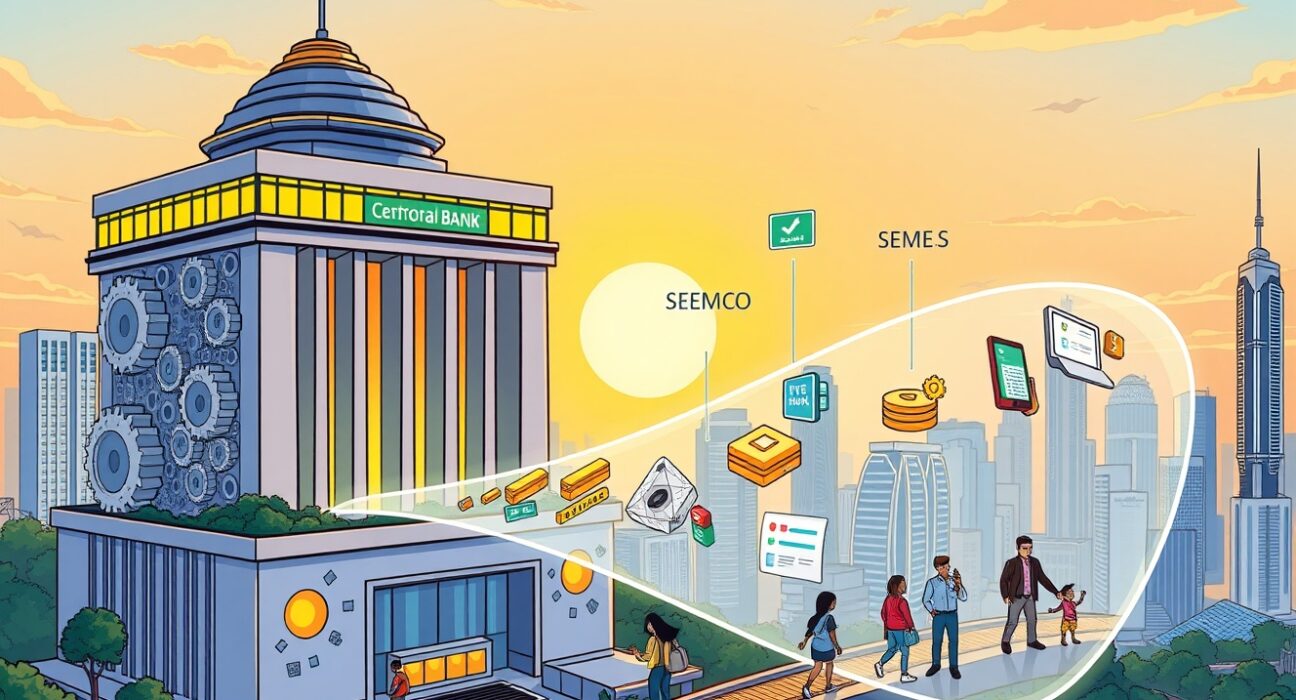
From Technology Strategy to Capital Market Reform
While many countries remain cautious due to blockchain’s technical complexity and perceived financial risk, Malaysia is taking a proactive and pragmatic stance. Rather than relying solely on top-down regulation, the government is endorsing co-creation through real-world sandbox experimentation, a necessary condition for building meaningful digital policy frameworks.
The roadmap creates a formal structure for financial institutions, technology companies, banks, and regulators to test asset tokenization models in a controlled environment. These pilots may include tokenizing stocks, bonds, real estate, commodities, and even intangible assets such as carbon credits or intellectual property.
Importantly, the initiative opens the door to testing full-stack solutions from issuance to custody, secondary trading, and settlement, within regulatory oversight. The overarching goal is to build a complete tokenized value chain, ensuring asset-backed tokens can exist and circulate with transparency, compliance, and security.
User Protection at the Center: Learning from Global Experience
With tokenization still a nascent field and fraud risks high, Malaysia’s roadmap emphasizes user protection, risk transparency, and dispute resolution as foundational components.
A timely case study is Japan’s recent launch of JPYCoin (JPYC), a stablecoin that has introduced an explicit fraud compensation policy, an unprecedented move in the stablecoin landscape. The JPYC model provides a benchmark for how governments and token issuers might design consumer-facing financial products with stronger guarantees in the face of system failures or malicious activity.
Malaysia’s roadmap hints at exploring similar mechanisms. Regulators may require token issuers and service providers to implement clear disclosure rules, compensation procedures, and redress channels. This reflects a broader principle: trust in tokenized finance depends not just on code and cryptography, but on governance, accountability, and public oversight.
Regional Ambitions: Islamic Finance and Cross-Border Interoperability

Beyond domestic goals, Malaysia’s strategy reveals clear aspirations to position itself as a regional tokenization hub. With decades of experience in Islamic finance, the country is uniquely positioned to combine blockchain with shariah-compliant instruments such as sukuk (Islamic bonds) and ESG-focused investments.
Tokenized green sukuk, for instance, could unlock new efficiencies in compliance and attract new investor classes looking for verifiable, impact-driven assets. Malaysia’s mature regulatory framework in Islamic finance provides a natural platform to lead the digital transformation of this asset class across the Muslim world from the Middle East to Southeast Asia and Africa.
In parallel, Malaysia is signaling interest in cross-border tokenized systems, particularly through initiatives like Project Dunbar, a joint effort among central banks from Singapore, Malaysia, Australia, and South Africa to build a multi-CBDC cross-border settlement platform. Such collaborations could allow tokenized assets and digital currencies to move frictionlessly between jurisdictions, bypassing intermediaries and significantly reducing transaction costs.
Challenges and Expectations
Despite its strong foundation, Malaysia’s roadmap will inevitably face challenges. The first is striking a balance between innovation and systemic stability, particularly as the legal and technical standards for digital assets continue to evolve globally. Secondly, building institutional and technical capacity to oversee pilot projects, evaluate risks, and measure outcomes will require sustained coordination and talent investment.
Another critical factor will be private sector participation. Banks, brokerages, fintech startups, and asset managers will need to view the roadmap not as a compliance burden but as a gateway to new markets. Without genuine engagement from these players, the roadmap risks becoming bureaucratic rather than catalytic.
Still, Malaysia brings notable advantages to the table. Its established capital markets, relatively agile regulatory institutions, and openness to regional integration give the roadmap a strong starting point. If implemented with rigor and industry buy-in, the initiative could catalyze a broader transformation of Southeast Asia’s capital markets.
Conclusion
By unveiling a three-year asset tokenization roadmap, Malaysia sends a clear message to the global community: the country is not content to passively observe the evolution of digital finance, it intends to help shape it.
With a carefully structured approach to sandbox experimentation, user protection, and legal clarity, Malaysia is laying the groundwork for a digital financial infrastructure where assets can be issued, owned, and exchanged securely, transparently, and at scale.
This is not just a technical shift, it is a redefinition of how capital markets work. And if successful, Malaysia’s model could become a template for other emerging economies seeking to embrace blockchain not as a speculative tool, but as a strategic enabler of economic modernization.
As global attention turns to tokenization and programmable finance, Malaysia has stepped forward with both ambition and realism. What comes next will depend on how successfully it turns vision into execution and how effectively others in the region, including Vietnam, respond to the opportunity this creates.
Varmeta – Excellent in every block
Website: var-meta.com
Linkedln: https://www.linkedin.com/company/var-meta/