Are you feeling the “Neo4j tax” while building your next GraphRAG or Agentic AI app? While Neo4j is a giant, its heavy enterprise costs and complex ETL pipelines often slow down fast-moving AI teams. This post explores the best Neo4j graph database alternatives that actually handle hybrid search and vector needs natively. If you want to scale your AI without breaking the bank or your infrastructure, read on.
What is a Neo4j Graph Database?
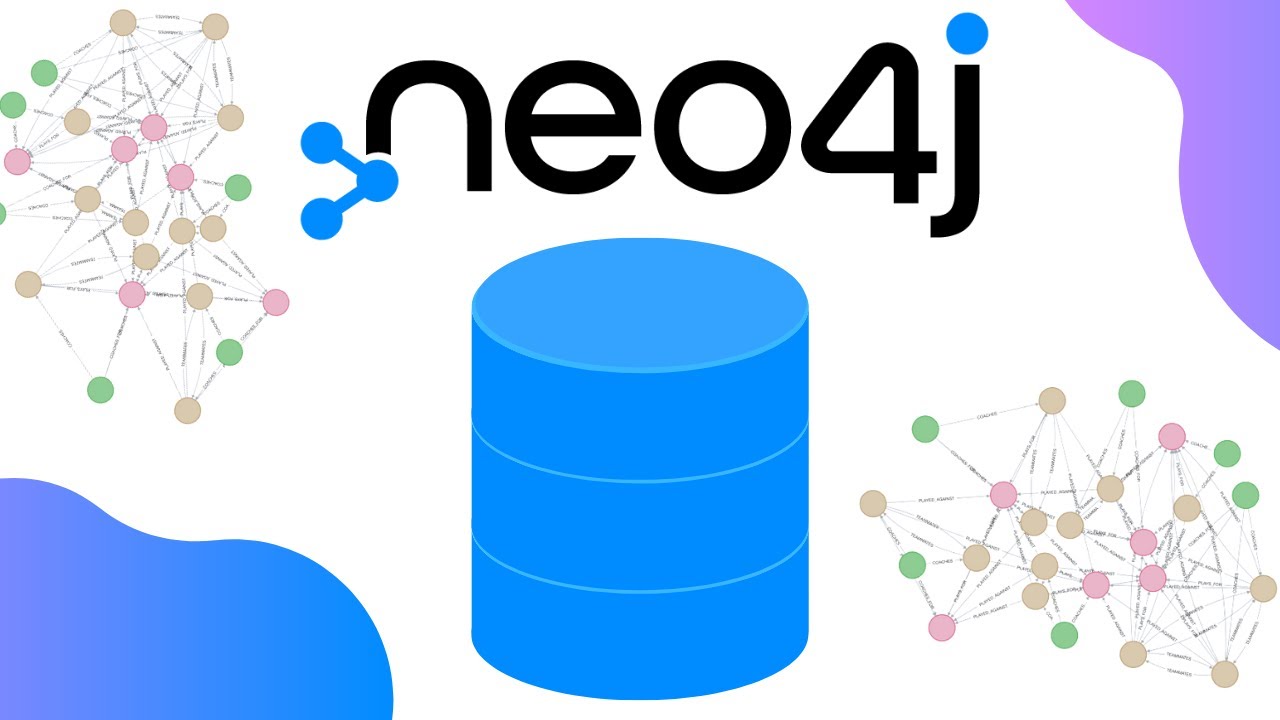
Neo4j Graph Database is a native property graph database. Unlike a traditional SQL database that uses rows and columns, Neo4j is designed to treat relationships as first-class citizens. It is built to handle highly connected data where the “links” between things are just as important as the things themselves.
How it Stores Your Data
Neo4j is an engine that stores data as nodes and relationships. A node is essentially an entity, like a “User” or a “Product.” A relationship is the connection between them, like “PURCHASED” or “FOLLOWS.”
Because it uses index-free adjacency, the database can traverse millions of connections in milliseconds. It does not need to search through a massive index to find which nodes are connected; it simply follows the pointers stored on the disk or in memory.
The Power of Cypher and ACID
One of the reasons Neo4j became so popular is its Cypher query language. Cypher is a declarative language that uses “ASCII art” syntax to describe patterns in data, making complex joins look easy.
Additionally, Neo4j is fully ACID-compliant. This means every transaction is Atomic, Consistent, Isolated, and Durable. It is a reliable system of record for mission-critical tasks like fraud detection in banking, real-time recommendation engines, or mapping out complex IT networks.
Why Look for a Neo4j Graph Database Alternative in the AI Era?
The world changed when Large Language Models (LLMs) went mainstream. In 2026, a graph database isn’t just for showing who follows whom on social media. It is now the “memory” for AI agents. While Neo4j is powerful, many developers find that it wasn’t originally built for the specific demands of modern AI workloads.
The Shift Toward GraphRAG and Agentic AI
Today’s AI apps rely on GraphRAG (Graph + Retrieval-Augmented Generation). This technique uses a graph to provide context to an LLM, helping it understand the “why” and “how” behind data points.
Developers now need a database that acts as a high-speed inference path. Neo4j can sometimes feel too “heavy” for these ephemeral AI tasks. Many teams are looking for lighter, in-memory options that can store agent memories or handle rapid, multi-hop queries without the overhead of a massive transactional system.
The Struggle with Hybrid Search and Costs
Modern AI requires hybrid search, which is the ability to perform graph traversals and vector semantic searches in the same engine.
While Neo4j has added vector support, it often requires managing separate indexes or complex ETL (Extract, Transform, Load) processes to move data from your main store into the graph. Below is a quick look at why teams are switching:
| Pain Point | Neo4j Experience | Alternative Benefit |
| Licensing Cost | High Enterprise fees for horizontal scaling | Open-source or more flexible pricing |
| Data Silos | Requires moving data into a “Graph-only” silo | Multi-model support (Vectors + Docs + Graph) |
| Latency | Can be slow for high-velocity AI inference | In-memory engines optimized for GraphBLAS |
| Complexity | Difficult to manage at massive scale | Zero-ETL or unified PostgreSQL instances |
Scalability and Multi-Model Flexibility
Another big issue is the “multi-database tax.” If you use Neo4j, you usually still need a vector database (like Milvus) and a document store (like MongoDB). Maintaining three different databases is a nightmare for small teams. This has led to the rise of multi-model platforms like ArangoDB or ArcadeDB.
These alternatives allow you to store your vectors, your JSON metadata, and your graph relationships in one single place. It simplifies your tech stack and ensures that your AI has a single, consistent source of truth.
Top AI-Ready Graph Database Alternatives to Neo4j
If you are looking for a Neo4j graph database alternative that feels like it was built in this decade, these options are leading the pack. Each offers something unique, from multi-model flexibility to insane in-memory speed.
ArcadeDB: The Swiss Army Knife of Graphs
ArcadeDB is an open-source (Apache 2.0) multi-model database that doesn’t force you to choose between graph, document, or key-value models. It is one of the most AI-ready options because it includes a built-in Model Context Protocol (MCP) server. This allows AI agents to talk directly to your data without complex middle layers.
It supports Cypher, SQL, and Gremlin, making the migration from Neo4j a breeze. Its engine is highly efficient, often requiring much less RAM than Neo4j for the same dataset size.
Pros:
- True multi-model support: handles Graphs, Documents, and Vectors in one engine.
- Native MCP server support for seamless AI agent integration.
- No “Enterprise” lock-in; the open-source version is fully featured.
- Supports multiple query languages (Cypher, SQL, Gremlin).
- Low memory footprint compared to JVM-based databases.
Cons:
- Smaller community compared to Neo4j.
- Documentation is functional but not as polished as commercial giants.
FalkorDB: The Speed Demon for GraphRAG
FalkorDB is an in-memory graph database built on top of Redis and GraphBLAS. If your AI needs to traverse relationships at the speed of thought, this is it. It is specifically optimized for AI inference paths where latency is the enemy.
Recent benchmarks show that FalkorDB can be up to 10x to 100x faster than Neo4j for specific multi-hop queries. This makes it the go-to choice for real-time Agentic AI and chatbot memory.
Pros:
- Extremely low latency due to its in-memory architecture.
- Leverages sparse matrix math (GraphBLAS) for high-performance traversals.
- Drop-in compatibility with many Redis-based workflows.
- Built specifically for the needs of modern GraphRAG.
- Simple to deploy and scale horizontally.
Cons:
- Dataset size is limited by available RAM.
- Not ideal for massive “cold” data storage.
TigerGraph: The Enterprise Powerhouse for Hybrid Search
TigerGraph excels when you need to combine massive graph analytics with Vector Search. It uses a “distributed-first” architecture, meaning it can scale across multiple machines much more naturally than Neo4j’s traditional clustering.
Its GSQL language is Turing-complete, allowing you to run complex algorithms directly inside the database. For AI workloads, its ability to run hybrid graph-vector queries in a single pass is a massive advantage for reducing hallucinations.
Pros:
- Massive scalability for datasets with billions of edges.
- Unified Graph + Vector search capabilities.
- High-performance parallel processing for complex analytics.
- Strong security and governance features for enterprise use.
- Excellent at reducing AI hallucinations through deep context retrieval.
Cons:
- GSQL has a steeper learning curve than Cypher.
- Can be resource-heavy for smaller, simpler projects.
ArangoDB: The Contextual Data Platform
ArangoDB calls itself a “contextual data platform” because it unifies graph, vector, document, and search. Instead of “stitching” different tools together, you get a single engine. This is perfect for building AI-powered apps where you need to store raw documents alongside their knowledge graph representations.
Benchmarks have shown ArangoDB to have an 8x speed advantage over Neo4j in certain multi-model workloads. It’s about building a “single source of truth” for your AI.
Pros:
- Unifies four data models in one database engine.
- Strong ArangoSearch integration for advanced text and fuzzy searching.
- AQL (ArangoDB Query Language) is very intuitive and powerful.
- Flexible schema allows for rapid prototyping.
- Great managed cloud service (Oasis) for easy scaling.
Cons:
- Graph traversals can be slightly slower than “native-only” graph DBs like FalkorDB.
- Complex configurations can be tricky for beginners.
Memgraph: The High-Performance C++ Alternative
Memgraph is a C++ based, in-memory graph database that is a literal drop-in replacement for Neo4j. It uses Cypher and is compatible with Neo4j’s drivers. If you love Neo4j’s syntax but hate its performance bottlenecks or Java overhead, Memgraph is your best bet.
It is designed for real-time streaming and analytics. Because it is written in C++, it handles memory much more efficiently than Neo4j, making it a favorite for performance-critical AI systems.
Pros:
- High-performance C++ core with minimal overhead.
- Full Cypher and Bolt protocol compatibility.
- Excellent for real-time data streaming (integrates well with Kafka).
- Deep integration with the Python data science ecosystem.
- Strong in-memory performance for dynamic, changing graphs.
Cons:
- Mainly in-memory, though it offers disk-based storage options.
- Community and ecosystem are still growing.
How to Choose the Right AI Graph Database Alternative
Choosing a database is like picking a partner. You need to know what you’re looking for. Here is a comparison table to help you decide:
| Feature | ArcadeDB | FalkorDB | TigerGraph | ArangoDB | Memgraph |
| Primary Model | Multi-model | Graph (Redis) | Native Graph | Multi-model | Native Graph |
| Query Language | Cypher, SQL, Gremlin | Cypher | GSQL | AQL | Cypher |
| Best For | Multi-model AI | High-speed RAG | Enterprise AI | Unified Context | Real-time Stream |
| Open Source? | Yes (Apache 2.0) | Source Available | No (Limited Free) | Yes (Community) | Yes |
| Performance | High | Ultra-High | High (Batch) | Mid-High | Ultra-High |
The verdict:
- Choose the Neo4j graph database if you already have a massive legacy system and need a traditional “system of record.”
- Choose ArcadeDB or ArangoDB if you are tired of “Frankenstacks” and want one database to handle vectors, documents, and graphs.
- Choose FalkorDB or Memgraph if your AI needs to make decisions in milliseconds and latency is your top priority.
- Choose TigerGraph if you are a massive enterprise dealing with billions of data points and complex AI pipelines.
Conclusion
Finding the right Neo4j graph database alternative in 2026 is about understanding your specific AI needs. Whether it’s the speed of FalkorDB, the flexibility of ArcadeDB, or the stability of a unified PostgreSQL stack, the options are better than ever.
Ready to level up your AI data architecture? At Varmeta, we help teams build smarter, faster, and more cost-effective AI solutions. Contact us today to see how we can optimize your data stack for the AI era!
FAQs
1. Is ArcadeDB really a good Neo4j alternative?
Yes, it’s open-source, supports Cypher, and handles multiple data models, making it much more flexible for modern AI apps.
2. Can I use PostgreSQL instead of Neo4j?
Absolutely. With the Apache AGE extension, you can run Cypher queries directly inside Postgres.
3. What is the fastest graph database for AI?
FalkorDB and Memgraph are generally the fastest because they are in-memory and built for low-latency traversals.
4. Is TigerGraph better than Neo4j for big data?
Yes, TigerGraph’s distributed architecture usually scales better than Neo4j when dealing with massive datasets.
5. Does Neo4j support vector search?
Yes, Neo4j has added vector search features, but many alternatives offer it as a native, more integrated part of their multi-model engine.