The unification of blockchain with artificial intelligence (AI) represents one of those trends that are transforming almost every sphere of human activity. As business organizations are always looking for better ways to improve their efficiency, the effectiveness of operational processes, and even the safety of the entire system, the fusion of these two technologies opens up a great scope. The article analyzes the primary use cases, advantages, and barriers to the adoption of blockchain and AI technologies.
The Emergence of New Opportunities Brought about by the Combination of AI and Blockchain Technologies
What do Blockchain and AI Mean?
A blockchain is a shared, immutable ledger that records transactions on many computers. The technology provides for such a degree of security whereby the records in the database cannot be changed in the past without the agreement of all network users.
Artificial Intelligence mainly refers to techniques and systems involving the performance of human intelligence functions by machines, especially computers. AI is a collection of various technologies such as machine learning, natural language generation, and robotics that allow the system to use data input, update its state through internally built algorithms, and output a decision.
Why Integrate Both Blockchain and AI?
The application of AI and blockchain together can resolve various problems that businesses encounter today. Data remains intact with blockchain technology, and AI analysis can help tell a story out of the data. As a result, these technologies can improve the quality of the data, the time taken to make a decision, and the operations.
Obstacles to Utilizing AI and Blockchain Technologies
While the potential use cases are quite encouraging, organizations encounter a number of hindrances when it comes to working with both blockchain and AI.
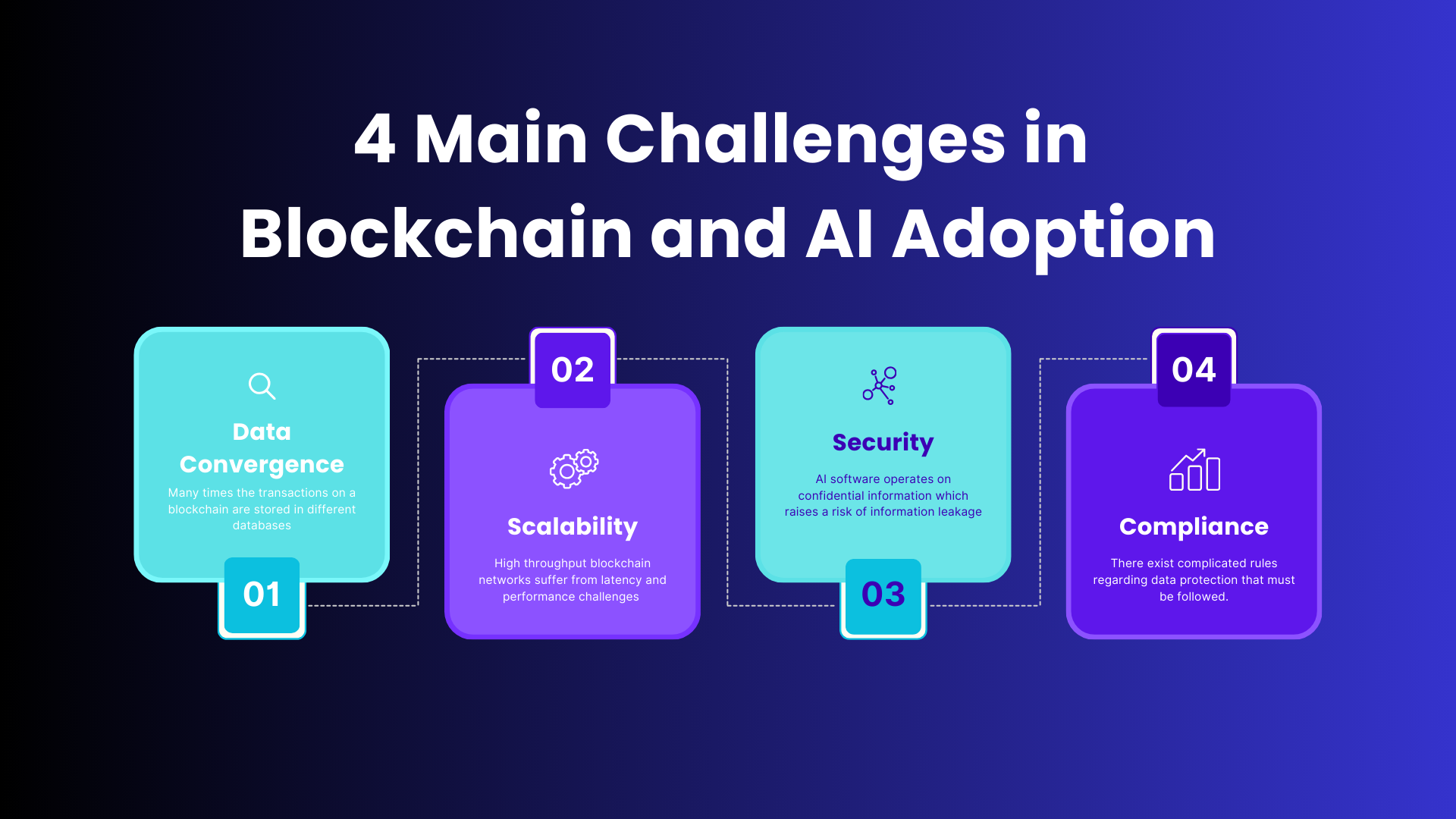
1. Data Convergence
The spirit of the AI is in the data, but the availability and the quality of the data within the bounds of a blockchain can be a problem. Many times the transactions on a blockchain are stored in different databases which makes it so that one has to clean the data before being able to fit it into any AI models.
Solution: Enforced the use of data standardization protocols to ensure uniformity in the data formats used by every participant within the blockchain network. In addition to this, data cleaning processes will help in reformatting the blockchain data into ai compatible formats
2. Scalability
With the increasing volume of data and transactions, larger issues of concern arise with regard to scalability. High throughput blockchain networks suffer from latency and performance challenges when AI algorithms are added on as an afterthought to the already existing resource-intensive network.
Solution: Off-chain computation or sidechains can be harnessed to carry out AI calculations away from the central blockchain network. Cloud-based AI services have the overreaching attributes of elasticity to fulfill scaling needs to cope with blooming computational workloads.
3. Security
Blockchain is designed with advanced levels of security; however, artificial intelligence software operates on confidential information which raises a risk of information leakage.
Solution: Data-enciphering approaches can be adopted for the appropriate AI integration in order to prevent data breaches. Also, incorporates advanced AI approaches that include federated learning or homomorphic encryption that do not require raw data to be analyzed.
4. Compliance with Appropriate Laws and Regulations
Merging AI with blockchain technology is not only beneficial but also challenging because there exist complicated rules regarding data protection that must be followed.
Solution: It is advisable and helpful to work with lawyers who are knowledgeable about blockchain and AI and the laws governing them that the organization has to comply with. Regulations in the future can also be met by creating AI systems that are transparent by design.
Top Blockchain and AI Use Cases
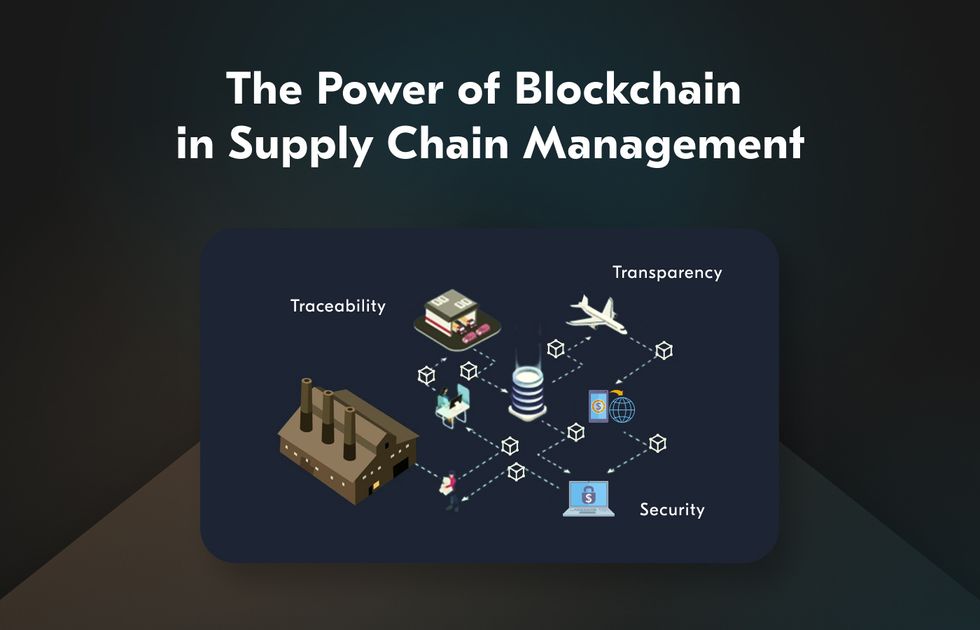
1. Supply Chain Management
Supply chain management is one of the most promising areas for the application of blockchain and AI. By combining these technologies, businesses can achieve greater traceability and accountability.
- Work In Progress: AI and IoT technology can update the state of the assets in every step of the supply chain while the transactions taking place are stored on a blockchain network. Blockchain solves the problem of visibility, as it enables risks to be identified in the system at that particular time.
- Demand Forecasting: By employing advanced Machine Learning algorithms, AI can forecast demand trends from past behavior, at the same time helping businesses to manage their stock levels efficiently and prevent unnecessary losses. In the McKinsey report, countries that deploy AI in managing supply chains cut forecast inaccuracies by 50 percent (source: McKinsey).
2. Interoperability of data in healthcare
The convergence of AI and blockchain will greatly improve the operations of the healthcare sector.
- Regaining Control of One’s Data: Blockchain technology gives the patients the ability to trust that they can keep their medical records private but still give access to them to the doctors that they want. in such a way it promotes the privacy of information and encourages working together of various players.
- Predictive Analytics: AI uses historical data to predict the occurrence of certain phenomena, and diseases and assist in treatment planning. A recent study reported in the Journal of Medical Internet Research showed that combining arrest technology with AI makes it possible to increase the accuracy of diagnosis by more than 20% (source: JMIR).

3. Services Financiers
The finance industry is generally fast-tracking the incorporation of blockchain as well as AI technologies to increase security and enhance the user experience.
- Fraud Prevention: The AI can scrutinize the transactional behavior of customers and ascertain any outliers that may indicate fraud and this can be done instantly. Only legitimate transactions can be conducted due to the blockchain technology’s features wherein transactions cannot be modified.
- Enhanced Customer Experience: By leveraging AI chatbots and personalized services, financial institutions can improve customer engagement and satisfaction. According to a report by Accenture, banks that implement AI can reduce customer service costs by up to 30% (source: Accenture).
4. Digital Identity Verification
As more and more interactions go online, the security of such processes, particularly regarding identity verification is vital.
- Robust Verification Processes: The combination of AI with blockchain can help create a secure identity verification system. While AI performs recognition of faces, voice, and behavior, blockchain serves as an integral system keeping the history of conducted verifications.
- Seamless Customer Onboarding: Organizations can improve the customer onboarding process by minimizing the effort and time taken during identity verification. Research conducted by the World Economic Forum indicated the results of utilizing blockchain technology-based identity solutions found that banks stand to save approximately $100 billion per year in expenses associated with Know Your Customer (KYC)compliance.

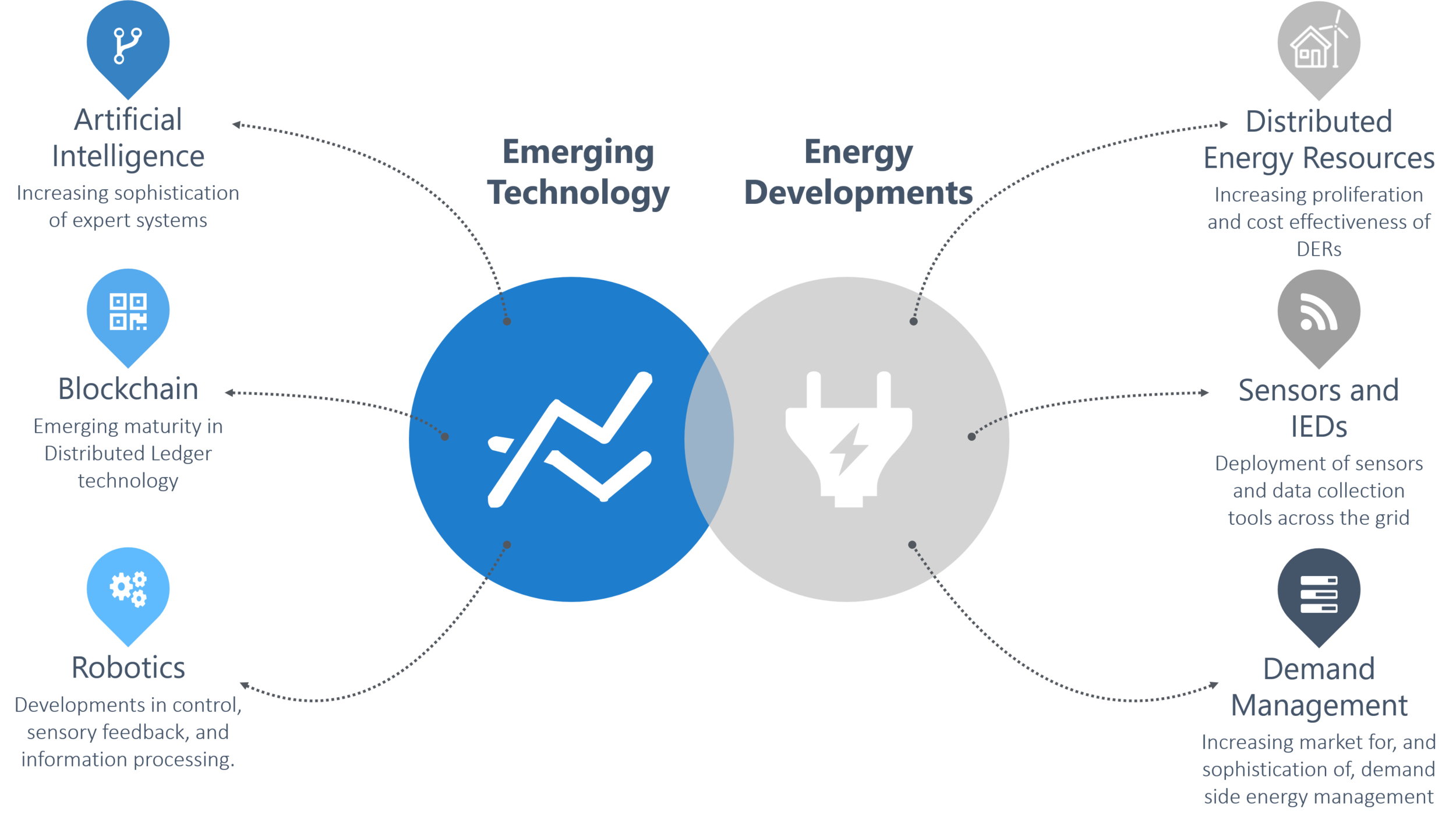
5. Energy Management
Similarly, in the energy sector, the convergence of AI and blockchain technology can yield remarkable changes.
- Better Energy Usage Effective: To satisfy the demand, jump in consumption studies, and control the management of the resources available. Blockchain allows for peer-to-peer energy transactions where an individual is allowed to trade excessive energy they have held securely.
- Sustainability: These drivers when conjoined can improve the scope of sustainability by enhancing energy distribution and consumption. In a report released by the International Energy Agency, it was highlighted that AI and blockchain technologies could result in smart grids operating below 30% energy consumption (source: IEA).
Conclusion
Complementing each other, ideas of blockchain technology and artificial intelligence open great potential opportunities for several sectors. The use of both technologies in an organization helps improve its efficiency, security, and accountability, which leads to innovation and growth of the organization.
While the adoption of these technologies is not without challenges, it is possible to overcome them through strategic planning and innovation in technology, enabling businesses to leverage the full potential of blockchain and AI. In the future, it is clear that these technologies will co-exist to change current industries and open up opportunities for innovations in the future.
References
- McKinsey. (2021). “AI in Supply Chain Management.” Read More.
- Journal of Medical Internet Research. (2020). “The Role of AI in Healthcare.” Read More.
- Accenture. (2021). “AI in Banking.” Read More.
- World Economic Forum. (2021). “Blockchain-Based Identity Solutions.” Read More.
- International Energy Agency. (2021). “Artificial Intelligence in Energy.” Read More.