Real-World Assets have recently become a popular topic of discussion in the De-Fi community. In a Blockchain Start-Up forum on Reddit, there was a popular topic: Will RWAs dominate the DeFi business by 2025, or is this all hype?
First, let’s pick up a little bit about real-world assets.
1. What are Real-World Assets?
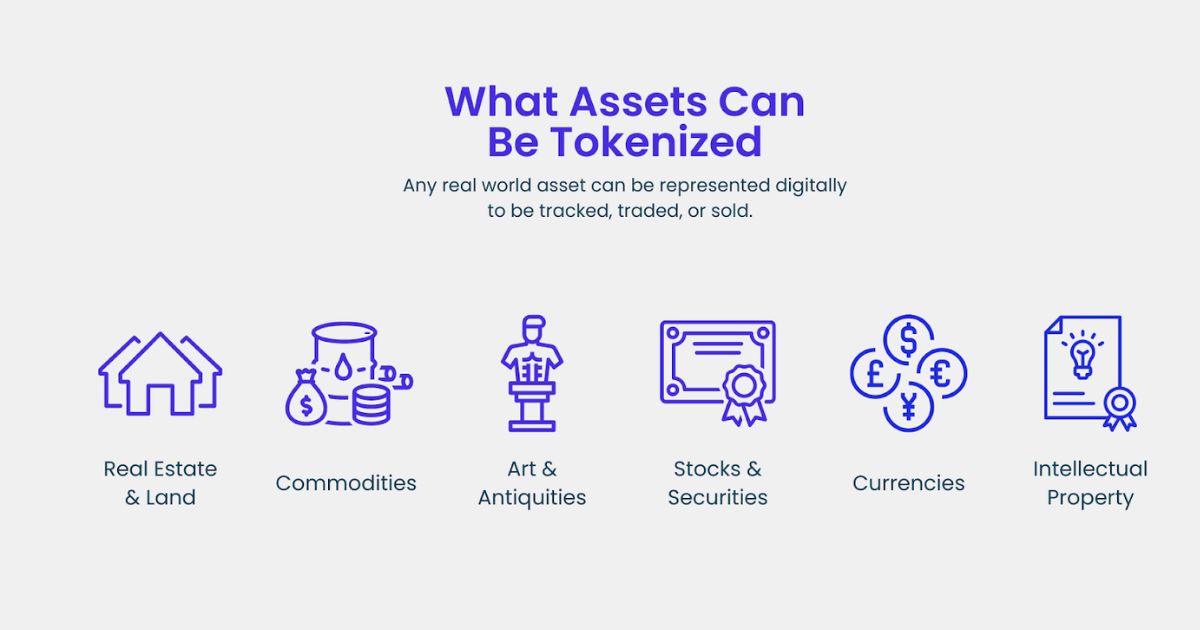
Real-world assets, or RWAs, are tokens that reflect specific real assets. It could be property, objects, bonds, or something else. These, like other tokens, function on the blockchain via smart contracts, and one token can represent both the entire item and its component parts.
To make RWAs (Real-World Assets) easier to understand, let’s use an example involving real estate:
Imagine you own a building worth $1 million. Traditionally, you would need to sell the entire property to access its value. However, through tokenization, you could divide the building into 1,000 digital tokens, each worth $1,000. Now, you can sell part of the building (say, 100 tokens) to investors. These tokens can be traded, bought, or sold, giving investors fractional ownership, and you gain liquidity without selling the entire asset.
2. Tokenization for real-world assets: how does it work?
Let’s continue with the example of a building worth $1 million:
1. Identify the Asset
Your building is $1 million, and you want to let people invest in it without selling the whole thing.
2. Break It Down
You decide to break the building into 1,000 digital tokens, each worth $1,000. Every token represents a tiny share of the building—like owning 0.1% of it.
3. Create a Smart Contract
A smart contract is set up on the blockchain. This contract handles ownership, ensures everything is transparent, and automates any future payments (like rent distribution).
4. Issue the Tokens
Now, the tokens are released on a blockchain platform. Investors can buy as many tokens as they want, meaning they own part of your building.
5. Trade the Tokens
Once someone buys tokens, they can keep them or sell them to other investors whenever they want—just like trading shares in a company.
6. Earn Income
Let’s say the building generates $100,000 a year in rent. Each token holder automatically gets a share of the income based on how many tokens they own. So, someone with 10 tokens (1% ownership) would earn $1,000 in rental income for the year.
The Big Picture
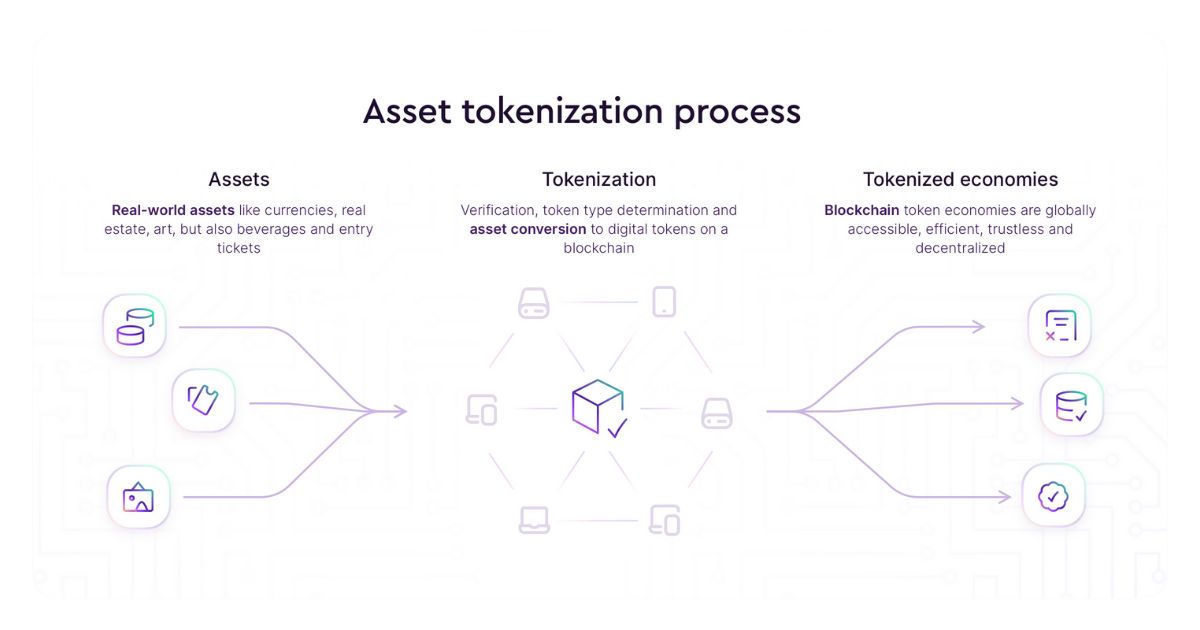
Tokenization makes it easier to invest in expensive assets like buildings by allowing people to buy small fractions. It also makes the asset more liquid (easier to trade) and opens up investment opportunities that weren’t available to smaller investors before.
3. Barriers to RWAs Development in DeFi: A Deep Dive
While the tokenization of Real-World Assets is poised to revolutionize finance, allowing people to invest in assets like real estate or art using blockchain, several hurdles stand in the way. Let’s break down the most pressing barriers:
3.1 Regulatory Hurdles: The Wild West of Laws
One of the largest roadblocks facing RWAs is regulatory uncertainty. Countries vary significantly in their treatment of tokenized assets. For instance, regions like Switzerland and Singapore have developed more structured frameworks for tokenization, while others, like the United States, are still catching up. Laws concerning asset ownership, securities, and taxation can make it challenging to ensure compliance when offering tokenized assets to a global market. Without clear regulations, many traditional investors may be hesitant to get involved
3.2 Proof of Ownership and Legal Complexity
When you tokenize a real-world asset, you’re essentially converting it into a digital token on a blockchain. But for these tokens to have real-world value, they must represent actual legal ownership. Establishing this is a challenge, as it involves issuing verifiable proof, which may differ between jurisdictions. How do you confirm that a person who holds a token for a property actually owns a part of it in the eyes of the law? This complexity slows down widespread adoption.
3.3 Technical Integration and Standardization
Another issue that could slow the rise of RWAs is the lack of technical standards. Different blockchain platforms operate on different protocols, and this creates interoperability issues. Without consistent standards across platforms, it becomes difficult to trade or manage tokenized assets across different blockchain systems. For tokenization to thrive, these ecosystems must align, or investors and institutions will find it too complex to navigate
4. Will RWAs Really Change the Game in Investing?
Real-world assets (RWAs) are gaining momentum as a major force in the investment space. As Sizododayladyyu shared on the Blockchain Start-Up forum: “The RWA market is growing rapidly, with predictions of it reaching US$16 trillion by 2030. I’m confident that a significant portion of this will consist of machines, robots, and devices. This is where the Peaq network comes into the spotlight, enabling the tokenization of these assets by turning them into machine RWAs.”
Similarly, Chainlink highlights that “Tokenized real-world assets have been a growing segment of the DeFi ecosystem, with RWA total value locked sitting at ~$5B in December 2023, according to DefiLlama.”
These trends show how RWAs are transforming investment by offering fractional ownership, improved liquidity, and broader access, especially through tokenization, bridging traditional finance and DeFi.
5. Example of RWAs in DeFi: KLDX STO Investment Platform
KLDX is a Security Token Offering (STO) Investment Platform developed by Varmeta, designed to bring real-world assets into the decentralized finance space through tokenization. KLDX enables investors to access a variety of private market assets, including equity, private debt, real estate, commodities, and more, by converting them into security tokens.
How KLDX Works with Real-World Assets (RWAs):
- Tokenization:
KLDX transforms real-world assets into security tokens. These tokens represent ownership or investment rights in underlying assets, such as private equity, real estate, or commodities. By using blockchain technology, ownership rights are digitally represented, allowing fractional ownership. - Investment:
Investors can purchase these security tokens on the KLDX platform, gaining fractional exposure to the underlying real-world asset. For example, instead of buying an entire property, an investor can purchase tokens that represent a share of a real estate asset. - Liquidity:
KLDX provides a secondary market where these security tokens can be bought and sold, giving investors liquidity that’s typically difficult to achieve with traditional private market investments. Token holders can trade their assets seamlessly, increasing flexibility and access.
Types of Real-World Assets on KLDX:
- Private Equity:
Investments in pre-IPO companies, unicorns, and growth-stage businesses. This gives investors access to the world of venture capital and private equity, which was traditionally limited to large institutions. - Private Debt:
Tokens represent loans to private companies, where investors earn returns through interest payments. This is similar to lending money to private businesses with an expectation of repayment. - Real Estate:
Investors can participate in the ownership of commercial and residential properties, development projects, and more, through tokenized real estate investments. - Commodities:
Assets such as gold, silver, oil, or agricultural products are also tokenized, giving investors exposure to physical commodities that can be traded digitally. - Other Asset Classes:
KLDX extends its offering to include investments in sectors such as infrastructure, healthcare, and technology, providing a broad array of opportunities to investors.
Democratizing Private Market Investments:
One of the key benefits of KLDX is that it democratizes access to high-value investments that were traditionally reserved for institutional investors. By tokenizing real-world assets and making them available in smaller, fractional units, individual investors can now participate in opportunities like private equity or real estate with significantly lower capital.
In essence, KLDX is bringing real-world assets into DeFi, offering enhanced liquidity, accessibility, and fractional ownership through blockchain technology. This allows for greater inclusion in high-potential markets and opens up investment opportunities for a broader audience.