Binance Blockchain Week 2025 in Dubai captured the crypto industry at a moment of profound transition. The last decade of blockchain development has oscillated between breakthrough innovation and speculative turbulence, but the discussions at this year’s event signaled a different inflection point, one defined by institutional alignment, maturing governance, and the integration of blockchain into the broader machinery of global finance. Instead of debating whether Web3 has long-term significance, speakers and participants contemplated the architectural, regulatory, and macroeconomic conditions necessary for blockchain to underpin the next generation of economic infrastructure. This shift became especially clear in the context of Binance Blockchain Week, where the industry’s leading voices converged around shared priorities.
What distinguished this year’s conference was not simply the presence of policymakers, institutional money managers, payment networks, and AI researchers. It was the coherence of their narratives. Taken together, the two days of discussions revealed a structural shift: blockchain is no longer positioning itself as a disruptive alternative to existing systems, but as an inevitable evolution of them. The industry is stepping into a phase where credibility, transparency, technical robustness, and regulatory alignment carry more strategic weight than speculative excitement. In this environment, conversations about liquidity cycles, stablecoin infrastructure, tokenization, on-chain data, and global payment rails feel less like projections of a distant future and more like the groundwork for an imminent economic realignment. These themes were consistently reinforced throughout the sessions of Binance Blockchain Week, illustrating how deeply the industry is reconfiguring its long-term priorities.
Day 1: Governance, Legitimacy, and the Reframing of Digital Assets

Day 1 of Binance Blockchain Week focused heavily on governance, both corporate and institutional and on redefining digital assets within a maturing macroeconomic context. The appointment of Yi He as Co-CEO of Binance, standing alongside Richard Teng, was a defining moment. It reflected not only a shift in corporate leadership but also a strategic recognition of the scale and complexity the organization now manages. With nearly 300 million users, Binance is no longer a high-growth startup; it is a global financial technology platform that must balance innovation with oversight, operational resilience, and cross-border regulatory expectations.
This leadership transition set the tone for broader discussions about how major industry players must evolve. The presence of UAE policymakers underscored an important geopolitical truth: jurisdictions that create clear, innovation-friendly digital asset frameworks will shape the trajectory of global blockchain adoption. Dubai continues to position itself as a regulatory anchor in a landscape often characterized by fragmentation. Its approach reflects a strategic vision, one in which digital assets are not treated as speculative anomalies but as foundational components of the region’s digital economy. The dialogue between policymakers and industry leaders highlighted that regulatory clarity is no longer a secondary concern; it is a catalyst for institutional confidence and global capital inflows. These reflections echoed many of the conversations emerging from Binance Blockchain Week’s opening sessions.
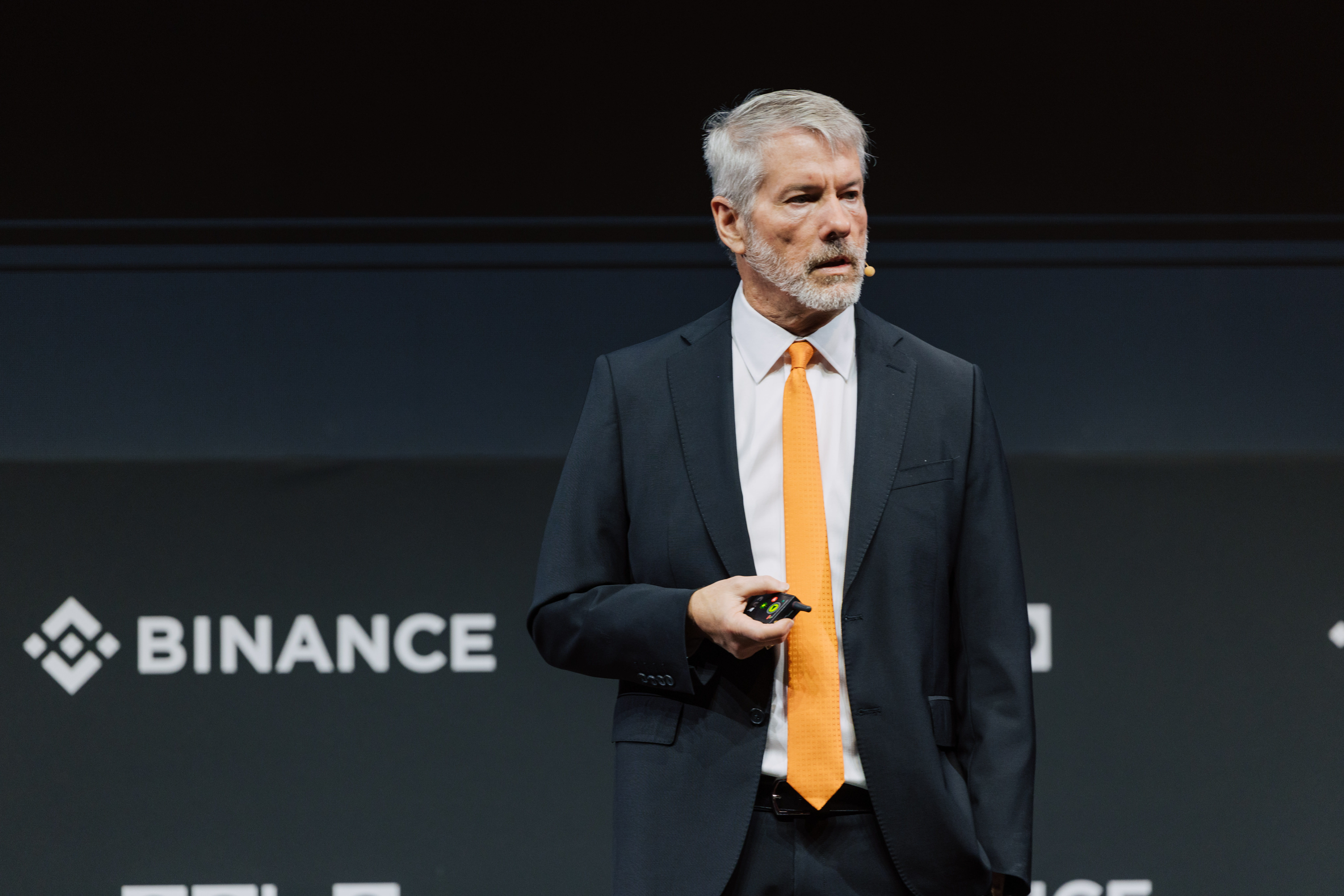
Michael Saylor’s keynote reinforced this shift in tone. Rather than centering his argument on Bitcoin as a speculative instrument, Saylor situated it within the lineage of capital evolution. By describing Bitcoin as “digital capital” rather than merely a digital asset, he reframed it as a structural element of modern balance sheet management. This conceptual move is significant. It positions Bitcoin and by extension, other blockchain-native assets, as tools for long-term financial organization in a world increasingly shaped by inflationary pressures, geopolitical uncertainty, and digitized value flows. His argument suggested that digital scarcity is becoming as economically meaningful as physical scarcity, and that on-chain assets are entering conversations once reserved exclusively for sovereign debt, equities, and real-world commodities.
What made Day 1 especially noteworthy was the alignment between different types of institutional actors. Asset managers, corporate treasuries, and infrastructure providers emphasized the same priorities: predictable governance, standardized compliance frameworks, and the operational resilience necessary for large-scale capital allocation. Their discussions revealed a common recognition that blockchain’s next era will be built on a stable foundation, not on speculative cycles. The industry is moving away from the mindset of “rapid iteration at all costs” and toward the discipline required for long-term system reliability. This shift parallels the early internet’s transition from anarchic experimentation to enterprise-grade architecture and was a consistent talking point throughout Binance Blockchain Week.
Even the Blockchain 100 Awards, which recognized content creators, educators, and analysts, reflected this maturation. The celebration of research, transparency, and public awareness highlighted an underappreciated truth: credible information ecosystems are essential for sustainable Web3 adoption. The recognition of community contributors illustrated that the next phase of blockchain growth will depend not just on technological breakthroughs but also on the cultivation of informed, engaged, and responsible public discourse.
In aggregate, Day 1 established a new narrative: digital assets are no longer peripheral. They are entering the vocabulary of institutional finance, public policy, and global corporate governance. The question is no longer whether the industry will professionalize, but how quickly and under what structures.
Day 2: Macro Liquidity, On-Chain Intelligence, and the Reinvention of Global Payments
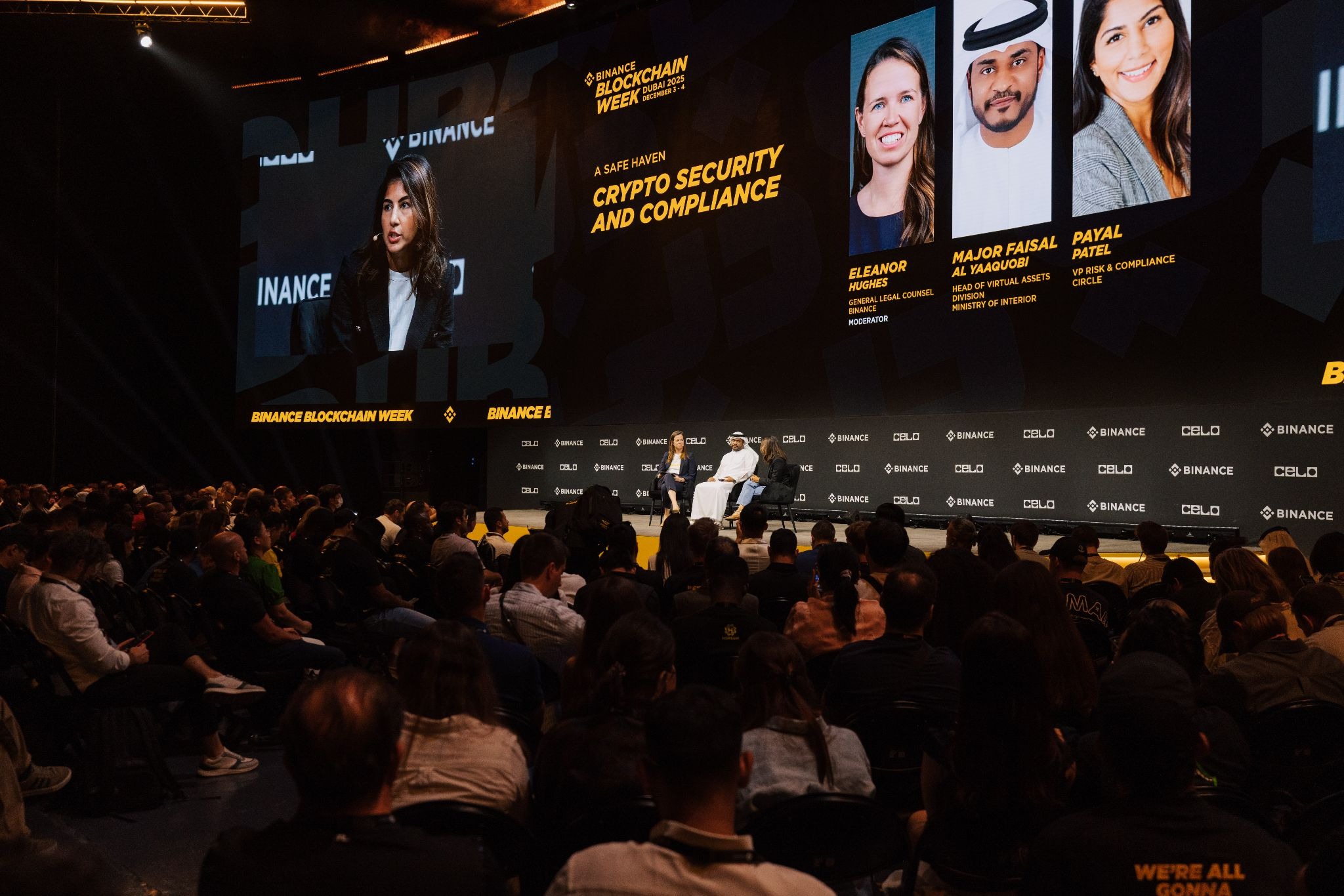
If Day 1 articulated the governance foundations of a maturing industry, Day 2 explored the technological and macroeconomic engines that may drive its expansion. The discussions painted a picture of a financial landscape that is becoming increasingly algorithmic, predictive, transparent, and borderless. This second day of Binance Blockchain Week expanded the analytical lens beyond governance and into market architecture and future-facing innovation.
Raoul Pal’s keynote provided the macroeconomic frame through which many attendees interpreted the future of digital assets. Rather than projecting explosive short-term price movements, he emphasized liquidity cycles, demographic shifts, interest-rate trajectories, and global capital rotation as the structural forces shaping the coming years. His thesis that 2026 could represent a moment of significant acceleration for crypto was not based on enthusiasm, but on a disciplined understanding of how liquidity reenters risk markets during periods of economic recalibration. His caution against leverage and impulsive speculation further reflected the conference’s broader shift toward responsible, data-driven engagement with digital markets.
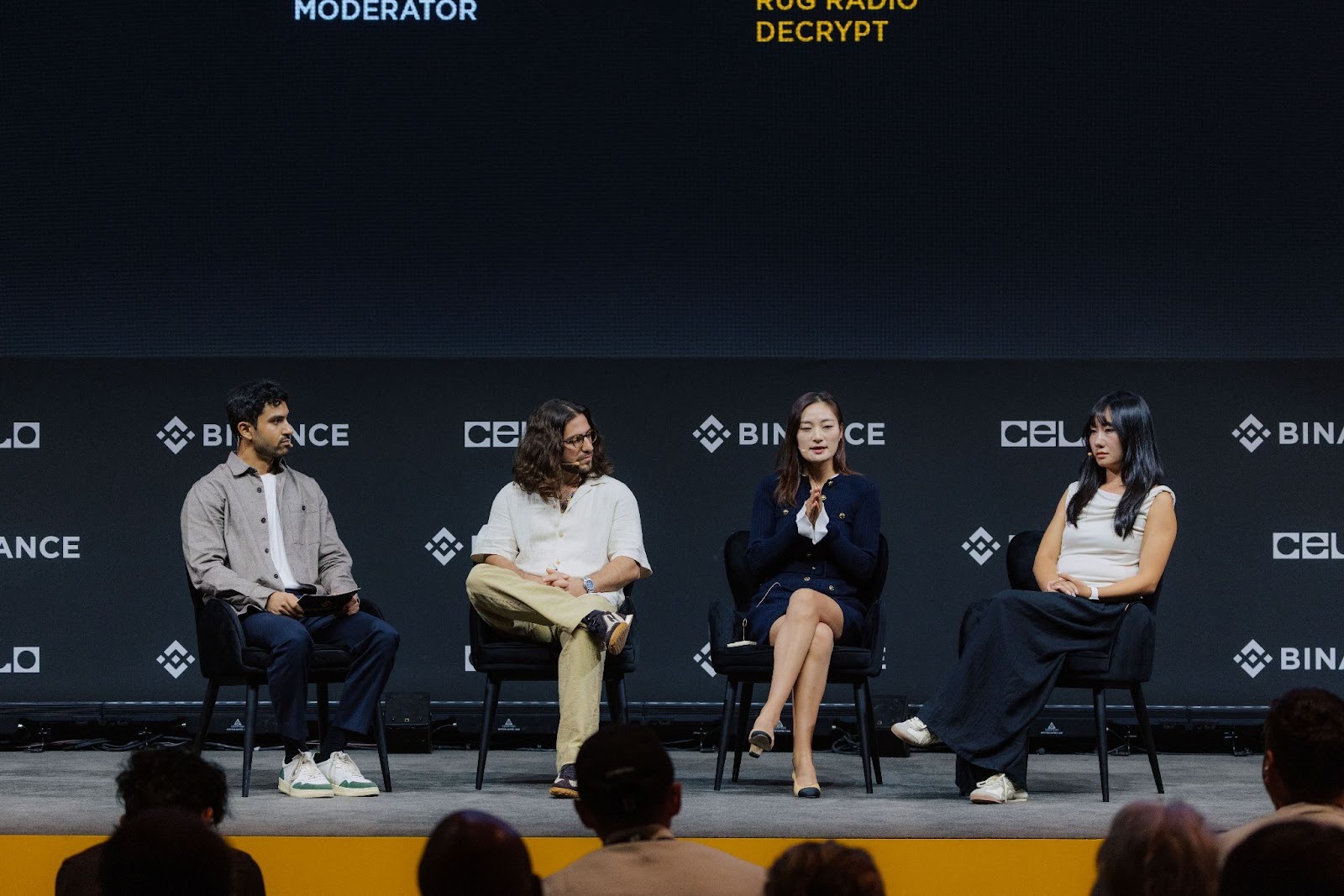
Equally impactful were the discussions surrounding on-chain markets and prediction systems. These conversations highlighted an emerging reality: blockchain is creating a level of transparency that traditional markets simply cannot replicate. On-chain data allows researchers, traders, and institutions to observe liquidity flows, risk concentrations, and behavioral patterns in real time. As decentralized markets and predictive protocols evolve, they begin to resemble open, permissionless versions of sophisticated institutional analytics systems. This democratization of financial intelligence marks a fundamental break from legacy paradigms, where access to high-quality market insights is restricted to large institutions. In a blockchain-native environment, the ability to interpret transparent, real-time data may become a decisive competitive advantage.
The intersection of blockchain and AI amplified this theme. Speakers from on-chain analytics firms and AI research institutions described a future where machine learning models continuously interpret public ledger data, identify emerging patterns, and automate complex portfolio decisions. In this vision, AI does not merely enhance blockchain ecosystems; it transforms them into dynamic, self-optimizing networks. The implications are far-reaching. Risk detection becomes more efficient. Market inefficiencies shrink. Retail participants gain access to analytical capabilities that were previously exclusive to hedge funds and proprietary trading desks. And as AI becomes more deeply integrated into on-chain infrastructure, the boundary between financial intelligence and financial execution begins to blur. This topic emerged repeatedly across Binance Blockchain Week discussions, reinforcing the growing convergence between AI and decentralized finance.
The exploration of global payments added another dimension to Day 2’s narrative. With participants from Mastercard, Ripple, and TON, the discussion moved beyond theory into practical application. Stablecoins, once dismissed as niche experiments, are increasingly being recognized as essential instruments for cross-border commerce and treasury management. Payment networks are not merely observing blockchain innovation, they are incorporating it into their architectures. Their engagement signals a broader competitive shift: the global payments industry, constrained for decades by slow settlement times, high transfer costs, and fragmented regional systems, is being forced to modernize. Blockchain offers a path forward, not as a symbolic enhancement but as a technical necessity for meeting the demands of a digitized global economy.
Day 2 of Binance Blockchain Week revealed an environment in which Web3 is beginning to function not as a standalone sector but as a technological substrate for globally integrated finance. The convergence of macroeconomic insight, on-chain transparency, AI-powered analytics, and institutional-grade payment infrastructure creates a cohesive vision of what the next decade could look like: a world where financial systems operate with greater speed, clarity, and interoperability than ever before.
Synthesis: From Fragmentation to Financial Architecture
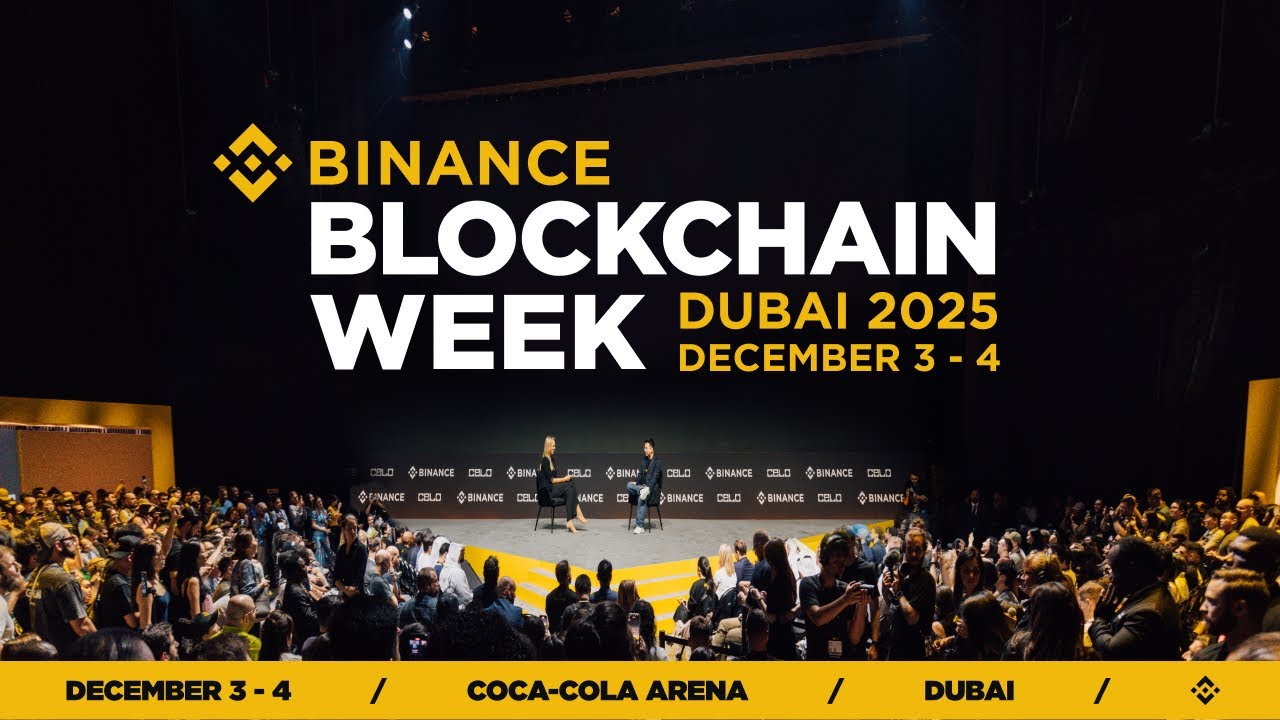
Taken together, the insights from Day 1 and Day 2 point toward a single overarching conclusion: blockchain is evolving from an industry defined by fragmentation into one defined by architecture. The speculative mania of previous cycles obscured a deeper trajectory, one where Web3 technologies gradually integrate into critical economic systems, reshape payment flows, and redefine how value is stored, analyzed, and transferred across borders.
The maturation of governance frameworks, the institutional reframing of digital assets, the rise of AI-driven market intelligence, and the mainstreaming of stablecoin-based payments all indicate that the future of Web3 will be anchored in systems thinking rather than isolated innovation. The organizations that succeed in this future will be those capable of designing infrastructure that is compliant, interoperable, transparent, and adaptive to both macroeconomic cycles and real-world demand.
Binance Blockchain Week 2025 ultimately served as a lens through which to view the next phase of the industry’s evolution. It revealed a landscape where blockchain no longer competes with traditional finance, it interconnects with it. The next chapter of Web3 will not be defined by volatility or speculative fervor, but by integration, intelligence, and institutional-grade infrastructure. And for regions experiencing rapid digital transformation, particularly in Asia and emerging markets, this convergence may prove to be one of the most consequential technological shifts of the coming decade.
Varmeta’s perspective after Binance Blockchain Week: Strategic Implications for Builders and Emerging Markets
While the core content of the conference stood on its own, the themes emerging from Binance Blockchain Week carry particular strategic significance for organizations building foundational Web3 infrastructure. The accelerated institutional alignment seen throughout the event underscores the importance of designing systems that can operate at global scale, under regulatory scrutiny, and across diverse economic environments. The convergence of AI, on-chain transparency, and cross-border payments highlights the expanding role of data intelligence and interoperability as competitive differentiators.
For emerging markets such as Southeast Asia, where digital adoption is rapid and financial systems are unevenly developed, the discussions at the conference point to a transformative opportunity. Stablecoin rails, tokenized assets, and AI-enhanced on-chain analytics create openings for new models of financial inclusion and economic participation. Builders who prioritize regulatory-aligned innovation, security-first infrastructure, and user-centric design will be well-positioned to shape this next era of Web3. In this sense, the signals from Binance Blockchain Week do not merely reflect where the global industry is heading, they illuminate where forward-looking builders should allocate their energy in order to create long-term value and resilience.
Conclusion
Viewed in its entirety, Binance Blockchain Week 2025 functioned as more than a showcase of ideas; it served as a coordinated statement about where the digital asset ecosystem is heading. The event crystallized a shared understanding that the future of blockchain will be defined not by isolated speculative cycles, but by the construction of durable, interoperable, and intelligence-driven financial architecture. Governance, macroeconomic insight, AI, on-chain data, and payment infrastructure are no longer parallel conversations, they are interlocking components of the same structural transition.
As the narratives from Dubai continue to ripple outward, they offer a clear message to policymakers, institutions, and builders alike: the window for experimentation without accountability is closing, and a new era of disciplined, system-level innovation is beginning. Those who can translate the lessons of Binance Blockchain Week into concrete strategies, balancing regulatory alignment with technical ambition, and pairing infrastructure with real-world utility will be the ones shaping how value is created and exchanged in the next decade of the global digital economy.
Varmeta – Excellent in every block
Website: var-meta.com
Linkedln: https://www.linkedin.com/company/var-meta/