Author : Frank Le
Head of growth – Varmeta
Over the past few months, the growing momentum of RWA tokens signals a significant shift in market perception and adoption, marking a new era for asset management and ownership.
At its core, RWA tokenization enables the digital representation of physical and legal assets on the blockchain, transforming how ownership is accessed, managed, and traded. This innovation not only modernizes traditional asset structures but also introduces benefits like fractional ownership, enhanced liquidity, and global accessibility.
Blockchain technology serves as a catalyst for this transformation, providing a foundation of transparency, security, and efficiency. As the digital economy continues to evolve, RWA tokenization is poised to make asset ownership more inclusive, liquid, and equitable, opening doors to unprecedented investment opportunities and reshaping global markets.
What is RWA tokenization?

Real world asset (RWA) tokenization refers to the process of creating blockchain-based digital tokens that represent ownership or rights to tangible financial assets such as cash, commodities, stocks, loans, artwork, or real estate. This innovation significantly changes how these assets are accessed, traded, and managed, offering a more efficient and transparent alternative to traditional methods.
Although still in its early stages, RWA tokenization is rapidly expanding beyond traditional assets like bonds, stocks, and real estate. Emerging industries such as gaming, energy, and collectibles are beginning to explore its potential, signaling broader applications in the near future.
One of the first examples of RWA tokenization came with the launch of Tether (USDT) in 2014. Tether, a stablecoin pegged to the US dollar and designed to maintain a consistent value of $1, pioneered the stablecoin market, which is now valued at over $200 billion. This marked the beginning of integrating real-world value into blockchain systems, laying the foundation for the tokenization of a wide range of assets.
The Tokenization process
Tokenizing real world assets involves several key steps:
- Identifying the asset: Determine the physical or financial asset to be tokenized, such as real estate, a commodity, or a collectible.
- Defining token characteristics
Choose the type of token to represent the asset, such as a fungible token or a non-fungible token. Specify additional details, including how the token will function and its ownership rules. - Selecting a blockchain platform
Decide on a blockchain system either public or private for issuing the tokens. For broader accessibility, consider integrating cross-chain protocols like Chainlink CCIP, enabling the token to be used across multiple blockchains. - Incorporating off-chain data
Most tokenized RWAs require reliable off-chain data, which can be provided by trusted oracle services like Chainlink. Additionally, the underlying assets must be verified by a trusted third party to ensure transparency and legitimacy.
RWA tokenization represents a transformative shift in the way assets are managed, enabling greater accessibility, liquidity, and efficiency. As the technology continues to evolve, it promises to reshape industries and expand investment opportunities on a global scale.
The growth of the tokenized RWA market
The tokenization of RWAs is progressing rapidly, with projections suggesting that the market will continue to grow exponentially. In 2020, the global RWA market size was estimated to be around $300 million, and by 2025, it is expected to exceed $16 billion. This growth is driven by several key factors, including the increasing adoption of blockchain technology, regulatory advancements, and the need for more liquid and transparent asset markets.

As RWAs become more integrated into traditional finance and decentralized ecosystems, we expect the market to reach $16.1 trillion by 2025, up from $310 billion in 2022. This explosive growth is expected to be led by industries such as real estate, commodities, art, and equity instruments.
Benefits of RWA tokenization
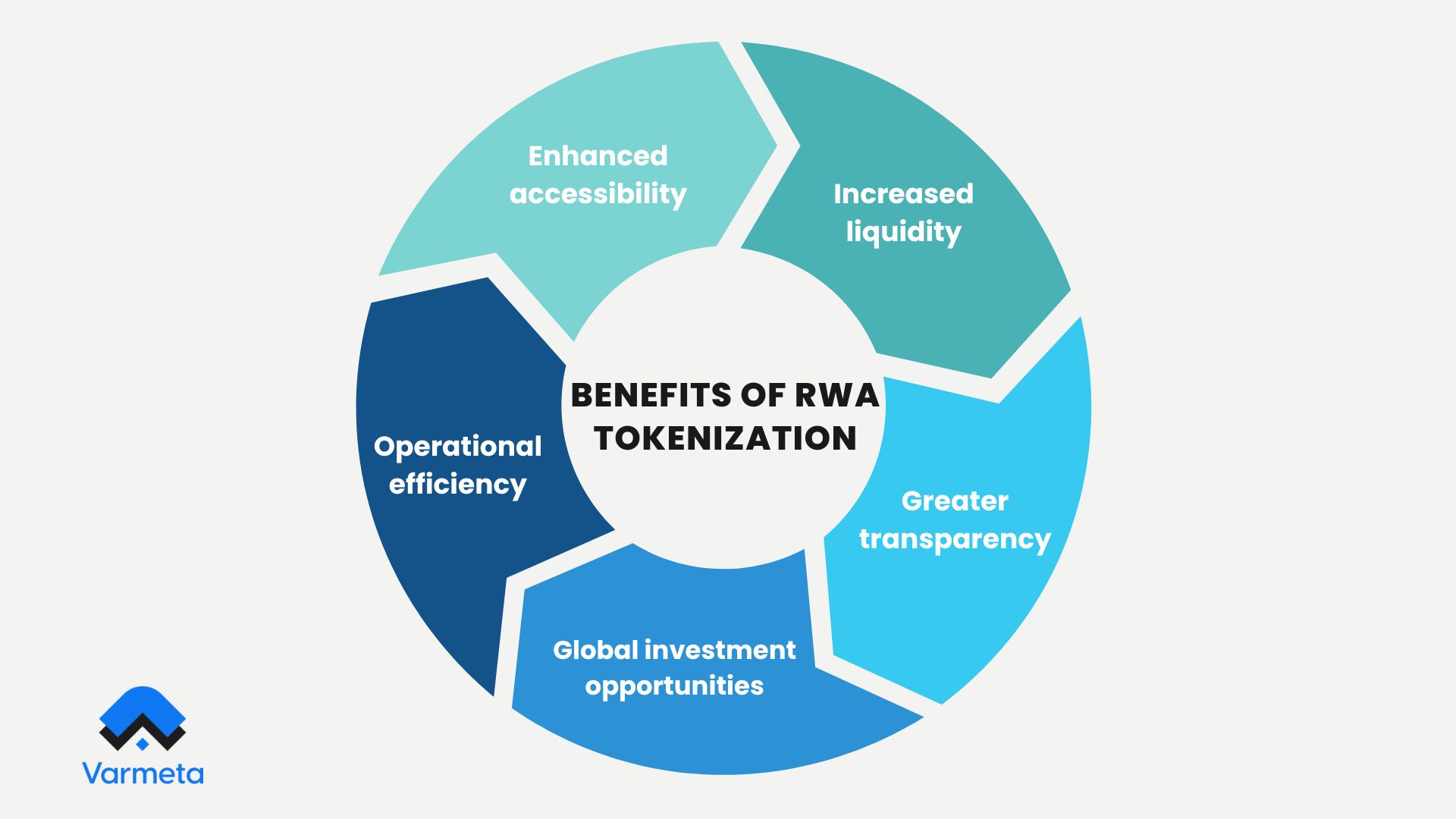
Real world asset (RWA) tokenization is changing the way we think about ownership and investment, leveraging blockchain technology to create a more accessible, transparent, and efficient financial system. Below are the key benefits of this transformative innovation:
Enhanced accessibility
One of the most significant advantages of RWA tokenization is its ability to democratize access to high-value assets. Traditionally, investments in real estate, fine art, or private equity were limited to wealthy individuals or institutions due to high entry costs. Tokenization breaks these barriers by dividing assets into smaller, affordable fractions. For example, instead of needing millions to invest in a luxury property, an individual can purchase a token representing a small share of that property. This inclusivity opens the door for a wider range of investors, empowering individuals with limited capital to diversify their portfolios and participate in previously inaccessible markets.
Increased liquidity
Illiquidity has long been a challenge for assets like real estate, art, or private equity, where selling often requires months or even years. Tokenization addresses this issue by allowing assets to be traded on blockchain-based marketplaces. Token holders can buy or sell their shares quickly, creating a dynamic and efficient market. This newfound liquidity benefits not only investors but also asset owners, who can unlock the value of their assets without waiting for lengthy sales processes.
Greater transparency
Blockchain technology is inherently transparent, recording every transaction on an immutable ledger. This means that all ownership and transaction histories for tokenized assets are easily verifiable and tamper-proof. For investors, this level of transparency reduces the risk of fraud and creates a higher degree of trust. Asset owners and managers also benefit, as they can provide clear and auditable records to stakeholders, enhancing credibility and accountability.
Operational efficiency
Tokenization leverages smart contracts to automate processes that traditionally require intermediaries. Tasks such as transferring ownership, distributing dividends, and ensuring compliance can be executed automatically through code, reducing the need for brokers, lawyers, and administrators. This not only speeds up transactions but also significantly lowers operational costs. The efficiency brought by tokenization allows for streamlined asset management and reduces friction in the investment process.
Global investment opportunities
Tokenized assets transcend geographical boundaries, enabling investors from around the world to access opportunities in different markets. This global reach eliminates the complexities and costs associated with cross-border transactions, such as currency exchange fees or legal restrictions. For asset owners, tokenization expands the pool of potential buyers, increasing demand and potentially boosting asset values. This borderless nature of tokenization aligns with the vision of a truly interconnected global financial ecosystem.
The benefits of RWA tokenization are far-reaching, touching every aspect of asset management and investment. By making assets more accessible, liquid, and efficient, tokenization is reshaping traditional markets and paving the way for a more inclusive and transparent financial system. As adoption grows, these benefits will continue to drive innovation and create new opportunities for individuals and organizations alike.
Challenges in RWA tokenization
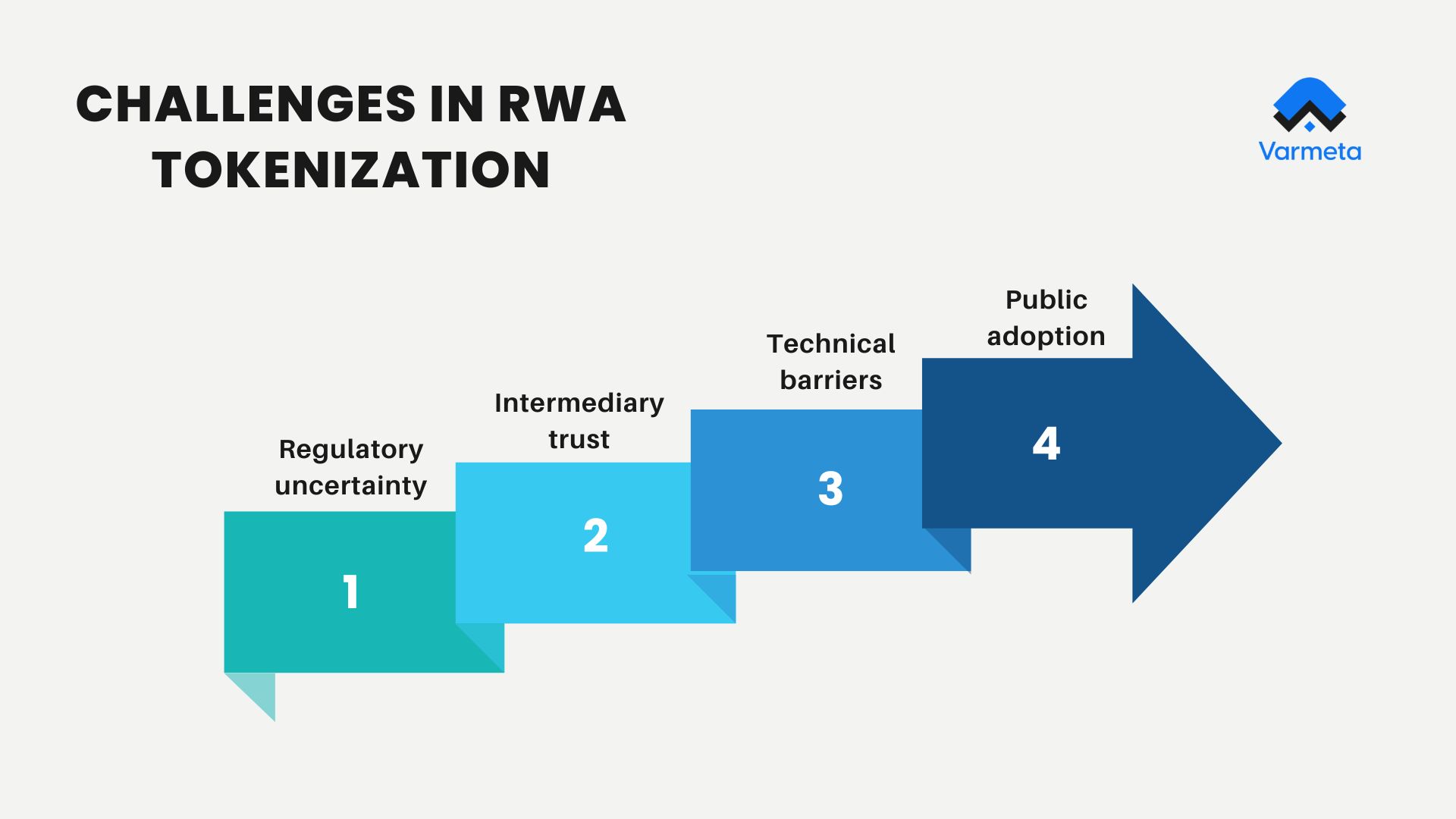
While real world asset (RWA) tokenization offers numerous benefits, it also faces significant challenges that must be addressed for widespread adoption and success. Below are some of the key obstacles:
Regulatory uncertainty
Regulatory uncertainty remains a significant challenge for the widespread adoption of RWAs. A PwC survey in 2024 found that 65% of institutional investors cite regulatory uncertainty as their primary hesitation to engage with tokenized RWAs. Fragmented compliance standards across jurisdictions further complicate matters. The Financial Action Task Force (FATF) has estimated that a unified global framework will not be fully operational until 2027.
- Fragmented jurisdictions: More than 40 countries have conflicting compliance standards for RWAs, which slows the adoption of tokenized assets.
- Slow progress: Global regulatory bodies are still working on harmonizing these standards, causing delays in the implementation of tokenized RWAs.
Intermediary trust
Unlike purely digital assets, tokenized real-world assets rely on intermediaries to manage the connection between the blockchain tokens and the physical or legal assets they represent. This includes custodians, legal entities, or verification services responsible for ensuring the underlying asset’s validity and security. However, this reliance introduces trust issues, as the integrity of the system depends on the reliability and competence of these intermediaries. Mismanagement, fraud, or negligence by any of these parties can undermine confidence in the tokenization process.
Technical barriers
The technology supporting RWAs faces challenges related to scalability and security. Ethereum gas fees, which reached an average of $40 per transaction during peak periods in 2022, highlight the need for more scalable blockchain solutions.
- Scalability: Layer 2 solutions are expected to address these scalability issues, allowing tokenized RWAs to operate at scale.
- Security: In 2023, smart contract vulnerabilities led to losses of $2.1 billion, underscoring the importance of security in tokenized markets.
Public adoption
For tokenization to reach its full potential, public awareness and understanding must improve. Many investors and businesses are unfamiliar with blockchain technology and hesitant to embrace tokenized assets due to a lack of education and trust. Overcoming misconceptions, addressing concerns about security, and providing user-friendly platforms will be essential to drive adoption. Building confidence in the technology and its benefits requires ongoing efforts to educate stakeholders and demonstrate real-world successes.
Addressing these challenges will require collaboration between industry leaders, regulators, and technology providers. Regulatory clarity, trusted intermediary systems, scalable blockchain solutions, and educational initiatives are all critical to unlocking the full potential of RWA tokenization. As these issues are resolved, the transformative power of tokenized assets will become increasingly evident, paving the way for a more accessible and efficient global financial ecosystem.
Key use cases of RWA tokenization

Real-world asset (RWA) tokenization is transforming traditional industries by leveraging blockchain technology to digitize ownership, improve transparency, and increase accessibility. Below are some of the most impactful use cases:
Real estate
Tokenizing real estate enables fractional ownership of property, allowing investors to hold portions of high-value real estate without the need for large upfront investments. Tokenized real estate is valued at $208 billion, and the market is expected to grow to $2.3 trillion by 2030.
- Fractional investment opportunities: Platforms like RealT have seen an 80% increase in investor participation since introducing fractional ownership models in 2021.
- Cross-border access: Tokenization enables the easier exchange of real estate across borders, making it accessible to global investors.
- Liquidity enhancements: Transactions on blockchain-based platforms have reduced average property sale times from six months to just three weeks.
Commodities
Tokenized commodities, particularly gold, have been gaining traction in recent years. The tokenized gold market alone represents $6 billion in market value, with platforms like Paxos and Tether Gold leading the adoption.
- Accessibility: Retail investors’ interest in tokenized commodities is growing rapidly. By 2024, 23% of retail investors will own tokenized commodities, compared to just 8% in 2020.
- Market stability: According to Morningstar, tokenized commodities have reduced average portfolio volatility by 12%.
Art and collectibles
The tokenized art market is projected to exceed $50 billion by 2030, with annual growth rates of 11%. Tokenization provides fractional ownership of fine art, offering global accessibility and increasing investor demand.
- Fractional ownership: Platforms like Masterworks report an 87% increase in investor demand since introducing fractional ownership models in 2022.
- Global accessibility: Over 35% of new investors in tokenized art are from emerging markets, up from just 5% in 2018.
Carbon credits
Carbon credits, which represent the right to emit a certain amount of carbon dioxide, are increasingly being tokenized to improve transparency and trading efficiency. Each token represents a carbon offset or reduction program and can be easily tracked and traded on blockchain platforms.
This use case addresses growing concerns about climate change by providing a transparent way to verify and trade carbon credits. Tokenization simplifies the process of buying, selling, and verifying credits, making it easier for companies to meet sustainability goals. For example, a renewable energy project could tokenize its carbon offset certificates, allowing corporations to purchase and trade them seamlessly.
Supply chain assets
Tokenized supply chain assets are valued at $60 billion and are expected to reach $500 billion by 2030. Tokenization of supply chain assets provides dynamic liquidity solutions, enabling small and medium-sized enterprises (SMEs) to trade invoices for immediate cash flow.
- Dynamic liquidity solutions: Platforms like Marco Polo report a 30% reduction in payment delays by using tokenized invoices.
- Increased SME participation: Tokenized invoice trading has improved liquidity for SMEs in the Asia-Pacific region by 25%.
RWA tokenization is revolutionizing diverse industries by making assets more accessible, liquid, and efficient. From fractional real estate ownership to transparent carbon credit trading, the applications of tokenization are vast and impactful. As adoption grows, these use cases will continue to evolve, unlocking new opportunities and reshaping traditional markets in the digital age.
Debt and equity instruments
Tokenized debt and equity instruments are projected to grow to $8 trillion by 2025, comprising 50% of the RWA market.
- Efficient issuance: Tokenized bonds have reduced issuance costs by 30% compared to traditional methods.
- Secondary market liquidity: Platforms like Securitize have increased trading volumes by 42% year-over-year, demonstrating the market’s growing appetite for tokenized debt and equity instruments.
The future of RWA tokenization
Real-world asset (RWA) tokenization is poised to reshape industries by bridging traditional finance and blockchain technology. As adoption accelerates, several key trends and developments are emerging that will shape its future:
Hybrid models: Bridging on-chain and off-chain solutions
The future of RWA tokenization will likely involve hybrid models that combine the strengths of both on-chain and off-chain approaches. While on-chain tokenization provides transparency, efficiency, and decentralization, off-chain solutions are critical for managing physical assets and complying with existing legal frameworks.
These hybrid systems could, for example, use blockchain to record and track ownership while relying on off-chain custodians or legal entities to manage the physical asset. This approach offers the best of both worlds, enabling scalability, regulatory compliance, and transparency in asset management.
Regulatory evolution and support
As the tokenization market matures, regulatory frameworks are expected to evolve to accommodate digital assets. Governments and regulatory bodies are already exploring ways to integrate blockchain-based solutions into existing financial systems.
Clear regulations will provide the legal certainty needed for institutional adoption, addressing concerns about ownership rights, security, and compliance. Initiatives such as Europe’s MiCA (Markets in Crypto-Assets) regulation and similar efforts in other regions signal a growing commitment to creating a supportive environment for tokenized assets.
Rapid market growth and integration into traditional finance
The tokenized asset market is projected to grow exponentially, potentially reaching trillions of dollars in value over the next decade. This growth will be fueled by the increasing adoption of tokenized solutions in sectors like real estate, commodities, and art.
As tokenized assets become more mainstream, traditional financial institutions are expected to integrate them into their operations. Banks, investment funds, and asset managers may begin offering tokenized versions of their portfolios, combining the benefits of blockchain technology with the stability and trust of traditional finance.
The role of DeFi in expanding opportunities
Decentralized Finance (DeFi) is set to play a pivotal role in unlocking new opportunities for RWAs. By integrating tokenized assets into DeFi protocols, users can access innovative financial services such as lending, borrowing, and staking.
For example, a tokenized real estate asset could be used as collateral in a DeFi lending platform, allowing owners to unlock liquidity without selling the asset. This integration not only enhances the utility of tokenized assets but also creates a more inclusive financial system where anyone with an internet connection can participate.
The future of RWA tokenization is incredibly promising, with hybrid solutions, regulatory advancements, and DeFi innovation paving the way for widespread adoption. As these trends converge, tokenized assets are set to become a cornerstone of the global financial ecosystem, transforming how we manage, trade, and invest in real-world assets.
Conclusion
Real world asset (RWA) tokenization is revolutionizing the way we think about ownership, investment, and asset management. By leveraging blockchain technology, it offers unparalleled benefits, such as improved accessibility, enhanced liquidity, increased transparency, and the ability to participate in global markets with ease. These innovations are breaking down traditional barriers, democratizing access to high-value assets, and creating a more inclusive financial ecosystem.
However, for RWA tokenization to reach its full potential, key challenges like regulatory uncertainty, reliance on intermediaries, and public education must be addressed. Collaboration between industry leaders, regulators, and technology providers will be crucial in overcoming these obstacles. As blockchain technology continues to evolve and integrate with traditional financial systems, tokenization is set to become a cornerstone of the global economy.
The future of RWA tokenization is promising, with hybrid models, advancing regulations, and the growing role of Decentralized Finance (DeFi) paving the way for widespread adoption. Now is the time for businesses and investors to explore this transformative approach, unlocking new opportunities and reshaping markets in the digital age.