ServiceNow’s AI business crossed a real milestone in its second quarter of 2026: annual contract value from AI products surpassed $1 billion, net new AI ACV accelerated more than 40 percent quarter over quarter, and the number of customers running agentic AI in production grew ninefold over nine months, according to the company’s own Q2 2026 investor results. Total quarterly revenue reached $3.99 billion, up 24 percent year over year, and the company now counts 658 customers paying more than $5 million a year, with a 98 percent renewal rate. By any measure, ServiceNow workflow automation is one of the strongest-performing product categories in enterprise software right now.
None of that momentum makes ServiceNow cheap. The platform commands roughly 44.4 percent of the global ITSM market, more than its next several competitors combined, but it costs approximately 3.2 times more than Jira Service Management, its closest rival by adoption, and enterprise rollouts typically take 9 to 18 months against 60 to 90 days for a comparable Jira Service Management deployment.
That gap between market dominance and time to value is the real story behind ServiceNow workflow automation in 2026: the platform is winning more than ever, and it is asking customers to pay more than ever to get there. This article breaks down what that premium actually buys, where it stops making sense, and what changes once AI agents enter a ServiceNow workflow.
What ServiceNow workflow automation actually includes in 2026
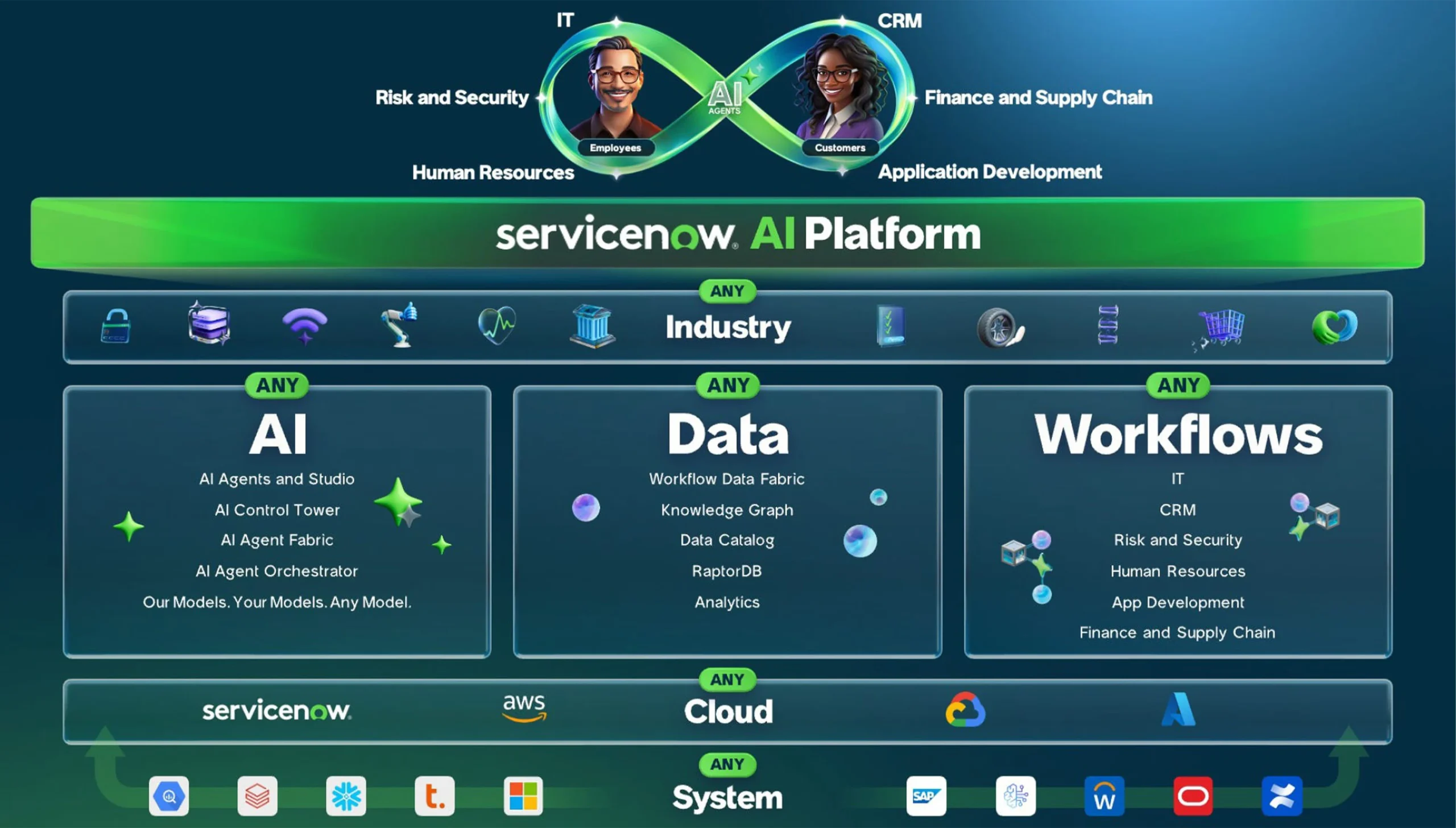
“ServiceNow workflow” covers more ground than most buyers initially scope for. The platform is organized into modules that share a common data model but are licensed, configured, and often budgeted separately.
| Module | What it automates | Common budgeting mistake |
| ITSM (IT Service Management) | Incident, problem, and change management workflows | Treated as the whole platform when it’s one module among several |
| ITOM (IT Operations Management) | Discovery, CMDB, and infrastructure monitoring workflows | Assumed to be included in ITSM licensing; it’s typically a separate purchase |
| HRSD (HR Service Delivery) | Employee onboarding, case management, and HR request workflows | Scoped as a standalone project without accounting for shared ITSM data dependencies |
| CSM (Customer Service Management) | External customer case and service workflows | Confused with ITSM’s internal ticketing model, which uses different SLA logic |
| Security Operations | Vulnerability response and security incident workflows | Bundled into ITSM cost estimates when it usually isn’t |
| AI Agent Studio, Orchestrator, and Action Fabric | Agent-driven workflow steps that reason over context instead of following a fixed rule | Assumed to be included at every licensing tier; agentic AI capability is metered and tiered separately |
Underneath all of these sits Flow Designer and Workflow Studio, the deterministic, if-this-then-that automation layer most ServiceNow instances still run on day to day. The AI layer sits on top of that foundation rather than replacing it, which is part of why a ServiceNow workflow automation budget so often balloons past its original scope: each module and each AI tier is its own line item, and few first-time buyers price out all of them at once.
The real cost comparison
The list price on a ServiceNow quote is rarely the number a finance team ends up paying. A 50-fulfiller Pro-tier ITSM deployment that looks like roughly $96,000 a year on paper tends to land closer to $300,000 to $400,000 in year one once an implementation partner, internal admin time, and configuration work get counted, a gap that’s common enough to have its own name among ServiceNow buyers: quote shock.
| ServiceNow | Jira Service Management | Freshservice | |
| ITSM market share | ~44.4% | Smaller, but fastest-growing enterprise alternative | Positioned for mid-market, not enterprise scale |
| Relative cost | Baseline (1x) | Roughly 0.3x ServiceNow’s cost | Starts around $19 to $99 per user per month |
| Typical enterprise rollout time | 9 to 18 months | 60 to 90 days | Weeks, not months, for standard configurations |
| AI approach | Native, deeply integrated agentic AI (Now Assist, AI Agent Studio) | AI features added to an existing architecture, expanding through 2026 | AI (Freddy) added on top of existing architecture |
| Best fit | Large enterprises with complex, multi-department governance needs | Teams already inside the Atlassian ecosystem wanting faster time to value | Mid-market teams prioritizing simplicity and speed over deep customization |
The AI row is where ServiceNow’s investment shows up most clearly. Gartner named ServiceNow the sole Leader in its 2025 Magic Quadrant for AI Applications in IT Service Management, and the earnings data backs that positioning up with real adoption, not just analyst opinion: agentic AI in production grew ninefold in nine months, and deals including five or more ServiceNow AI products grew 5.5 times year over year.
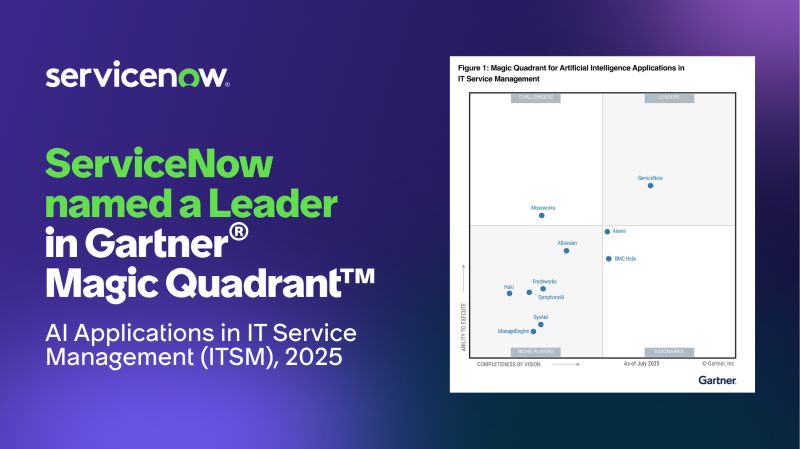
Competitors are catching up on paper, Jira Service Management’s 2025-2026 roadmap adds AI-powered virtual agents and request triage automation, and Freshservice’s Freddy AI covers similar ground, but neither has shipped a governance layer as mature as ServiceNow’s AI Control Tower yet. That gap is currently wide enough that large enterprises are visibly paying for it rather than waiting for competitors to close it.
The global ITSM market itself is growing fast enough to make this comparison matter for years, not just this budget cycle. It reached roughly $11.91 billion in 2024 and is projected to climb to $36.78 billion by 2032, a 15.3 percent compound annual growth rate. A platform decision made in 2026 is realistically a decision that shapes IT operations budgeting for the next six to eight years, which is part of why the sticker-price comparison undersells how much is actually riding on this choice.
When the ServiceNow premium is worth paying
The 658 customers now paying ServiceNow more than $5 million a year aren’t making an irrational choice, and their average contract value has grown 233 percent since 2011 as those relationships deepened. For a specific kind of organization, the premium buys something genuinely hard to replicate elsewhere.
- Multi-department governance at scale: An organization running ITSM, HR service delivery, and security operations on one shared data model avoids the integration tax of stitching together three separate platforms, which is exactly the workflow pattern ServiceNow’s AI Agent Orchestrator is built to coordinate across departments.
- Regulatory and audit exposure that justifies the tooling: ServiceNow’s AI Control Tower, its governance layer for agentic workflows, is more mature than what most competitors currently ship, which matters directly to organizations that need to document AI agent behavior for compliance reasons.
- An existing ServiceNow investment with room to expand: The cohort data above shows expansion, not replacement, is the more common path once an organization is already on the platform, which is part of why churn stays low even as list prices climb.
Outside of those cases, the 9 to 18 month rollout timeline and the 3.2x cost multiple are real costs that a mid-market team building comparatively simple workflows is paying for capability it may never use.
What changes once AI agents enter a ServiceNow workflow
The one gap ServiceNow’s investment hasn’t closed yet is proving that an AI agent’s decision was correct, not just that it acted. AI Control Tower documents that an agent stayed inside its policy boundaries and produced a completed action, which is real governance value for compliance teams. It doesn’t independently check whether the underlying judgment call, the root cause an agent diagnosed, the remediation plan it picked, was actually right. An agent that misdiagnoses a ticket and closes it with the wrong fix still produces a policy-compliant audit entry, because the platform is built to confirm that a rule was followed, not that a conclusion was sound.
That distinction matters more as agentic AI adoption accelerates rather than less. With agentic AI in production up ninefold in nine months, more ServiceNow workflows are handing real decisions to AI agents than at any point since the platform launched Now Assist. Teams scaling that adoption should budget for a verification layer around high-stakes agentic steps, security remediation and access approvals especially, the same way they’d budget for any other governance gap the core platform doesn’t fully close.
Common mistakes teams make budgeting for ServiceNow workflows
- Pricing the ITSM module and assuming it covers the whole rollout: ITOM, HRSD, CSM, and Security Operations are typically separate purchases, and a workflow that spans departments usually needs more than one.
- Assuming agentic AI capability comes standard: AI Agent Studio and Action Fabric access is tiered and metered, and a workflow plan scoped around the list price alone is likely to hit a licensing wall mid-build.
- Underestimating implementation time in the initial budget: The 9 to 18 month enterprise rollout window is the realistic planning number, not the vendor’s best-case timeline, and every month of delay is a month of parallel-running legacy tooling.
- Comparing sticker price to sticker price against Jira Service Management or Freshservice: The honest comparison is total cost of ownership against the specific governance and cross-department reach a workflow actually needs, not the monthly per-seat number alone.
Conclusion
ServiceNow workflow automation earned its market position the hard way: real enterprise adoption, a governance layer competitors haven’t matched yet, and now a billion-dollar AI business validating that large organizations are willing to pay a real premium for it. That premium is only rational for the organizations actually using the breadth it buys.
For a team evaluating ServiceNow against a faster, cheaper alternative, the honest question isn’t which platform has better marketing. It’s whether the workflow in front of you needs multi-department governance and audit depth, or whether it needs to ship in ninety days. Getting that assessment wrong in either direction is expensive: overbuying ServiceNow for a workflow that didn’t need it wastes months of implementation time on capability nobody uses, and underbuying a lighter platform for a workflow that actually needed ServiceNow’s depth means rebuilding the governance layer later, usually after an audit or an incident forces the question.
If your team is scaling autonomous workflows, connect with Varmeta to implement the verifiable AI and blockchain infrastructure needed to ensure every agentic decision is accurate, compliant, and auditable.
FAQs
1. Is ServiceNow worth the cost compared to Jira Service Management?
For large enterprises with multi-department governance needs, complex change management, or heavy compliance exposure, ServiceNow’s depth typically justifies its roughly 3.2x cost premium. For teams prioritizing fast deployment and simpler workflows, Jira Service Management or Freshservice usually deliver comparable value at a fraction of the cost and a fraction of the rollout time.
2. How long does a ServiceNow workflow rollout actually take?
Enterprise ServiceNow deployments typically take 9 to 18 months, driven by the platform’s configuration depth and the number of modules involved. Comparable Jira Service Management rollouts typically complete in 60 to 90 days, though they cover a narrower scope.
3. Does ServiceNow’s AI Agent capability come included with standard licensing?
No. Agentic AI features through AI Agent Studio and Action Fabric are metered and tiered separately from core ITSM licensing, which is one of the most common sources of budget overruns once a team starts scoping an AI-driven workflow.
4. Can ServiceNow’s AI Control Tower verify that an AI agent’s decision was correct?
No. Control Tower confirms an agent acted within its permitted policy scope and produced a completed action. It doesn’t independently verify that the underlying decision, like a diagnosed root cause or a chosen remediation plan, was actually correct, which is a separate governance gap worth planning around for high-stakes workflows.
5. What’s the biggest budgeting mistake teams make when scoping ServiceNow workflow automation?
Pricing only the ITSM module and the list-price licensing tier, then discovering mid-project that ITOM, HRSD, or agentic AI capability each require separate purchases. A realistic ServiceNow budget starts from total cost of ownership, not the initial quote.