It is safe to say that the blockchain trilemma is one of the many issues that need to be addressed with great importance in the matters of the development of blockchain technology. Growing popularity causes the appetite for the development of solutions that would effectively compromise security, decentralization, and scalability. Gartner forecasts that the business value generated by blockchain will grow rapidly, reaching $176 billion by 2025 and $3.1 trillion by 2030. This brings the necessity to tackle all the issues that come with the blockchain trilemma even more. In this post, we will talk about artificial intelligence (AI) and its role in these barriers thereby helping set a stronger and bigger environment.
Understanding the Blockchain Trilemma
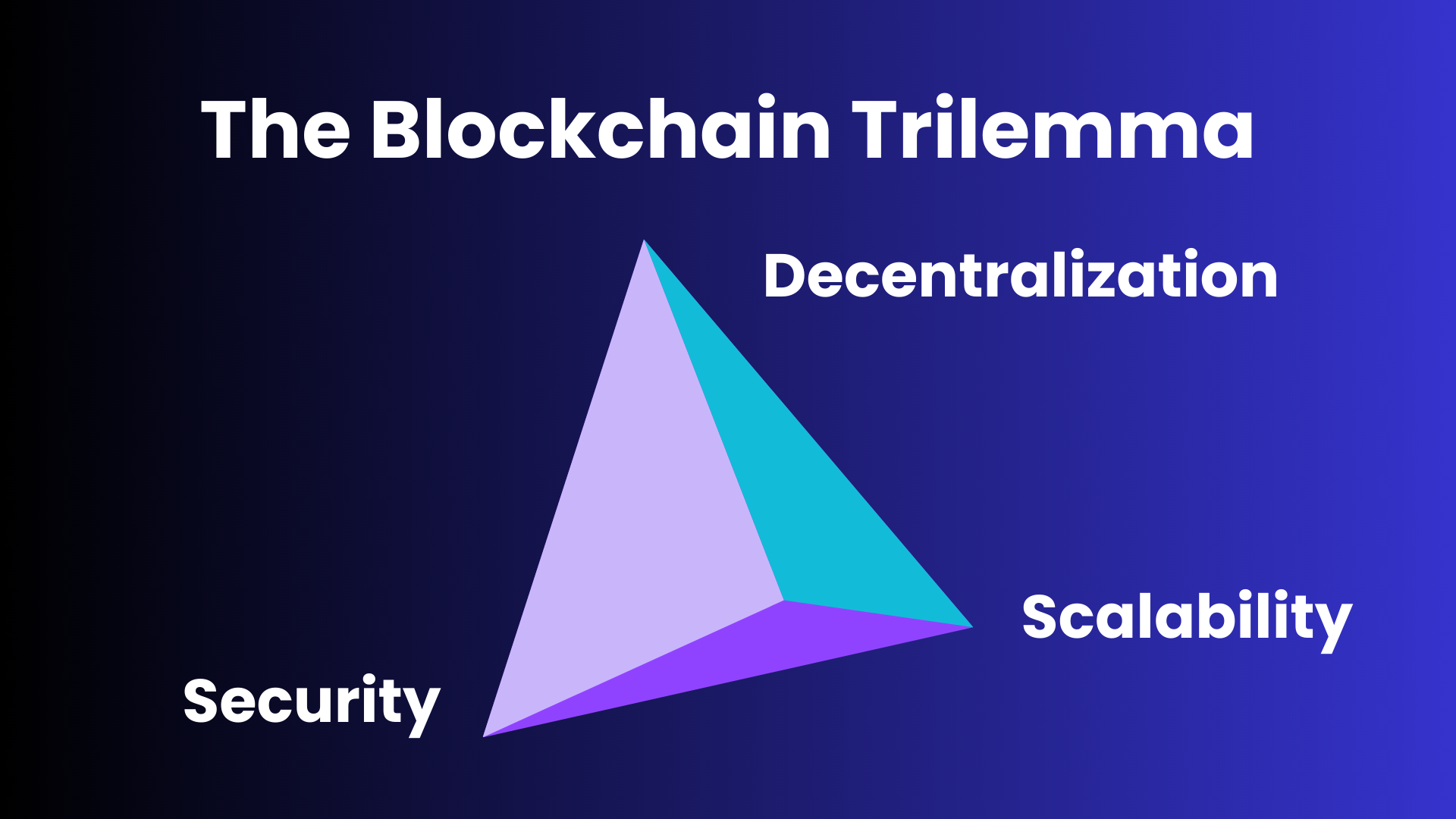
The Three Core Elements
1. Security:
Security is the main basis for any blockchain system. This means all transactions are protected systems of record where no one can make alterations to records or perpetrate an attack. Having such a lockbox for the infallible security of a blockchain is necessary for the users as well as the assets themselves. One who cannot believe in the security of the executed transactions is hardly going to use any blockchain services.
2. Decentralization:
This principle aims to stop any one participant from controlling the entire network thus making it harder to censor and commit fraud. In other words, it is necessary to protect the blockchain from any attack. Blockchain decentralizes the network so that its users are not required to have any central authority, thus increasing its justice.
3. Scalability:
Scalability quantifies the performance of a given blockchain about the number of transactions performed. The faster speed of processing transactions is crucial for mass acceptance when the number of users grows. When there is an overload of the network because it cannot scale to the number of transactions, it is considered a scalability constraint and results in slow responses and high operational costs.
The Challenge of Balancing the Trilemma
Striking the right proportions of these three sectors is quite a challenging task. Most blockchain systems are good at two factors only to excel in the third factor in the blockchain trilemma. Taking Bitcoin as an example, it is hard to talk about its security and decentralization not to mention its greatest challenge of scalability which allows it to only process around seven transactions per second (TPS). Such transaction capability is rather ridiculous, especially in comparison to traditional transactions such as a credit card payment system, where for Visa cards, thousands of transactions are executed within seconds. On the contrary, sometimes, speed-oriented blockchains tend to sacrifice security, and thus their degree of attack resistance is lowered.
The blockchain trilemma encapsulates the inherent conflict between the three distinct aspects. Hence the developers and organizations are always trying to find a way to improve one aspect while keeping the rest intact. This also brings the need for improvement, especially in AI.
AI’s Impact on Blockchain: What Does The World Say?
Recent findings and statistics reveal that integrating AI into blockchain systems is not just beneficial; it is essential for overcoming these hurdles. Let’s explore what leading organizations and research institutions are saying about this powerful synergy.
World Economic Forum: Blockchain technology is projected to account for 10% of global GDP by 2027, underscoring the need for solutions to scalability and security challenges.
IBM Research: A survey revealed that 64% of organizations noted scalability as a primary concern. And CEOs Race Towards Gen AI Adoption, Questions Around Workforce and Culture Persist.
McKinsey & Company: Companies leveraging AI in their blockchain initiatives have seen up to a 20% increase in efficiency and a 30% reduction in fraud risks.
Deloitte: 39% of organizations believe that integrating AI with blockchain can significantly enhance security and scalability.
Accenture: Businesses incorporating AI into their blockchain strategies can achieve up to a 40% improvement in transaction speeds, addressing scalability concerns directly.
The integration of AI into blockchain technology is not merely a trend; it is a critical evolution that addresses the pressing of methods to get the blockchain trilemma. The statistics from leading research organizations underscore the transformative potential of AI, highlighting significant improvements in efficiency, security, and transaction speeds.
The Role of AI in Solving the Blockchain Trilemma
Artificial intelligence (AI) offers innovative solutions to have blockchain trilemma solved or improved. By integrating AI with blockchain technology, we can enhance security, improve scalability, and maintain decentralization. Here are key areas where AI can make a significant impact:
There are promising solutions to the problems of the Blockchain trilemma and AI is one of them. These two technologies can work together to improve safety, increase the capacity of the system, and keep the system decentralized. Below are the leading considerations that support the significant usage of AI:
1. Advanced Threat Detection
Almost all Blockchain networks incur some form of security threat, including but not limited to, smart contracts’ failures and the so-called 51% attacks. In a 51% attack, an external entity controls about half of the computational resources of the network, thus changing the records created for every transaction in the network. Modern times fear the emergence of criminals going undetected or leaving very few traces over a global network because of advanced AI security technologies.
In this case, AI would help in network security by incorporating an advanced threat detection strategy to monitor the network in real-time, detect any uncharacteristic activity, and respond to probable threats.
Machine learning can identify abnormal behavior based on previous activities, which will help for example in tracing any harmful transaction activities to enable quicker responses. Also, with these systems, AI will improve the observation of operations, enabling organizations to quickly manipulate the system and detect activities such as fraud, creating a healthier space for users.
2. Smart Contract Verification and Auditing
Smart contracts are essential components of several blockchain ecosystems today, especially in the decentralized finance (DeFi) and non-fungible token (NFT) spaces. Nevertheless, theorists outsmarting practitioners is difficult when coding bugs embed cryptographic traps. AI can help streamline the application verification and auditing processes of smart contracts by searching, within large datasets, content for risk elements before launch.
This alleviation is economical and bolsters trust in smart contracts. Defense mechanisms are also provided by way of how AI programs can create an attack on the users or testers of the system. This is important especially when the development approach is used in areas where time and resources are critical and vulnerable to exploits such as Banking and Health Industries.

3. Advanced management of identity and access
Decentralized systems rely on users holding private keys for gaining access to their assets and therefore, their security is the highest priority. If any of such keys gets compromised even for a moment, the risk of security goes to a very high level. AI enhances identity and access management by incorporating biometric systems such as facial recognition to establish and manage access controls combined with other existing systems.
These systems make use of the actual data and hence, can help in limiting access to sensitive data to only those authorized. In addition, AI has the capability of assessing the activity of a user and monitoring for any strange access actions that raise the user’s security safeguards and protection of their online identities.
4. Using Predictive Analytics in Security Management
The use of AI is of great interest because it helps to predict the occurrences of threats by extrapolating previous data. For this reason, by using AI metrics, engineers can learn from their ancestors’ mistakes and try to do better next time without the occurrence of such risk.
AI can, for instance, analyze the distribution of a miner’s hash rate and the potentiality of a 51% attack that can be posed to the network informing the network administrators of the threat before it happens. Such security improvement measures are tactically beneficial since they are anticipatory.

5. Dealing with transaction-related issues
As networks based on blockchain technology grow, scalability continues to be a major issue. AI can enhance the operational dynamics of processes involved in transaction verification. In this way, the AI can identify the most likely transactions to be validated and therefore track them to save time and manage queues within the system.
This not only enables the improvement of the scalability aspect of the system but also encourages the user which in turn facilitates the acceptance of blockchain technology in the mainstream.
6. Energy Efficiency
Blockchain trilemma addresses the problem of using energy-intensive mechanisms like proof-of-work (PoW) to face sustainability challenges. AI can optimize mining processes to make these networks more energy-efficient.
For example, AI can look at the data related to the energy use of mining activities and the network activity to come up with the most efficient mining schedule. Summarily, AI helps to enhance the transaction per energy ratio where every transaction is less energy-consuming, hence leading to a more green and cost-effective blockchain network.
7. AI-Enhanced Consensus Mechanisms
The consensus mechanism is one of the elements that determine that every single user of the blockchain network agrees on the state of the ledger at the very present time. Those methods, for instance, proof of work or proof of stroke, have limits of scalability. It can elevate these mechanisms by allowing variation of difficulty levels for upcoming miners according to existing situations of the network.
This is to ensure that block validation time by a given block does not disappoint to go beyond a certain time. This promotes ease of growth of the system without compromising on the safety measures put in place and security. AI can also help implement a hybrid consensus mechanism that allows the use of several algorithms to overcome the weaknesses of the current system.
8. Data Compression and Storage Solutions
As more and more users are connected to blockchain networks, problems in blockchain trilemma regarding the storage of information arise. This is where AI comes into the picture to help with video data compression as well as better storage segmentation techniques. AI definitions can find and eliminate duplication on a blockchain and shrink it while preserving integrity thus decreasing its size.
So that such information does not take a considerable amount of time to be looked up. That is this also eases the extent of scaling that can be achieved without compromising on the distributed nature of the system. There are also data management techniques at the lower end which would be important in enhancing technology to solve the blockchain trilemma, making the networks to be easy to use.
Conclusion
To sum up the advantages the fusion of AI within blockchain technology suggests that it would solve some of the hindrances that exist out there within the blocks. The adoption of AI and blockchain technology presents a transformative opportunity to address the challenges posed by the blockchain trilemma. By enhancing security, improving scalability, and maintaining decentralization, AI can help unlock the full potential of blockchain systems. As we move forward, it is clear that innovative solutions will be essential for driving the next generation of secure, scalable, and decentralized technologies.
Organizations like Var-Meta are at the forefront of these advancements, pioneering the integration of AI with blockchain to shape the future of digital transformation. By leveraging the power of AI, we can work towards a more secure and scalable blockchain ecosystem that meets the demands of tomorrow.
Learn more about our service in AI HERE!