On May 7, 2026, the final day of Consensus Miami week, Sui held its first-ever globally broadcast main stage event at Faena Forum in Miami Beach. Sui Live was not a side event tucked into a hotel ballroom. It was a full-day conference with keynotes, ecosystem announcements, dedicated developer sessions, and a simultaneous live stream designed to reach Sui’s global community beyond the attendees in the room. The timing, directly after two days of Consensus Miami, was deliberate: Sui used the concentrated attention of the industry’s most important week to make announcements that would carry weight across every market the network is targeting.
This is a recap of what was announced, who spoke, and what it tells us about where Sui is headed.
The event at a glance
Sui Live ran as a single-day main stage program co-located with Consensus Miami 2026, organized by Mysten Labs, the company behind the Sui blockchain. Speakers included Adeniyi Abiodun (CPO and Co-Founder, Mysten Labs), Raoul Pal (Co-Founder and CEO, Real Vision Group), Guy Wuollet (General Partner, a16z), Matthew Horne (Head of Digital Asset Strategists, Fidelity Digital Asset Management), Ben O’Neill (Global Head of Money Movement, Bridge), and Tayo Oviosu (CEO, Paga), among others. The afternoon included a formal announcement of Sui Overflow 2026, the network’s next global hackathon, presented by Carter Morgan from Mysten Labs developer relations.
The event was structured around three themes that have defined Sui’s 2026 roadmap: scalable finance, global payments, and AI-powered commerce. Each of those themes produced concrete announcements rather than aspirational keynote language, which is what made Sui Live worth attending and worth recapping.
$1 Trillion in stablecoin volume and the vision for zero-fee transfers
Adeniyi Abiodun opened with the headline number: the Sui network has processed over $1 trillion in stablecoin volume since August 2025. That figure was first shared with The Block during Consensus and became the anchor for Abiodun’s framing of what Sui is trying to become. His stated ambition is for Sui to be the default network for moving money globally, and he connected that ambition directly to the founding mission of the Libra and Diem projects at Meta, where the Mysten Labs founding team worked before building Sui.
The specific gap Abiodun pointed to is the cost of international transfers in markets without well-functioning correspondent banking infrastructure. He cited a $100 transfer to Nigeria carrying $35 in fees as the problem that on-chain payment rails exist to solve. Against that backdrop, the announcement of zero-fee stablecoin transfers coming to Sui in 2026 is not a product feature but a strategic bet: if sending money on-chain costs nothing, the economic case for using traditional payment channels in high-fee corridors collapses.
USDsui launches, bridge brings stripe’s infrastructure to Sui
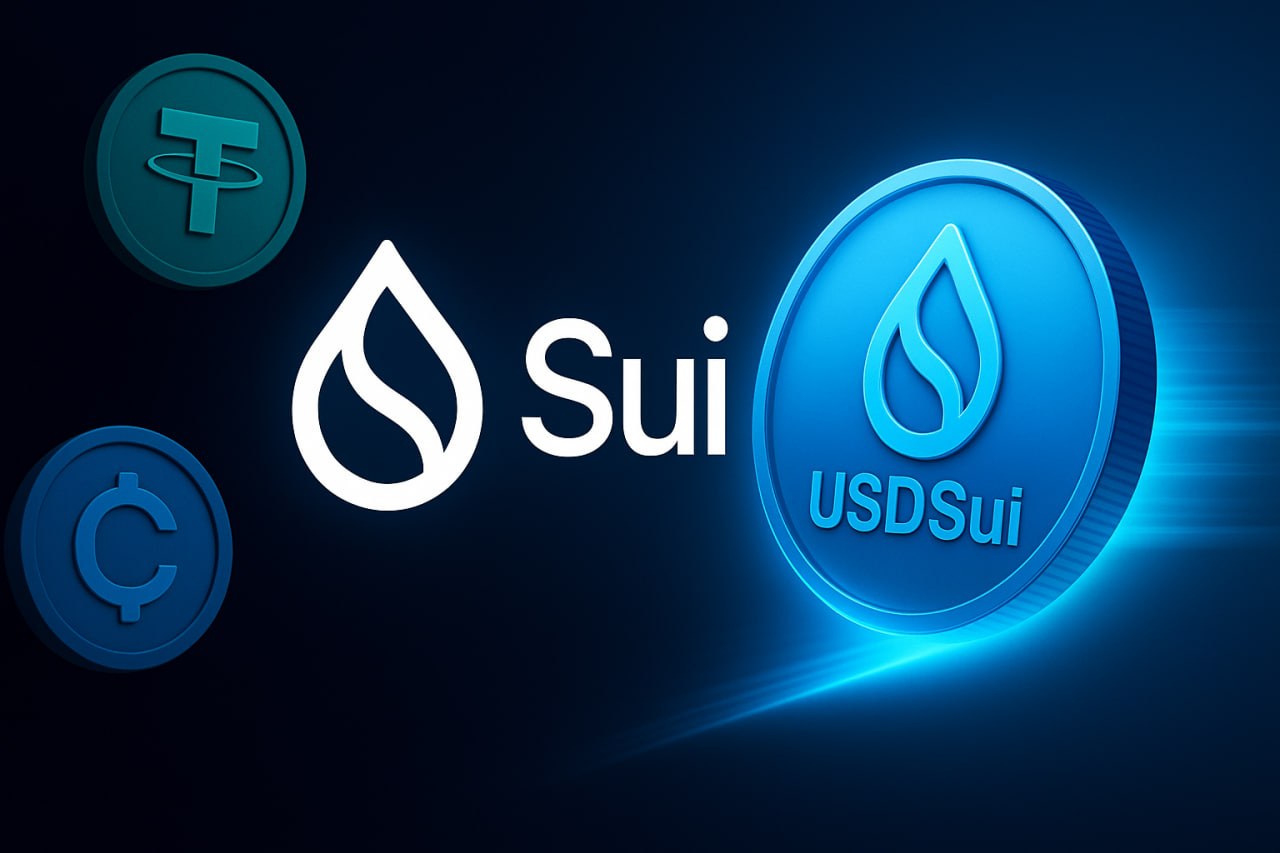
Three days before Sui Live, on May 4, Sui launched USDsui, a yield-bearing US dollar stablecoin issued by Bridge, the crypto infrastructure company Stripe acquired for $1.1 billion in 2025. Unlike USDT or USDC, which are designed primarily as settlement instruments, USDsui is yield-bearing from the start, meaning holders earn interest passively without any additional action. Ben O’Neill from Bridge appeared on stage at Sui Live to discuss the stablecoin’s role in Sui’s payments stack and the broader infrastructure Stripe’s acquisition of Bridge makes available to the ecosystem.
The significance of Bridge’s involvement extends beyond the yield feature. Bridge is now operating inside Stripe’s infrastructure, which means USDsui has a direct connection to one of the world’s largest payment processing networks. For Sui’s ambition to become a default payment rail, that relationship matters more than the stablecoin itself. It creates a bridge between on-chain settlement and the existing merchant and platform ecosystem that Stripe already serves.
Paga partnership: $42 Billion in historical volume moves on-chain
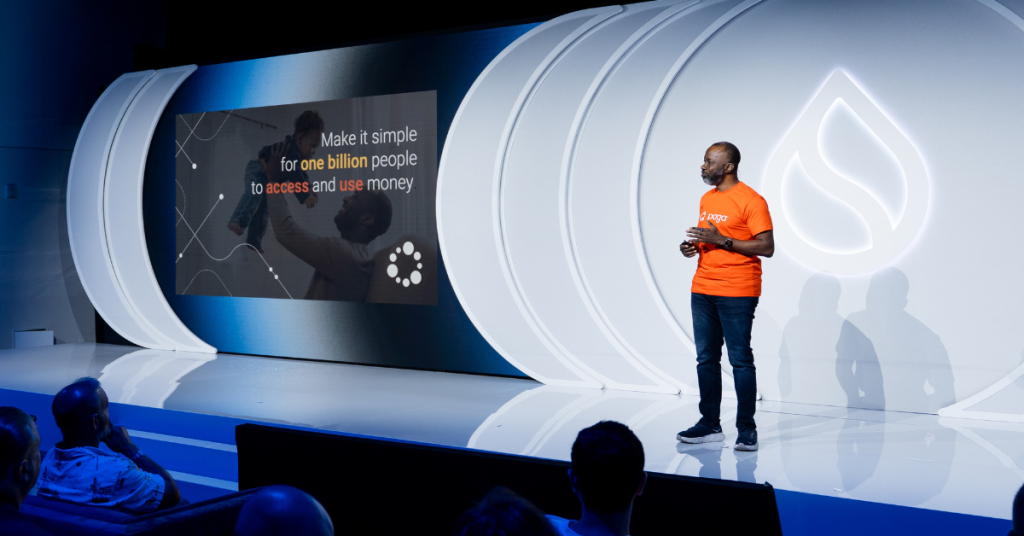
The most significant partnership announcement at Sui Live came from Tayo Oviosu, CEO of Paga, one of Africa’s oldest and largest fintech companies. Paga has processed $42 billion in total payment volume across 653 million transactions since 2009, and $11 billion in 2025 alone across 169 million transactions. The partnership with Sui, announced on stage in Miami, is Paga’s first formal move into crypto and marks a strategic shift under Oviosu, who became Group CEO in April 2026.
The scope of the deal covers four areas: high-yield USD accounts backed by USDsui; crypto on-ramps and off-ramps across Paga’s markets; tokenized real-world assets including real estate, bonds, and solar projects; and cross-border payment rails for businesses and consumers. Paga will adopt Sui as the primary blockchain across its ecosystem and jointly develop developer tools and infrastructure for fintech builders across Africa. Oviosu put the strategic rationale plainly on stage: “These are the walls of the cage, and until we tear them down, financial freedom on this continent is incomplete. We have found that partner: Paga and Sui.”
What makes the Paga deal structurally different from a typical blockchain partnership announcement is the existing scale. Many crypto infrastructure deals begin with a technology stack looking for users. This one begins with a payments company that already has a large user base conducting real transactions and is now adding blockchain-native capabilities on top. That reversal of the typical adoption pattern is exactly what Sui needs if it is serious about reaching mainstream payment volume.
Fidelity, a16z, and the institutional conversation
Matthew Horne from Fidelity Digital Asset Management and Guy Wuollet from a16z both appeared at Sui Live, which is worth noting in context. Fidelity has been building digital asset infrastructure since 2014 and manages assets at a scale where its presence at an ecosystem-specific event signals genuine evaluation rather than exploratory attendance. Wuollet’s session with Kevin Boon, President of Mysten Labs, covered the convergence of AI, DeFi, and the financial system, positioning Sui’s technical architecture as specifically well-suited to the kinds of high-throughput, composable financial applications that institutional DeFi requires.
The combination of Fidelity’s presence, Bridge’s stablecoin issuance infrastructure, and a16z’s continued involvement in the ecosystem reflects a specific thesis: that Sui’s object-based architecture and sub-second finality make it a more viable substrate for institutional financial applications than chains optimized for general-purpose smart contract execution. Whether that thesis proves correct depends on execution, but the caliber of participants at Sui Live suggests the thesis is being taken seriously by people who have done the analysis.
Sui Overflow 2026 and the developer momentum
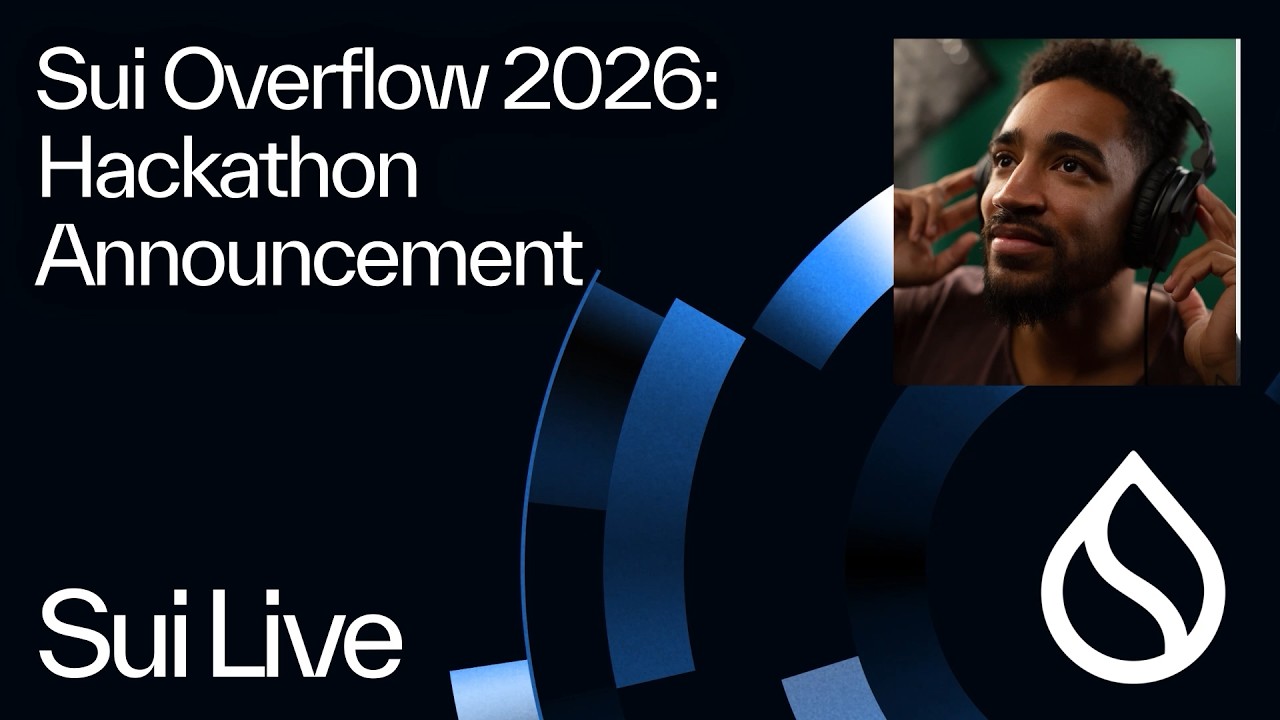
Carter Morgan from Mysten Labs formally announced Sui Overflow 2026, the network’s next global hackathon, during the afternoon session. Sui Overflow has become one of the more substantive hackathons in the L1 ecosystem, attracting builders focused on production-grade applications rather than proof-of-concept demos. The 2025 edition produced projects across DeFi, gaming, and payments that went on to raise funding and ship products. The 2026 edition is expected to reflect the same themes that dominated Sui Live: payments infrastructure, AI-native commerce, and real-world asset integration.
Developer activity on Sui has increased 200% over the past year according to Mysten Labs’ own figures, and the network has been expanding the Sui Stack, its integrated platform of tools and primitives for building financial applications, throughout 2025 and into 2026. The hackathon announcement at Sui Live is designed to funnel that development momentum toward the application categories Sui has now publicly committed to prioritizing.
Private transactions: The announcement that got less attention than it should
Abiodun confirmed at Sui Live what had been teased earlier in the year: private transactions are coming to Sui in 2026. His argument for why this matters is more precise than the usual privacy-as-a-principle framing. He argued that consumer payment adoption at global scale is structurally incompatible with a fully transparent-by-default public ledger, not for regulatory reasons but for behavioral ones. The same way people do not want their bank statements publicly visible, people making everyday payments on a blockchain do not want every transaction readable by anyone with a block explorer.
Sui’s approach is to make privacy the default for user transactions while maintaining the auditability that regulators and institutional counterparties require at the infrastructure layer. That combination, privacy for users and auditability for institutions, is technically difficult and the implementation details have not yet been published. But the commitment to solving it reflects a level of seriousness about payments adoption that most general-purpose smart contract platforms have not engaged with directly.
What Sui Live tells us about the broader market
Taken together, the announcements at Sui Live describe a network that has made a deliberate choice to compete primarily on payments and financial infrastructure rather than general-purpose computation. The $1 trillion in stablecoin volume, the USDsui launch through Bridge, the Paga partnership bringing $42 billion in historical payment volume, the zero-fee transfer roadmap, and the private transaction commitment all point in the same direction: Sui is building for the specific use case of moving money, at scale, in markets where traditional financial infrastructure is expensive, slow, or absent.
The conversations that shaped Sui Live, zero-fee stablecoin transfers, tokenized real-world assets, cross-border payment rails for underserved markets, are the same conversations driving blockchain adoption in Vietnam, Thailand, Indonesia, and the Philippines. The infrastructure race in these markets is happening now, across multiple networks, and the outcomes will be determined by which teams have the local regulatory relationships, the production deployments, and the technical depth to turn mainnet infrastructure into financial services that people actually use.
If you are building in this space, or exploring how enterprise DLT applies to your organization in APAC, reach us at www.var-meta.com.