I. Introduction
Singapore’s Web3 evolution is not the result of hype cycles or speculative enthusiasm; it is the culmination of a decade-long strategy built on credibility, institutional alignment, and government foresight. Unlike many markets where crypto rose through grassroots communities before regulators intervened, Singapore engineered its Web3 foundation from the top down. This approach produced something rare in the global Web3 landscape: a digital asset ecosystem that is both innovation-friendly and institutionally trusted.
Several forces distinguish Singapore from its regional peers. Its policymaking culture emphasizes clarity and predictability, giving founders and investors confidence to build long-term products without fear of sudden regulatory shocks. Singapore’s traditional financial institutions, far from resisting blockchain, are among the earliest adopters globally, actively exploring tokenization, digital bonds, and programmable money. Meanwhile, the technical talent pool in Singapore, shaped by a cosmopolitan workforce and high STEM education standards, provides the human capital necessary for Web3 scalability.
What makes Singapore exceptional is not the number of Web3 startups it hosts, but the strategic composition of those startups and institutions. Digital custody firms, cross-border settlement networks, tokenization platforms, and Web3 gaming infrastructure form the backbone of an ecosystem designed for large-scale economic integration is not just retail speculation.
This combination of regulatory discipline, corporate engagement, and cross-border market attractiveness is creating something few countries have achieved: a Web3 ecosystem capable of influencing global digital asset standards, not merely reacting to them.
II. Policy, Regulation, and Public-Sector Support

Singapore’s regulatory philosophy is one of its strongest competitive advantages. Rather than treating blockchain as a risky frontier to be constrained, MAS approaches it as a financial and technological domain to be governed through precision. The cornerstone of this approach is activity-based regulation: MAS regulates the economic function of an asset or service, not the technology itself. This subtle distinction has profound consequences. It allows innovation to flourish—new chains, token models, or decentralized architectures can emerge—so long as the activity they facilitate complies with Singapore’s legal standards.
Other jurisdictions have experimented with innovation-first policies or deregulation. Singapore took the opposite path: credibility-first innovation. As a result, Singapore has become the jurisdiction that global institutional players trust the most. This trust was tested and validated during the 2022 wave of exchange collapses. While global retail investors suffered catastrophic losses due to mismanagement and commingling of funds, Singapore’s strict rules on fund segregation meant that licensed entities in Singapore did not expose customers to the same systemic risks. MAS did not have to reactively tighten policies because its existing safeguards were already effective.
The introduction of the Financial Services and Markets Act (FSMA) further strengthens Singapore’s leadership position. By extending its regulatory reach to cross-border digital asset services, Singapore is signaling that companies cannot avoid compliance simply by incorporating offshore. This is an unusually strong stance one that aligns Singapore more closely with the EU than with loosely regulated markets in Asia.
Equally influential is Singapore’s work on stablecoin standards, widely regarded as one of the most technically rigorous frameworks globally. MAS treats stablecoins as part of future financial market infrastructure, not as speculative instruments. This sets Singapore up to become a global settlement hub should stablecoin adoption accelerate.
In essence, Singapore’s regulatory system is not merely a set of rules. It is an economic strategy designed to attract institutional capital, ensure stability, and position Singapore as the world’s most trusted digital asset jurisdiction.
III. Investment Landscape & Corporate Adoption
Singapore’s Web3 investment landscape is shaped less by speculative capital and more by the strategic participation of financial institutions and corporations. This is one of the main elements that differentiates Singapore’s Web3 evolution from most other Asian markets. While other countries see cyclical waves of retail interest, Singapore’s momentum is driven by long-term infrastructure plays, enterprise integration, and institutional flows.
Large corporations including banks, telcos, and technology groups have steadily expanded their blockchain initiatives. DBS Bank, for example, has moved beyond exploratory pilots to operating Singapore’s first institutional-grade digital asset exchange, offering tokenized securities and custody services with full regulatory oversight. UOB and OCBC, similarly, have been developing programmable money experiments and tokenization use cases aligned with MAS’ broader vision of interoperable digital financial infrastructure.
Telecommunications firms such as Singtel and StarHub have shown increasing interest in leveraging blockchain for data security, IoT device management, identity frameworks, and cross-border enterprise connectivity. Their involvement signals a shift toward real-world integration rather than purely speculative financial products.
Foreign corporations are also treating Singapore as their preferred Asia-Pacific entry point. Several global asset managers and financial service providers have initiated Singapore-based pilots in tokenized funds and bonds, reflecting a growing belief that Singapore may eventually become the region’s settlement hub for regulated digital assets.
Alongside corporates, investor confidence in Singapore remains high. Venture capital firms with a global footprint are expanding their Singapore allocations, supporting infrastructure, gaming, tokenization, and decentralized finance projects that align with the country’s regulatory clarity. The presence of sovereign-linked funds and major institutional investors further strengthens Singapore’s position as a trusted environment for Web3 ventures.
What emerges from these developments is a consistent pattern: Singapore’s Web3 market is driven by structural investment and enterprise adoption rather than speculative volatility. This foundation increases durability, reduces dependence on hype cycles, and positions Singapore for long-term leadership in the tokenized economy.
IV. Ecosystem Mapping: The Structure of Singapore’s Web3 Landscape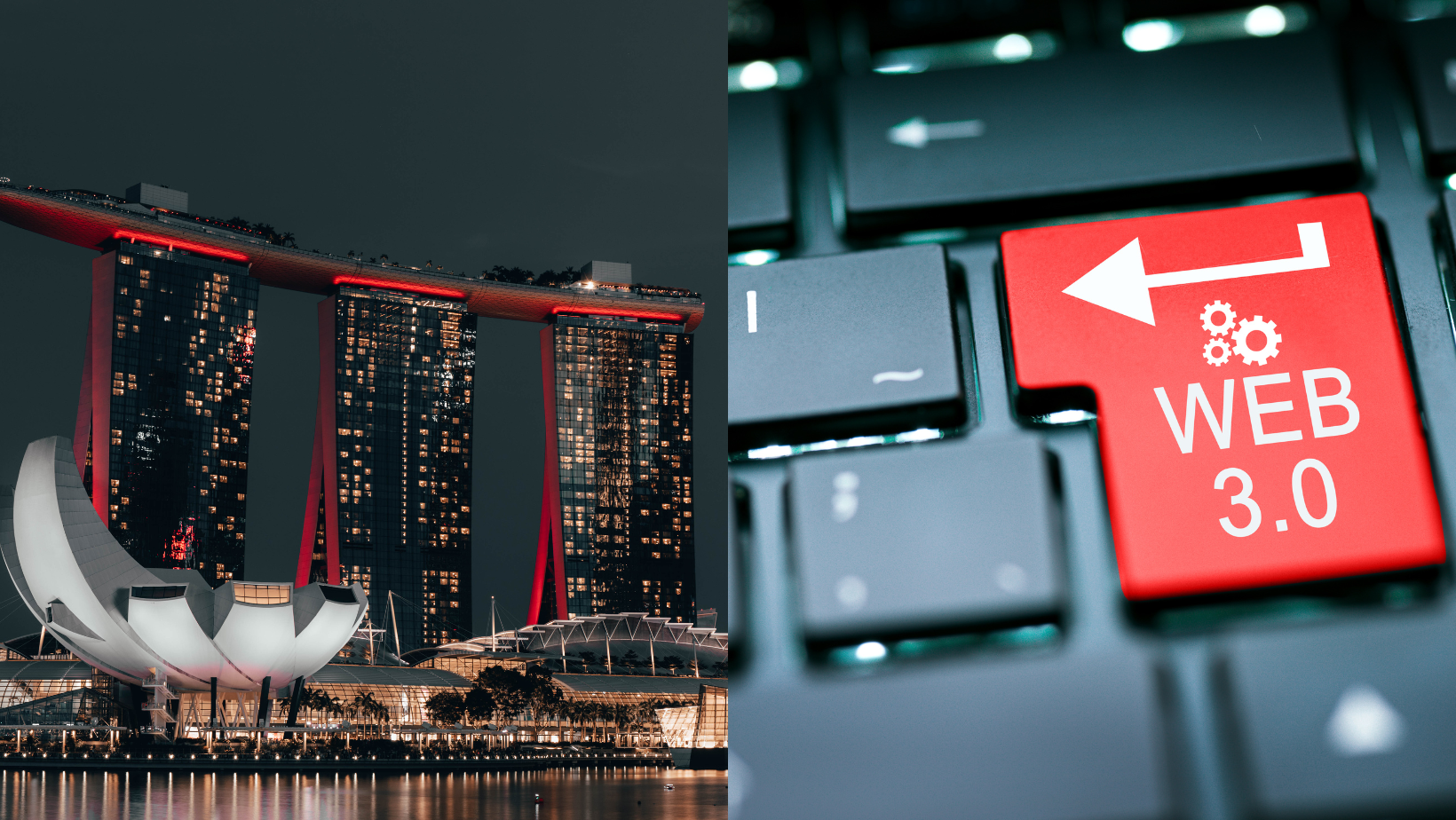
Singapore’s Web3 ecosystem has grown into a complex network of venture firms, developer studios, infrastructure builders, analytics companies, and enterprise-ready platforms. The ecosystem is not defined by sheer quantity but by the strategic roles its participants occupy across the digital asset value chain.
4.1 Venture Capital Firms
- HashKey Capital: HashKey Capital is one of Asia’s most established digital asset investment firms, operating across Hong Kong and Singapore with a portfolio spanning infrastructure protocols, decentralized finance, and Web3 applications. Its Singapore presence plays a crucial role in channeling institutional-grade capital into early-stage blockchain ventures, often bridging founders with compliance resources and international market access. The firm’s regulatory-first investment philosophy aligns strongly with Singapore’s disciplined digital asset environment, reinforcing the country’s position as a credible home for institutional Web3 innovation. Website: https://www.hashkey.com/
- Saison Capital: Backed by Credit Saison, Saison Capital invests in fintech and Web3 startups across Southeast Asia, focusing on infrastructure-level innovations that improve asset management, payments, and decentralized financial services. Its role in Singapore extends beyond funding: the firm actively connects founders to industry partners, accelerators, and enterprise clients, strengthening the foundational layers of Singapore’s digital asset economy. Saison’s cross-border networks also attract foreign founders to build from Singapore’s regulated environment. Website: https://www.saisoncapital.com/
- Signum Capital: Signum Capital is a Singapore-based investment firm that supports blockchain infrastructure, Layer 1 and Layer 2 networks, Web3 gaming projects, and decentralized applications. Known for its hands-on involvement with early-stage teams, Signum provides both capital and deep technical guidance. Its long-standing presence in Singapore helps cultivate a pipeline of robust, compliance-aware blockchain ventures, contributing directly to the country’s reputation as a high-quality builder ecosystem. Website: https://signum.capital/
- Foresight Ventures: Foresight Ventures is a globally active crypto fund that has expanded significantly into Singapore, building a portfolio focused on infrastructure, zero-knowledge technology, institutional rails, and AI-enabled blockchain innovations. The firm’s analytical research arm and accelerator programs strengthen Singapore’s Web3 knowledge base while attracting global founders who seek a stable policy environment in Asia. Website: https://foresightventures.com/
- LongHash Ventures: LongHash Ventures is a Web3-native accelerator and venture firm headquartered in Singapore, known for supporting early-stage founders through structured incubation programs. Through partnerships with global ecosystems—including Polkadot, Filecoin, and Stacks—LongHash connects Singapore’s startups with international liquidity, markets, and developer communities. It plays a central role in shaping Singapore’s startup pipeline, especially for technical and infrastructure-focused teams. Website: https://www.longhash.vc/
4.2 Decentralized Science (DeSci)
- Opal BioDAO: Opal BioDAO is an emerging decentralized science initiative focused on funding biotech and computational science research through tokenized governance models. By enabling scientists to access capital outside traditional grant structures, Opal introduces a new economic layer to Singapore’s research landscape. Its alignment with Singapore’s strong biomedical sector opens pathways for blockchain-enhanced research collaboration, IP management, and transparent scientific funding. Website: https://opalbiodao.com/
- VitaDAO (Singapore collaborations): While based globally, VitaDAO’s partnerships with researchers in Singapore contribute to decentralized longevity science and tokenized biotech research. Singapore’s academic institutions provide a strong base of scientific expertise, making the country a natural extension of VitaDAO’s community-driven research model. These collaborations increase awareness of DeSci principles in Singapore, encouraging scientists to explore blockchain as a tool for IP preservation and transparent funding. Website: https://www.vitadao.com/
- LabDAO (engagement with Singapore researchers): LabDAO is a decentralized platform supporting computational life sciences through shared infrastructure and open research tooling. Although its headquarters are in Switzerland, LabDAO’s collaborations with Singapore-based researchers help integrate Web3-native scientific workflows into local research. These partnerships showcase how decentralized technology can complement Singapore’s established biomedical R&D ecosystem. Website: https://labdao.com/
4.3 Web3 Developer Studios and Infrastructure Firms
- Crypto Garage SG partners: Crypto Garage provides digital asset financial services and enterprise custody solutions. As an extension of Japan’s Digital Garage ecosystem, its Singapore operations focus on secure custodial rails and blockchain settlement infrastructure designed for banks and regulated institutions. This strengthens Singapore’s enterprise Web3 stack by bringing proven, compliance-heavy technology to local financial institutions experimenting with tokenization and digital asset management. Website: https://www.cryptogarage.co.jp/en/
- Zokyo: Zokyo is a globally recognized blockchain security and development firm offering smart contract audits, penetration testing, and end-to-end Web3 engineering services. Its Singapore presence ensures local startups and enterprise teams have access to high-level security expertise, a critical pillar in a regulatory environment that emphasizes trust and consumer protection. Zokyo’s auditing work contributes materially to reducing risk across Singapore’s Web3 ecosystem. Website: https://www.zokyo.io/
- Varmeta: Varmeta is a Vietnam-based technology studio specializing in blockchain development, AI/data solutions, and mobile/web application engineering. In the blockchain domain, Varmeta provides end-to-end services including DApp development, smart contract engineering, cross-chain bridge construction, NFT marketplace builds, and exchange architecture for both centralized and decentralized platforms. Its AI/data practice enhances digital products with machine learning models, LLM integration, generative AI systems, and data-driven decision-support tools bridging Web3 infrastructure with advanced analytics. Complementing these capabilities, Varmeta’s app studio designs and develops high-quality mobile and web applications, enabling clients to launch seamless, user-centric interfaces for blockchain and AI-powered products. Website: https://www.var-meta.com/
- Curvegrid: Curvegrid is a Tokyo-founded but Singapore-active blockchain development company offering tools that simplify multi-chain application development. Its “MultiBaas” middleware enables businesses to deploy blockchain components without needing deep internal expertise, making enterprise adoption significantly more accessible. Curvegrid’s work helps accelerate Web3 integration in traditional sectors such as real estate, logistics, and digital certification. Website: https://www.curvegrid.com/
4.4 Notable Web3 Projects
- Zilliqa: Zilliqa is one of the earliest and most influential Layer 1 blockchains originating from Singapore, pioneering sharding technology to increase transaction throughput. Beyond technical innovation, Zilliqa has played a major role in shaping Singapore’s Web3 identity by fostering local developer communities and attracting corporate partnerships across gaming, entertainment, and financial services. It remains a foundational pillar of Singapore’s Web3 infrastructure. Website: https://www.zilliqa.com/
- Oasys: Oasys is a public blockchain optimized for Web3 gaming, delivering a gasless, low-latency, high-performance architecture tailored to mass-market gaming applications. Its decision to anchor regional operations in Singapore strengthens the country’s growing reputation as a hub for gaming and metaverse innovation. Oasys connects game studios with scalable blockchain tooling, helping accelerate the production of Web3-native entertainment experiences. Website: https://www.oasys.games/
- OpenCerts: OpenCerts is a blockchain-based credential verification system developed through a partnership between the Singapore Government Technology Agency and the Ministry of Education. By enabling tamper-proof academic credential authentication, OpenCerts demonstrates one of Singapore’s most successful public-sector blockchain deployments. It showcases how distributed ledger technology can solve large-scale administrative challenges with transparency and interoperability. Website: https://opencerts.io/
- Digital Entertainment Asset (PlayMining): PlayMining is an NFT-backed entertainment ecosystem based in Singapore, integrating gaming, creator royalties, and digital assets into a cohesive platform. Its work with regional content creators expands Singapore’s creative-tech footprint, while its experiments with alternative monetization models contribute valuable insights to Asia’s broader Web3 entertainment scene. Website: https://playmining.com/
4.5 Stablecoin Ecosystem
- StraitsX (XSGD): StraitsX issues XSGD, one of the world’s leading fiat-backed stablecoins pegged to the Singapore dollar. With integrations across exchanges, business payment systems, and DeFi protocols, XSGD enhances liquidity for SGD-denominated digital asset flows and supports real-world use cases such as remittances and corporate treasury settlement. Its MAS-aligned compliance framework also sets a benchmark for future regional stablecoin development. Website: https://www.straitsx.com/
- USDC (Circle Singapore): Circle has expanded its operations in Singapore to support USDC distribution and enterprise integrations across Asia-Pacific. Backed by Singapore’s stablecoin regulatory framework, USDC is increasingly used by institutional partners for settlement, treasury operations, and cross-border payments. Circle’s presence strengthens Singapore’s ambition to become a center for trusted, large-scale digital money infrastructure. Website: https://www.circle.com/
4.6 Web3 Gaming
- PlayMining (DEA): As one of Asia’s most active Web3 entertainment ecosystems, PlayMining integrates gaming, NFTs, and creator compensation into a unified digital economy. Its Singapore base allows it to collaborate with global partners while contributing to the region’s expanding blockchain gaming market. Through novel monetization models and content distribution frameworks, PlayMining supports Singapore’s positioning as an innovation hub in digital entertainment. Website: https://playmining.com/
- Enjin (historical Singapore presence): Enjin, a pioneering NFT infrastructure provider, previously headquartered in Singapore, developed tools that enabled mainstream game studios to mint and manage blockchain-based assets. Its technology has been widely adopted across global gaming markets, and its early presence helped elevate Singapore’s visibility as a serious contributor to Web3 gaming infrastructure. Website: https://enjin.io/
4.7 Government and Enterprise Blockchain Use Cases
- Project Ubin (MAS): Project Ubin was Singapore’s landmark experiment in blockchain-based clearing and settlement, involving major banks and technology partners. The project demonstrated the feasibility of using distributed ledger technology for cross-border payments, setting the foundation for subsequent innovations in digital asset settlement. It showcased Singapore’s willingness to lead global conversations on financial infrastructure modernization. Website: https://www.mas.gov.sg/
- Project Guardian (MAS + industry partners): Project Guardian is a regulatory sandbox enabling tokenized bonds, tokenized funds, and institutional DeFi. Led by MAS in collaboration with global institutions such as Citi, DBS, and JP Morgan, it is one of the world’s first regulated environments for testing how tokenized assets can interact with programmable market infrastructure. The project has positioned Singapore as a global reference point for institutional Web3 experimentation. Website: https://www.mas.gov.sg/
4.8 Crypto Exchanges
- Coinbase Singapore: Coinbase operates a licensed digital payment token exchange in Singapore, offering institutional-grade custody, compliance, and trading services. Its presence enhances Singapore’s ability to attract global institutional flows into regulated digital asset markets. Website: https://www.coinbase.com/
- Crypto.com: Headquartered in Singapore, Crypto.com offers exchange services, wallets, and payment infrastructure to millions of users globally. Its regulatory alignment and local operational strength reinforce Singapore’s position as a compliant, high-capacity digital asset hub. Website: https://crypto.com/
V. Strategic Insights & Opportunities
Singapore’s Web3 ecosystem stands at the intersection of financial credibility and technological ambition. The country is uniquely positioned to lead the next phase of global digital asset development, particularly in tokenization, institutional DeFi, stablecoin adoption, and enterprise-scale blockchain integration.
The country’s stable regulatory environment and its rigorous licensing framework create natural advantages for projects seeking institutional partnerships. Meanwhile, Singapore’s strong ties with global banks and financial market infrastructures give it leverage in shaping future standards for digital securities and programmable finance.
Opportunities for growth include:
- Expansion of tokenized funds and bonds
- Integration of stablecoins into enterprise and cross-border transactions
- Growth in compliance-focused infrastructure and custody solutions
- Increasing adoption of blockchain in trade, logistics, and supply chain
A rising wave of Web3 gaming studios and entertainment companies Singapore’s strategic position ensures that it can influence both regional and global digital asset policy, making it one of the most consequential markets for Web3 innovation.
Conclusion
Singapore’s Web3 ecosystem reflects a rare combination of regulatory clarity, institutional trust, and forward-looking innovation. The country’s disciplined approach has enabled it to avoid the volatility and structural weaknesses seen in other jurisdictions while fostering sustainable growth across financial markets, enterprise applications, and emerging technologies.
As global markets move toward tokenization and regulated digital asset infrastructure, Singapore is increasingly recognized not merely as a participant but as a standard-setter. Its commitment to long-term development, combined with a strong network of corporates, investors, and builders, positions it to play a defining role in the future of Web3 in Asia and beyond.
Varmeta – Excellent in every block
Website: var-meta.com
Linkedln: https://www.linkedin.com/company/var-meta/