ZKML, Blockchain and AI
Let’s talk about AI and blockchain and how combining these two powerful technologies can unlock entirely new use cases that were never possible before. Imagine decentralized on-chain trading bots that anyone can use, yield farming bots that outperform the market, and even open-source, transparent AI models that can be verified 100% on-chain.
So how is this possible? The answer lies in a relatively new but under-discussed technology called zero-knowledge machine learning (ZKML). While many people are familiar with blockchain and AI individually, ZKML represents a groundbreaking innovation that allows AI models to run on decentralized networks while maintaining privacy, security, and transparency.
Machine learning (ML) is a subset of artificial intelligence (AI) that enables systems to learn from data and make intelligent decisions without being explicitly programmed. It powers some of the most cutting-edge AI technologies today, including ChatGPT by OpenAI.
For example, large language models (LLMs) like ChatGPT function by training on massive datasets, allowing them to process information, recognize patterns, and generate responses based on user input. Essentially, machine learning models take in vast amounts of information, process it, and use statistical techniques to generate insights, predictions, and answers.
But while machine learning enables AI to become smarter and more efficient, it still operates in a centralized manner, meaning that the training process and model execution often occur behind closed doors, controlled by corporations or entities. This is where zero-knowledge proofs (ZKPs) come into play—adding a new layer of security, privacy, and decentralization to AI models.
According to Chainlink, zero-knowledge proofs (ZKPs)—a method for one party to cryptographically prove to another that they possess knowledge about a piece of information without revealing the actual underlying information. In the context of blockchain networks, the only information revealed on-chain by a ZKP is that some piece of hidden information is valid and known by the prover with a high degree of certainty. Basically it’s a way to prove information is true without revealing all the information itself. For example, illustrating this concept is like showing you a where’s Waldo image.

Imaging that I’m going to give you this picture of where’s Waldo, I want you to prove that you found Waldo without revealing Waldo’s location, what you could do is basically take a cutout of Waldo without any context for the background, and then show that picture to me that you proved that you found Waldo, but doesn’t tell me where it is. And so we can use these zero-knowledge proofs and these machine learning models to create new use cases for crypto.
How Blockchain and AI Work Together in ZKML
The structure of machine learning models mirrors the principles of blockchain cryptography. Just like blockchain verifies transactions using public and private keys, ZKML uses Zero Knowledge Proofs to confirm the validity of ML models without revealing sensitive data. Here’s how it works:
- Input Data: Machine learning models require input data and specific weights.
- Model Processing: The data is run through the model to generate predictions or outputs.
- Zero Knowledge Proof: Through ZKPs, the blockchain verifies that the model’s output is correct without needing access to the private input data.
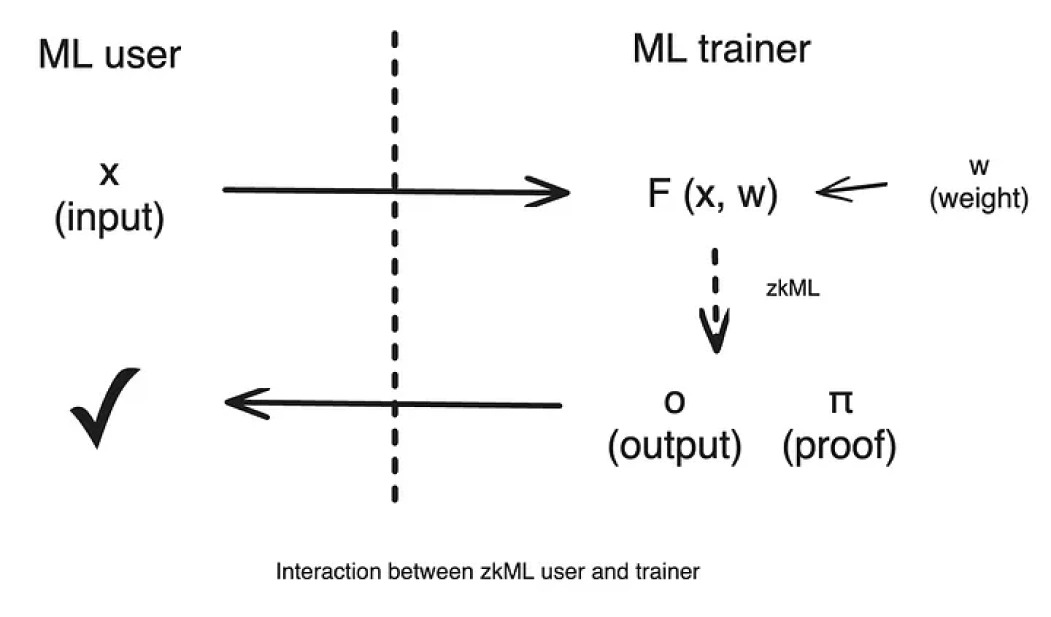
This setup opens up numerous possibilities where privacy, security, and decentralization are paramount.
For example, If I was going to do a transaction and send cryptocurrency from my wallet to yours and sign that transaction with my MetaMask, what I would do is I would have a secret key. The public message is like your private key, the message that you’re signing to make that transaction. You run it through a signature algorithm that everybody uses on chain, then you submit the signature in the public message and the blockchain verifies that and then actually makes a transaction in the blockchain.
Exciting Use Cases of Blockchain and AI Integration
Let’s take a look at several real-world applications of zero-knowledge machine learning (ZKML). It’s important to note that some of these are still in the experimental phase, and while they hold great potential, they may not yet be widely implemented. The examples provided are not endorsements of specific projects, but rather illustrations to help you better understand how this technology works in practice.
Decentralized On-Chain Trading Bots Powered by Blockchain and AI
One example is the development of decentralized on-chain trading bots. Imagine a trading bot that operates entirely on-chain and autonomously makes decisions using a machine learning model that predicts price movements. The goal of such a bot would be to outperform the underlying assets being traded.
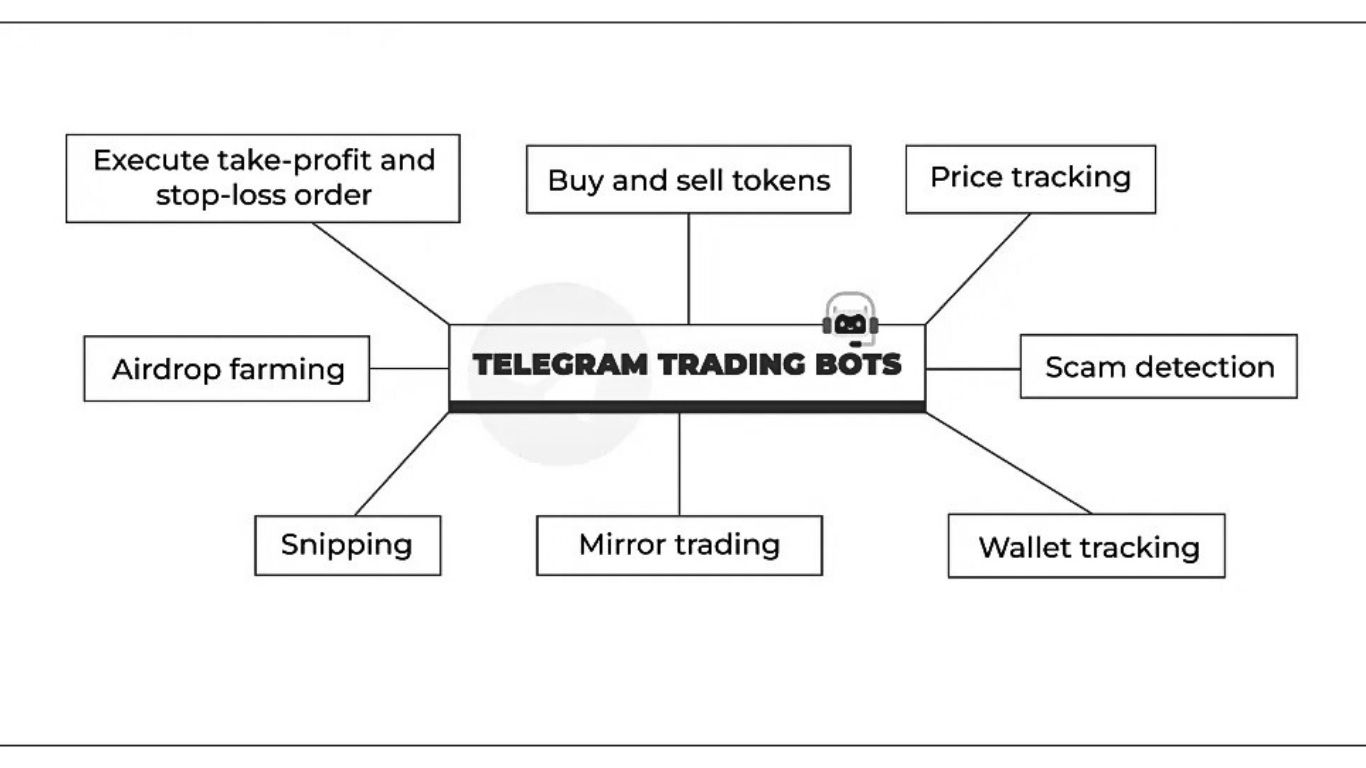
The interesting part is with ZKML, you don’t need to disclose every detail about how the bot’s model is adjusted. Some of the information can remain private, but through zero-knowledge proofs, you can still verify that the model is functioning correctly. This allows the bot to be integrated with blockchains and executed through smart contracts. The end result is an on-chain bot that anyone can participate in, sharing in the rewards without needing to know all the details of how the bot works—some of the process can remain secret, while other parts are verifiable.
On-Chain Yield Farming Optimized by Blockchain and AI
Another real-world use case of blockchain and AI is optimizing yield farming through machine learning models. Yield farming allows cryptocurrency holders to earn passive income by staking their assets in decentralized applications (DeFi). However, constantly shifting assets to chase the highest returns can be a cumbersome task.
With the integration of blockchain and AI, machine learning algorithms can automate the process, identifying the most profitable strategies to maximize returns. For example, projects like Noya AI utilize ZKML to optimize yield farming without revealing sensitive strategy details. The AI model can dynamically adjust to market conditions, and participants can benefit from the increased yield while trusting that the system is working as intended—all verified by blockchain’s transparency.
Open-Source, Transparent AI Models Verified by Blockchain
Transparency is a major challenge in the world of AI, where users often have to take developers at their word about how models function. However, with the integration of blockchain and AI, it’s possible to verify the performance of AI models without exposing all their underlying details.
For example, an AI model used for medical diagnosis could be verified on-chain through ZKML. This ensures that the AI is functioning as advertised without compromising patient privacy or revealing proprietary information. Blockchain’s verification process guarantees that the AI model is delivering accurate results, and zero-knowledge proofs maintain the necessary level of confidentiality. This use case highlights how blockchain and AI can combine to enhance trust in AI applications, particularly in sectors like healthcare.
The Future of Blockchain and AI: Overcoming Challenges in ZKML
Although the potential of ZKML in blockchain and AI is vast, the technology is still in its early stages. One of the main challenges lies in the computational expense of generating zero-knowledge proofs, particularly for large-scale AI models like ChatGPT. Currently, ZKML is more feasible for lightweight models, but ongoing research is focused on reducing computational costs and improving scalability.
As the technology matures, we can expect to see more complex AI models integrated with blockchain, unlocking even more use cases across different sectors. The ability to combine the strengths of blockchain and AI—ensuring privacy, security, and transparency—will drive significant innovation in the future.
How to Get Started with Blockchain and AI: Exploring ZKML Projects
For those interested in exploring the early potential of blockchain and AI integration, projects like EZKL offer a practical entry point. EZKL is a Python library designed to help developers integrate ZKML with smart contracts, enabling experimentation with zero-knowledge machine learning in a blockchain environment.
By combining blockchain and AI, we are unlocking new possibilities in DeFi, open-source AI, and beyond. As research continues, the intersection of these technologies will undoubtedly create new opportunities for innovation, far beyond what we’ve seen so far.
If you’re ready to harness the power of blockchain and AI for your business, Var Meta can help. Our expert team specializes in cutting-edge solutions that integrate these technologies, driving innovation and growth for your projects. Whether you’re looking to optimize operations, enhance data security, or explore new business models, we provide tailored strategies that deliver real results. Contact Var Meta today to learn how we can accelerate your digital transformation journey and stay ahead of the curve in this rapidly evolving tech landscape.
Related Article: Solving Blockchain Trilemma: AI is the ‘Golden Key’