Cryptocurrency has transformed the financial landscape over the past decade, serving as a versatile tool for transactions across industries. While its adoption is widespread in B2C contexts, the B2B space has been slower to integrate this technology, particularly stablecoins. However, with their unique attributes and practical applications, stablecoins are emerging as a viable solution for business-to-business payments.
The journey of cryptocurrency began in the 1990s with eCash, a digital currency ahead of its time. It wasn’t until Bitcoin’s launch in 2009 that cryptocurrencies gained momentum, eventually leading to the creation of stablecoins in 2014. Tether, the first stablecoin, set the foundation for a new class of digital assets that promised price stability and reliability.
Since then, stablecoins have gained significant traction, now accounting for roughly 10% of the total cryptocurrency market by market capitalization. Despite challenges, including the 2022 crypto market downturn, stablecoins have demonstrated resilience. Today, global giants like SAP, PayPal, and Visa are embracing stablecoins as an alternative for payments and settlements, solidifying their position in the financial ecosystem.
In this article, we will explore the essentials of stablecoins, their advantages, and how businesses can seamlessly leverage them for B2B payments with minimal risk and effort.
What are stablecoins?

Stablecoins are a unique category of cryptocurrency designed to minimize price volatility by pegging their value to stable assets, such as fiat currencies, commodities, or even other cryptocurrencies. They offer the security and transparency of blockchain technology while mitigating the speculative nature of traditional cryptocurrencies like Bitcoin.
Types of stablecoins
- Fiat-backed stablecoins
Pegged to fiat currencies like the US dollar, euro, or yen, these stablecoins are supported by reserves held in banks or similar institutions.
Use cases: Ideal for cross-border payments, remittances, and storing value with minimal volatility.
- Crypto-backed stablecoins
Backed by other cryptocurrencies, these stablecoins often over-collateralize to account for price fluctuations in the underlying asset.
Use cases: Popular in decentralized finance (DeFi) for lending, borrowing, and liquidity pools.
- Commodity-backed stablecoins
Pegged to tangible assets such as gold, silver, or oil, these stablecoins derive their value from physical commodities stored in reserves.
Use cases: Attract investors seeking a digital representation of commodities and hedging against inflation or currency devaluation.
- Algorithmic stablecoins
Maintain their value through algorithms and smart contracts that automatically manage the supply and demand of the token. These stablecoins are not backed by tangible assets but rely on market mechanisms.
Use cases: Useful for applications requiring decentralized and asset-light solutions.
Best stablecoins for businesses
Selecting the right stablecoin is critical for businesses aiming to streamline financial processes, reduce costs, and enhance cross-border transactions. With stablecoins gaining popularity in enterprise solutions, here are some of the top options for businesses based on their unique features and use cases:
- USD Coin (USDC)
USDC is a fiat-backed stablecoin pegged 1:1 to the US Dollar and known for its transparency and regulatory compliance.
Advantages:
- Regular audits to ensure trust and stability.
- High adoption rate among businesses for B2B payments and international transactions.
Best for: Companies seeking a secure, widely accepted stablecoin for digital payments and settlement.
- Tether (USDT)
USDT, one of the oldest and most widely used stablecoins, is also pegged to the US Dollar and boasts exceptional liquidity.
Advantages:
- Compatibility with multiple blockchain networks.
- Low transaction costs and high market acceptance.
Best for: Enterprises prioritizing speed, liquidity, and extensive blockchain compatibility for payments.
- DAI
DAI is a decentralized, crypto-collateralized stablecoin managed by MakerDAO, maintaining its value through smart contracts.
Advantages:
- Fully decentralized and transparent.
- Over-collateralization ensures price stability.
Best for: Businesses exploring decentralized financial solutions or avoiding reliance on traditional banking systems.
- Binance USD (BUSD)
BUSD is a fiat-backed stablecoin regulated by financial authorities, offering businesses a compliant and scalable option.
Advantages:
- Integration within the Binance ecosystem for ease of use.
- Fast transaction settlements with high credibility.
Best for: Enterprises needing a stablecoin for regulated and large-scale transactions or those already using Binance services.
- PAX Gold (PAXG)
PAXG is a commodity-backed stablecoin tied to physical gold, combining blockchain benefits with the stability of gold reserves.
Advantages:
- Each token represents one fine troy ounce of physical gold.
- Ideal for hedging against economic volatility.
Best for: Companies involved in wealth preservation, international trade, or those looking for a stable asset-backed payment method.
- Euro Coin (EUROC)
EUROC is a fiat-backed stablecoin pegged to the Euro, designed for businesses operating within or transacting in the European market.
Advantages:
- Simplifies Euro-based transactions.
- Reduces currency conversion complexities.
Best for: European enterprises or businesses dealing with Euro-denominated payments.
The best stablecoin for your business depends on factors such as transaction volume, geographical focus, regulatory requirements, and integration needs. By understanding these stablecoin options and their specific benefits, businesses can make informed decisions to enhance operational efficiency and embrace the future of digital payments.
How stablecoin development is revolutionizing B2B payment systems

Stablecoins are redefining how businesses manage B2B payments by addressing longstanding inefficiencies in traditional financial systems. Challenges like high transaction fees, delayed settlements, and currency conversion complexities are being replaced with faster, more cost-effective, and secure solutions through stablecoin development.
Here’s a closer look at how stablecoins are enhancing B2B payment systems:
Instant cross-border transactions
Traditional cross-border payments can take days to process due to intermediaries and banking delays. Stablecoins enable real-time settlements, eliminating these bottlenecks. Businesses benefit from faster cash flow, reduced payment delays, and enhanced operational agility, making international transactions seamless.
Reduced transaction costs
High fees for international transfers are a significant burden for many businesses. Stablecoins cut out traditional intermediaries like banks, dramatically lowering transaction costs. This affordability is especially beneficial for enterprises handling high-volume or recurring international payments.
Stability and predictability
Unlike cryptocurrencies like Bitcoin or Ethereum, which are prone to price volatility, stablecoins are pegged to stable assets like fiat currencies or commodities. This price consistency makes them a reliable choice for businesses, enabling predictable payments in contracts, subscriptions, or long-term agreements.
Seamless system integration
Modern stablecoin solutions are designed to integrate effortlessly with existing business systems, including financial management software and ERPs. This ease of integration allows businesses to adopt blockchain-based payments without overhauling their existing infrastructure, paving the way for scalable, future-ready solutions.
Enhanced transparency and security
Stablecoins leverage blockchain technology to provide transparent and immutable transaction records. Every payment is securely recorded on a distributed ledger, ensuring traceability and reducing the risk of fraud. This trust factor is particularly critical in B2B environments, where large transactions require high levels of security
Improved liquidity management
Unlike traditional banking systems that may delay fund availability, stablecoins provide instant liquidity. Businesses can access funds immediately after transactions, enabling more efficient capital management and quicker responses to operational demands.
Why stablecoins are the future of B2B payments?
Stablecoins are not just an alternative to traditional systems; they are a transformative solution that combines speed, cost efficiency, and reliability. Through advancements in stablecoin technology, businesses can:
- Streamline payment workflows.
- Save on operational costs.
- Ensure secure, transparent transactions.
As global adoption increases and stablecoin ecosystems continue to mature, businesses that embrace these innovations will gain a competitive edge, enjoying enhanced efficiency and global accessibility. Stablecoins are more than a financial tool—they are a strategic enabler for modern, connected commerce.
Benefits of stablecoins for businesses
Stablecoins are revolutionizing business operations by offering cost-effective, efficient, and secure financial solutions. These digital assets solve key challenges in traditional financial systems and provide businesses with tools to optimize payments and financial strategies. Below are the primary benefits of stablecoins for businesses:
Cost Efficiency
Stablecoins drastically reduce transaction costs by cutting out intermediaries, eliminating high currency conversion fees, and streamlining cross-border payments. Businesses making international transactions can save up to 80% compared to traditional payment systems, making them particularly advantageous for high-volume transfers.
Improved Cash Flow
With instant, 24/7 settlement capabilities, stablecoins prevent payment delays caused by banking hours or intermediaries. This ensures businesses have quicker access to funds, which improves working capital and facilitates better financial planning and operational efficiency.
Expanded Market Accessibility
Stablecoins provide an alternative payment system for businesses operating in or selling to regions with underdeveloped banking infrastructure. By enabling seamless transactions in emerging markets, businesses can reach new customer bases and foster growth in areas where traditional banking is limited.
Automation and Smart Contract Integration
Stablecoins integrate seamlessly with smart contracts, automating complex payment terms and reducing manual errors. This streamlines processes, cuts administrative costs, and ensures faster, more accurate payments with minimal oversight.
Balance Sheet Diversification
Stablecoins help businesses protect their assets by providing a stable alternative to fiat currencies in regions experiencing inflation or economic instability. Holding stablecoins allows businesses to reduce exposure to currency volatility while maintaining a dependable store of value.
By leveraging stablecoins, businesses can lower costs, improve liquidity, and unlock new market opportunities, making them an essential tool for modern, globalized commerce. As stablecoin technology advances, its integration into business operations will continue to redefine financial efficiency and accessibility.
Risks of using stablecoins for businesses
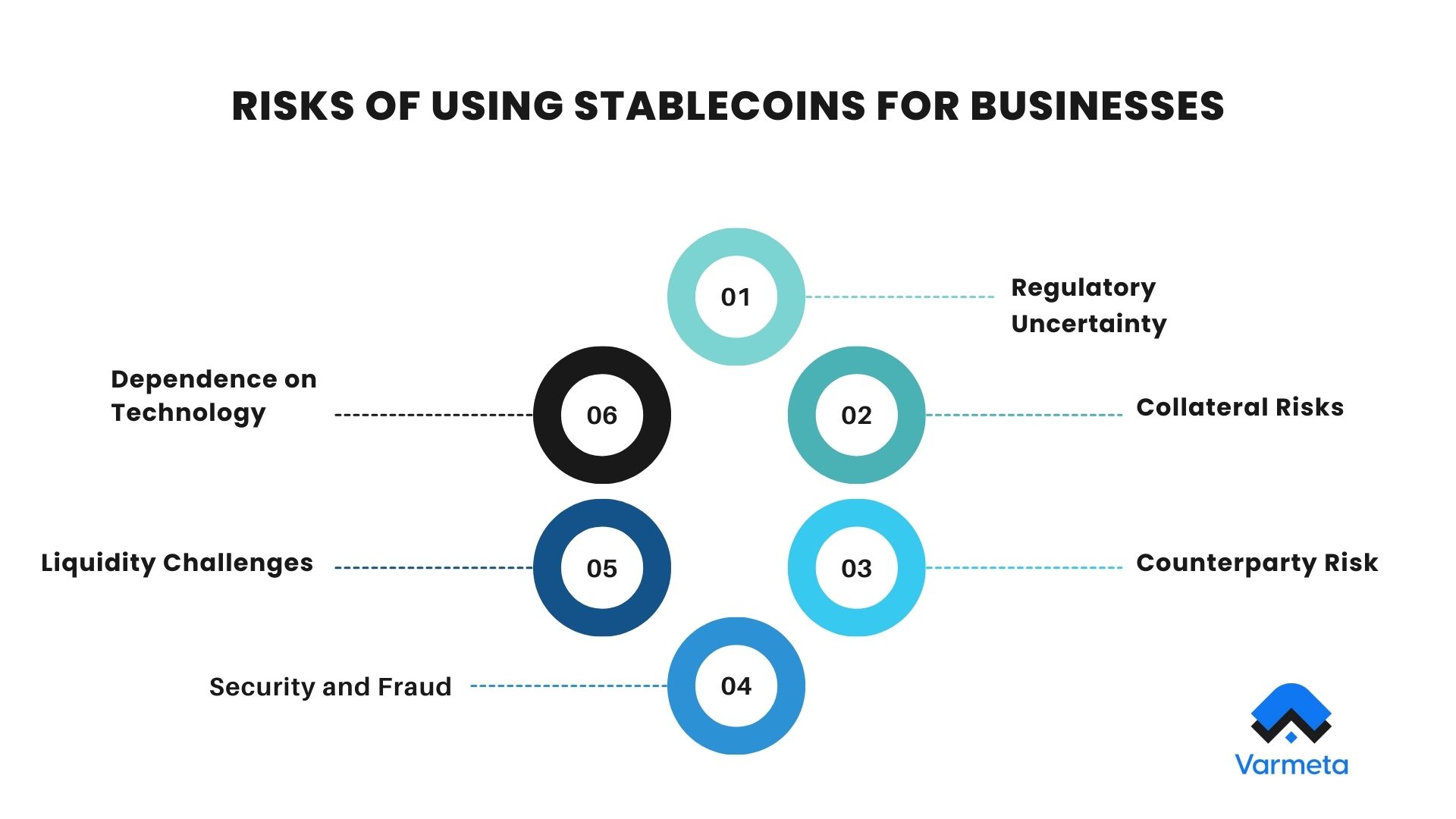
While stablecoins present exciting opportunities for businesses with benefits like fast transactions and cost savings, they also come with notable risks that organizations must carefully evaluate. These risks could impact the effectiveness and reliability of stablecoin-based payment systems, especially for B2B applications.
Regulatory Uncertainty
The regulatory landscape for stablecoins is still evolving, with governments worldwide introducing stricter oversight. This lack of clarity can create compliance challenges, particularly for businesses operating across multiple jurisdictions. Sudden regulatory changes could limit the use or availability of certain stablecoins, disrupting business operations.
Collateral Risks
The stability of a stablecoin depends on its underlying collateral. Fiat-backed stablecoins, for instance, require proper reserve management and transparent audits; any mismanagement could erode trust. Crypto-backed stablecoins face the volatility of the cryptocurrency market, potentially compromising their over-collateralized models. Algorithmic stablecoins are even more vulnerable, as they rely on algorithms to maintain value, which can fail under extreme market conditions.
Counterparty Risk
Businesses often rely on third-party services such as exchanges, wallet providers, and payment platforms to facilitate stablecoin transactions. These intermediaries can be a weak link; any mismanagement, security breach, or operational failure could lead to financial loss or service disruptions, jeopardizing business operations.
Security and Fraud
While blockchain technology is secure by design, stablecoins and the platforms supporting them are not immune to cyber threats. Hackers can target wallets, exchanges, or other components of the system, leading to potential theft or fraud. Businesses must invest in robust security measures to safeguard their funds and infrastructure.
Liquidity Challenges
Not all stablecoins enjoy the same level of liquidity. Smaller or less established stablecoins may struggle to maintain sufficient liquidity, particularly during periods of market stress or heightened regulatory scrutiny. This can make it difficult for businesses to convert stablecoins into fiat or other assets when needed, causing operational bottlenecks.
Dependence on Technology
Adopting stablecoins requires a reliable technical infrastructure, including blockchain platforms, wallets, and smart contracts. Technical issues such as network congestion, bugs, or even outages could delay payments or compromise the efficiency of operations, which can be critical for time-sensitive transactions.
Businesses exploring stablecoin adoption need to approach these risks with thorough due diligence, robust risk management strategies, and a clear understanding of the underlying technology and regulations. While stablecoins offer substantial benefits, mitigating these risks is key to ensuring their successful integration into business operations.
Getting started with stablecoins for B2B payments
Adopting stablecoins for B2B payments offers businesses the opportunity to enhance transaction speed, reduce costs, and simplify cross-border payments. However, successfully transitioning to a stablecoin-based system requires a strategic approach to ensure seamless integration and mitigate potential risks. Here’s a comprehensive guide for businesses to get started with stablecoins in B2B payments:
- Define Business Objectives
Before diving in, businesses should identify specific use cases where stablecoins can deliver value. These might include cross-border payments, supplier settlements, employee payouts, or holding reserves to hedge against inflation. Aligning stablecoin adoption with business goals ensures maximum impact. - Select the Right Stablecoin
Choosing the appropriate stablecoin is essential. Factors to consider include:
- Type of collateral (fiat-backed, crypto-backed, or commodity-backed).
- Compliance with regulations in target markets.
- Transparency and auditability of reserves.
Stablecoins like USDC, USDT, and DAI are popular for B2B use due to their liquidity and reliability.
- Integrate a Stablecoin Payment Solution
Implementing a stablecoin payment gateway is vital for sending and receiving payments. Solutions like Circle, Binance Pay, or BitPay offer secure integration with existing financial systems, making it easy to transact and manage funds in stablecoins. - Ensure Regulatory Adherence
Compliance is a critical step in adopting stablecoins. Businesses must ensure they meet anti-money laundering (AML) and know-your-customer (KYC) requirements and adhere to tax regulations in all jurisdictions where they operate. Consulting legal experts can help navigate these complexities. - Set Up Secure Digital Wallets
Secure wallets are essential for holding and transacting in stablecoins. Options include custodial wallets managed by third parties or non-custodial wallets for greater control. Employing multi-factor authentication and encryption enhances wallet security and minimizes risks. - Educate and Train Stakeholders
Training internal teams and partners on the use of stablecoins and blockchain technology is crucial for successful adoption. This education reduces errors, builds confidence, and ensures smooth operations as the payment system evolves. - Launch a Pilot Program
Start small by implementing stablecoin payments in a limited capacity. Use a pilot program to test performance, security, and cost-efficiency before scaling up to include more transactions and partners.
By following these steps, businesses can confidently transition to stablecoin-based payment systems, reaping the benefits of speed, efficiency, and cost savings. This proactive approach positions businesses to leverage blockchain technology effectively and stay ahead in the rapidly evolving financial landscape.
Conclusion
Stablecoins are revolutionizing B2B payments by offering businesses a fast, cost-efficient, and secure alternative to traditional financial systems. With their ability to facilitate instant cross-border transactions, reduce costs, and integrate seamlessly with existing financial infrastructure, stablecoins are an ideal solution for modern enterprises looking to optimize their payment processes.
By following a structured approach identifying use cases, selecting the right stablecoin, ensuring regulatory compliance, and integrating secure wallets and payment gateways, businesses can harness the full potential of stablecoins for B2B payments. Moreover, starting with a pilot program and educating stakeholders ensures a smooth transition and minimizes risks.
As stablecoins continue to gain traction globally, businesses that adopt this innovative payment method will not only enhance their financial operations but also position themselves at the forefront of the digital economy. Now is the time to explore how stablecoins can streamline your B2B payments and unlock new opportunities for growth and efficiency.