Zapier AI is a workflow automation platform designed to assist individuals and businesses in automating repetitive tasks and integrating artificial intelligence into daily operations. In this article, let’s explore Zapier AI automation, its key features, and its role in helping businesses build smarter, more efficient workflows.
What Is Zapier AI Automation?
As adoption of AI continues to expand (90% of SMBs using AI have experienced improved operational efficiency), no-code workflow automation platforms, including Zapier, have become integral to business operations. By enabling organizations to connect thousands of software solutions, these platforms support greater operational efficiency.
Zapier AI extends these capabilities into AI orchestration, providing a secure and reliable platform for integrating AI models with existing business tools. Acting as a centralized hub, Zapier AI enables organizations to connect more than 400 AI models and tools, including ChatGPT and Claude, with over 9,000 business applications.
Through these integrations, users can automate workflows, orchestrate AI-powered processes, and execute more than 30,000 actions across their connected applications.
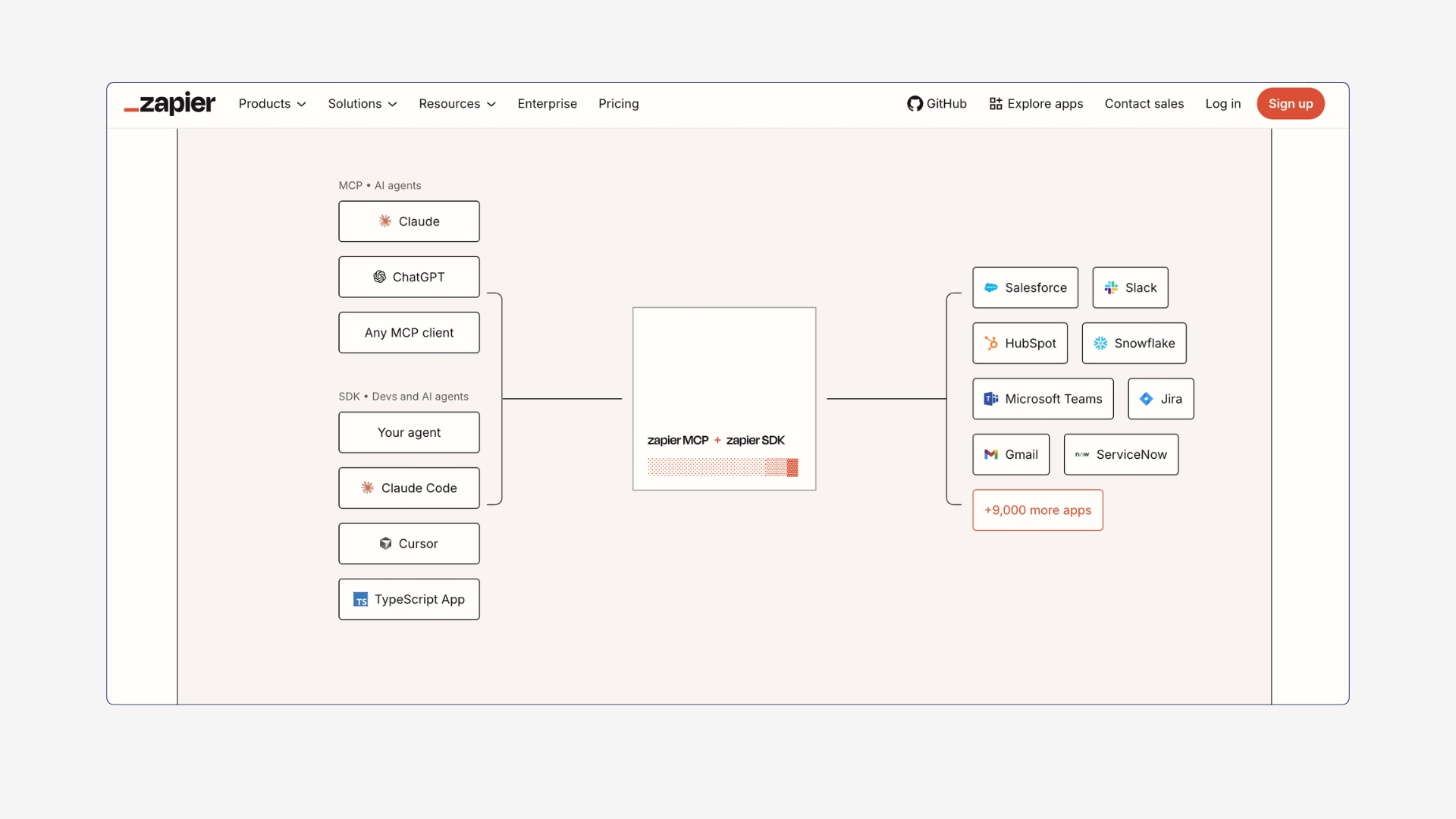
Zapier AI simplifies AI-powered workflow automation for businesses (source: Zapier)
What Can You Use Zapier AI For?
Zapier AI offers a broad set of capabilities that extend from improving established workflow processes to enabling the development of autonomous AI agents, chatbots, and integrations suitable for enterprise environments.
Enhancing workflow automation
One of the primary applications of Zapier AI is enhancing workflow automation. By incorporating AI-powered reasoning into routine processes, Zapier AI can improve standard automated workflows, commonly referred to as Zaps.
The platform can:
- Summarizes emails automatically.
- Categorizes and formats data between applications.
- Generates social media posts and AI-generated images.
- Analyzes support tickets to identify potential sales opportunities.
- Summarizes meeting notes.
- and more.
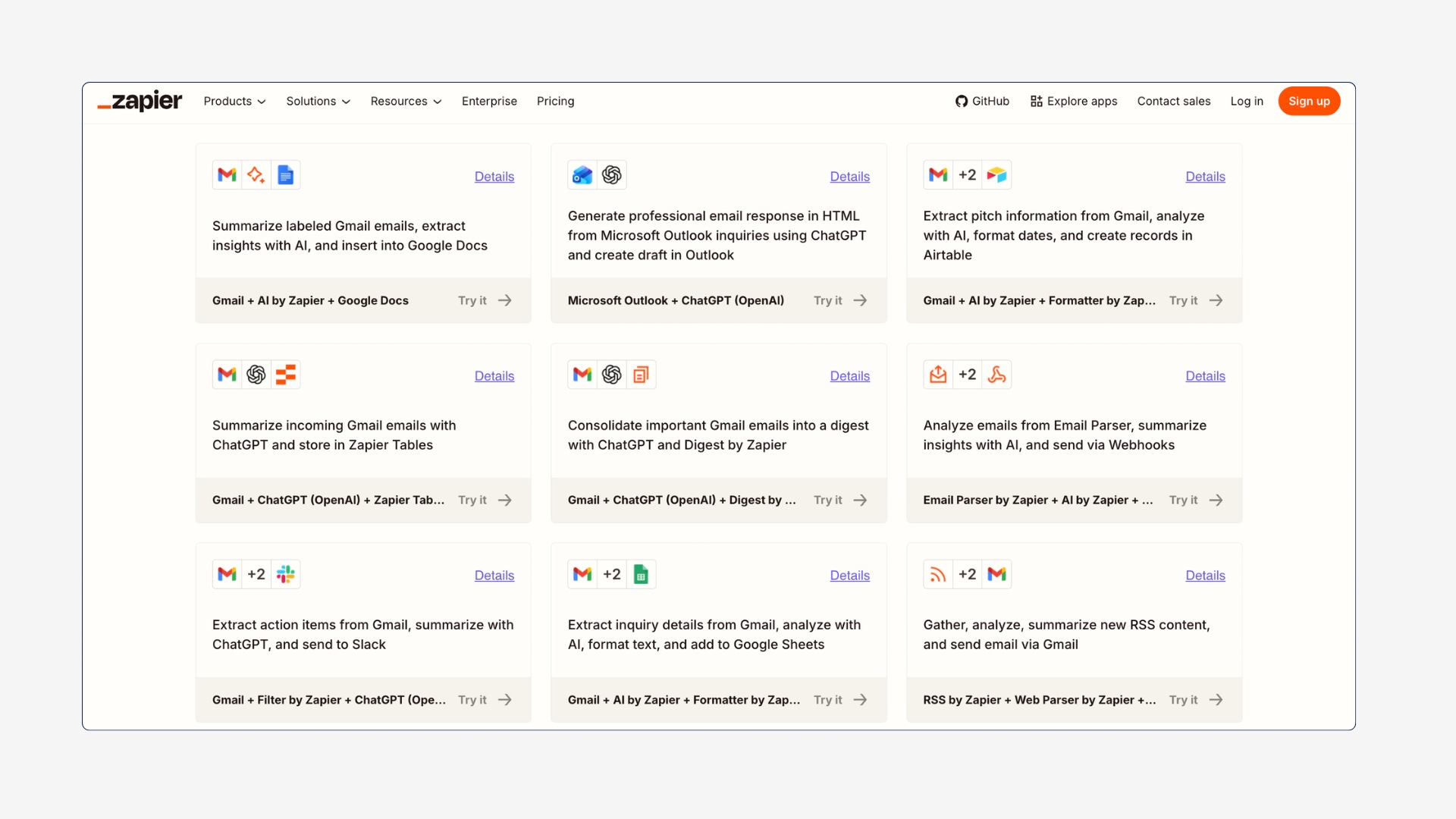
Zapier AI automatically summarizes emails (source: Zapier)
Building autonomous AI agents
The platform supports creating AI agents that can independently perform complex, multi-step tasks. These agents can conduct web research on prospective leads, qualify and score them based on predefined criteria, initiate personalized outreach, and route IT support tickets.
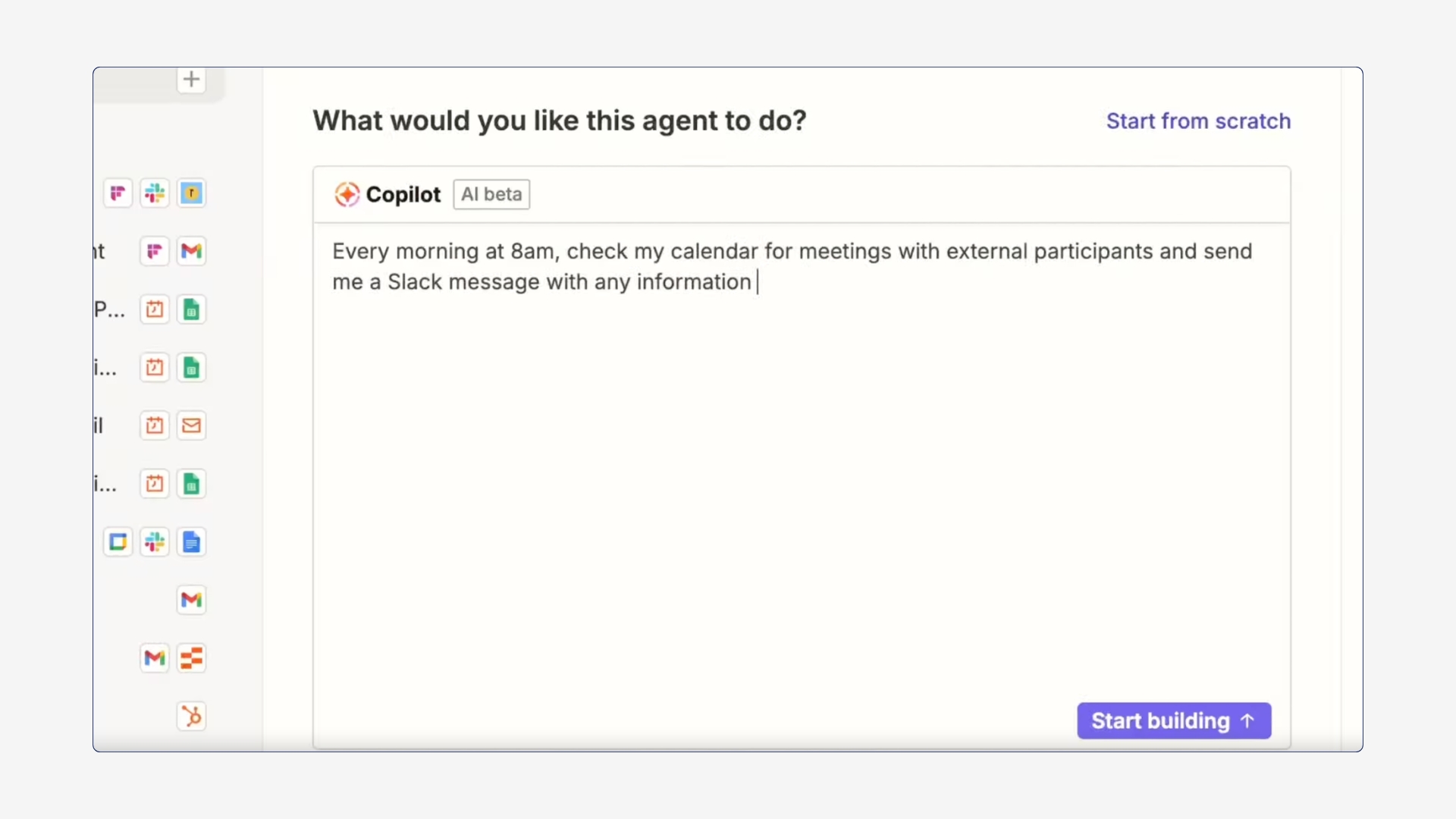
Build custom AI Agents with Zapier (source: Zapier)
Creating AI-powered chatbots
Zapier AI can be used to build no-code chatbots for customer-facing and internal business use. These chatbots can answer FAQs using information from websites and help centers, capture lead information, schedule meetings, assist with employee onboarding, and provide internal support.
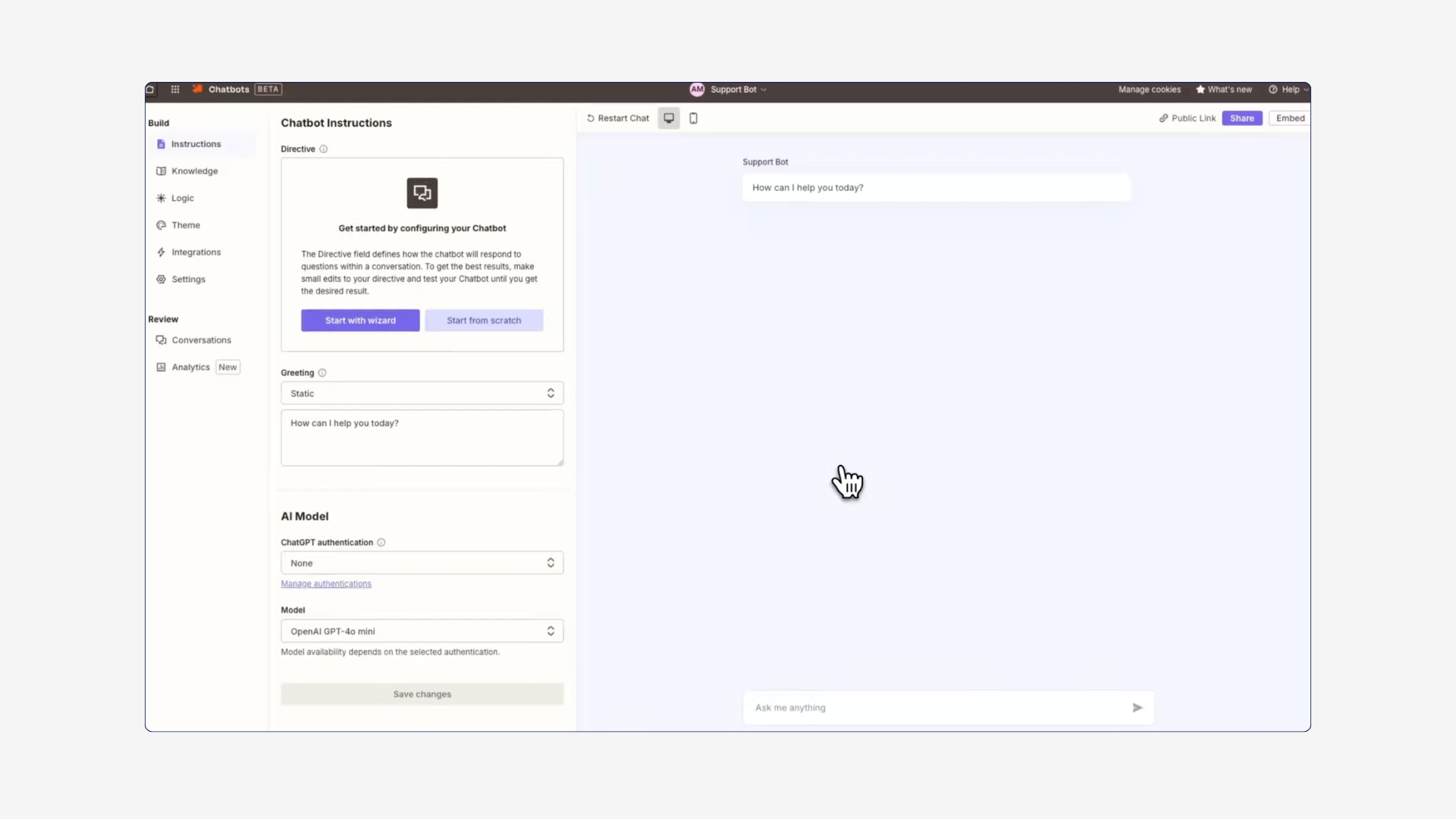
Creating AI Chatbots with Zapier (source: Zapier)
Designing and managing automation systems
With Zapier Copilot, users can build systems, workflows, tables, and AI agents using natural language prompts. Zapier Canvas offers AI-assisted process mapping, which helps visualize workflows and document business operations.
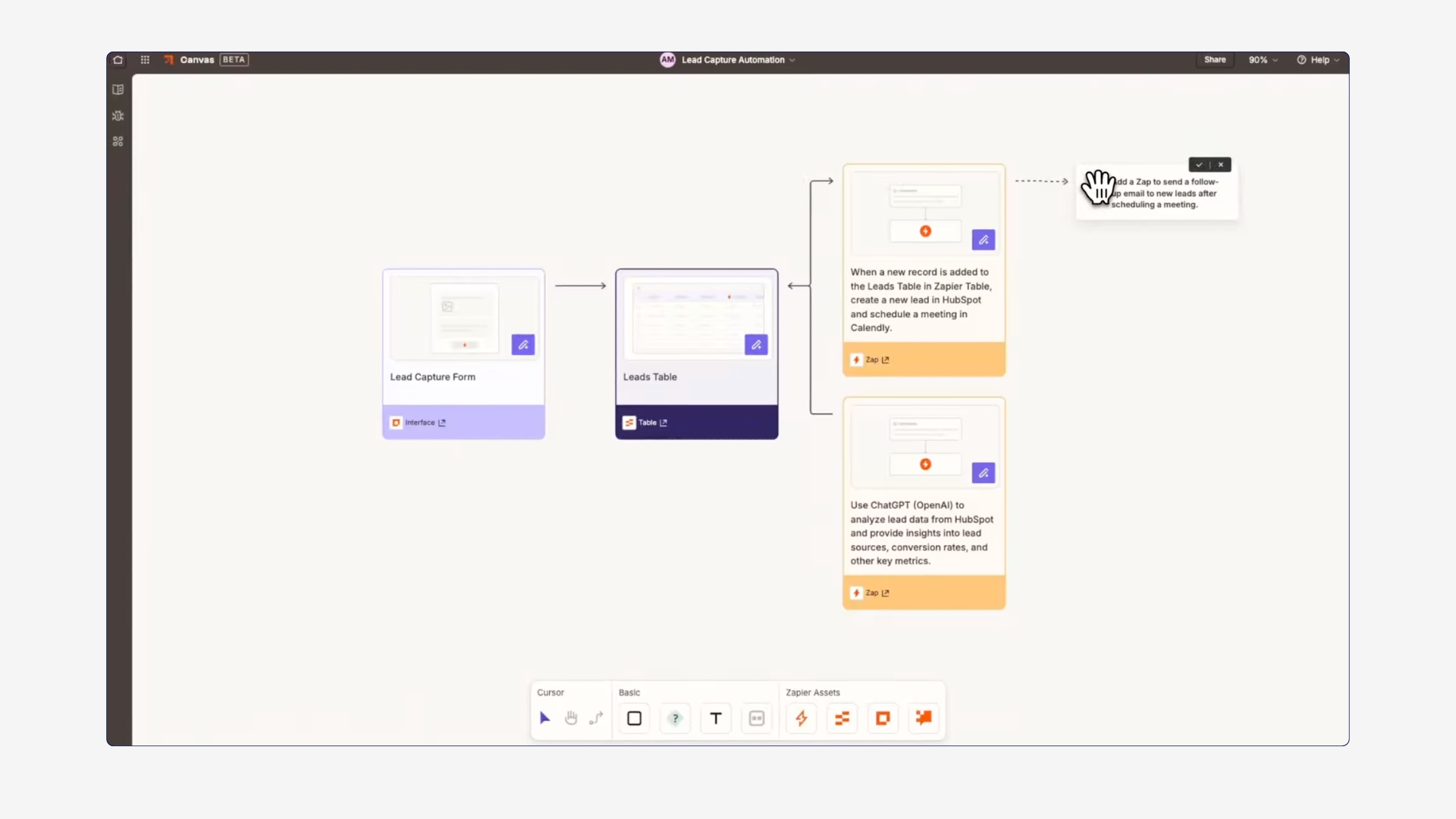
Visual workflow design with Zapier Canvas (source: Zapier)
Read more: AI Copilot vs. Agentic AI
Supporting developer and enterprise integration
Zapier AI provides advanced capabilities for technical and enterprise environments. Through the Model Context Protocol (MCP), AI assistants such as ChatGPT and Claude can connect directly to business applications and perform actions from within their chat interfaces.
The Zapier SDK allows developers to integrate Zapier’s automation capabilities into their own AI coding agents. In addition, AI Guardrails help organizations enforce security by detecting and blocking sensitive information, such as personally identifiable information, and harmful or toxic language before it reaches connected systems.
What Zapier AI Can’t Do
While Zapier AI offers significant automation and orchestration capabilities, its use is defined by a range of functional, technical, and subscription-based limitations.
Zapier AI does not replace human judgment or oversight. The platform executes workflows and logic as defined by users and cannot make complex business decisions independently. Even when integrated with advanced reasoning models, such as ChatGPT, Zapier AI cannot function as a fully autonomous management system.
Its analytical functions are inherently limited. While the platform can summarize documents, analyze sentiment, categorize information, and process structured data, it is not intended to perform advanced business intelligence or in-depth analytical tasks. Its principal function remains the automation of processes.
Security and governance features within Zapier AI require deliberate configuration. Protections are not enabled by default. Features such as AI Guardrails must be manually incorporated into workflows. Organizations are also responsible for configuring domain restrictions to prevent personal accounts from accessing business systems and to ensure that business data remains within authorized environments.
Zapier AI operates as a web-based platform. Users access the service through a web browser, as there are no dedicated desktop or mobile applications available.
AI outputs may still require verification. Although Zapier provides reliable production infrastructure with features such as retries and error recovery, the platform acknowledges that LLM outputs can be unpredictable. Consequently, AI-generated responses and decisions should be reviewed when accuracy is important.
The absence of centralized governance in AI deployment introduces significant organizational risks. Zapier AI identifies limitations associated with uncoordinated AI usage. Furthermore, traditional governance models, which often rely on blanket approval or restriction, can create operational bottlenecks rather than enabling flexible and effective oversight.
Zapier AI Pricing and Cost Considerations
Zapier AI offers a range of pricing plans to accommodate diverse needs. Basically,
- The Free Forever plan provides access to the platform’s core features at no cost.
- For those seeking to assess the platform’s advanced features, Zapier offers a 14-day Premium Trial that lets prospective users explore premium features and a curated selection of applications.
- For larger organizations, Zapier offers a customizable Enterprise plan, with pricing available upon direct consultation with the sales team.
While core platform access is free, Zapier operates on a task-based usage model. As automation volume increases, organizations with high numbers of AI tasks may experience correspondingly higher operating costs.
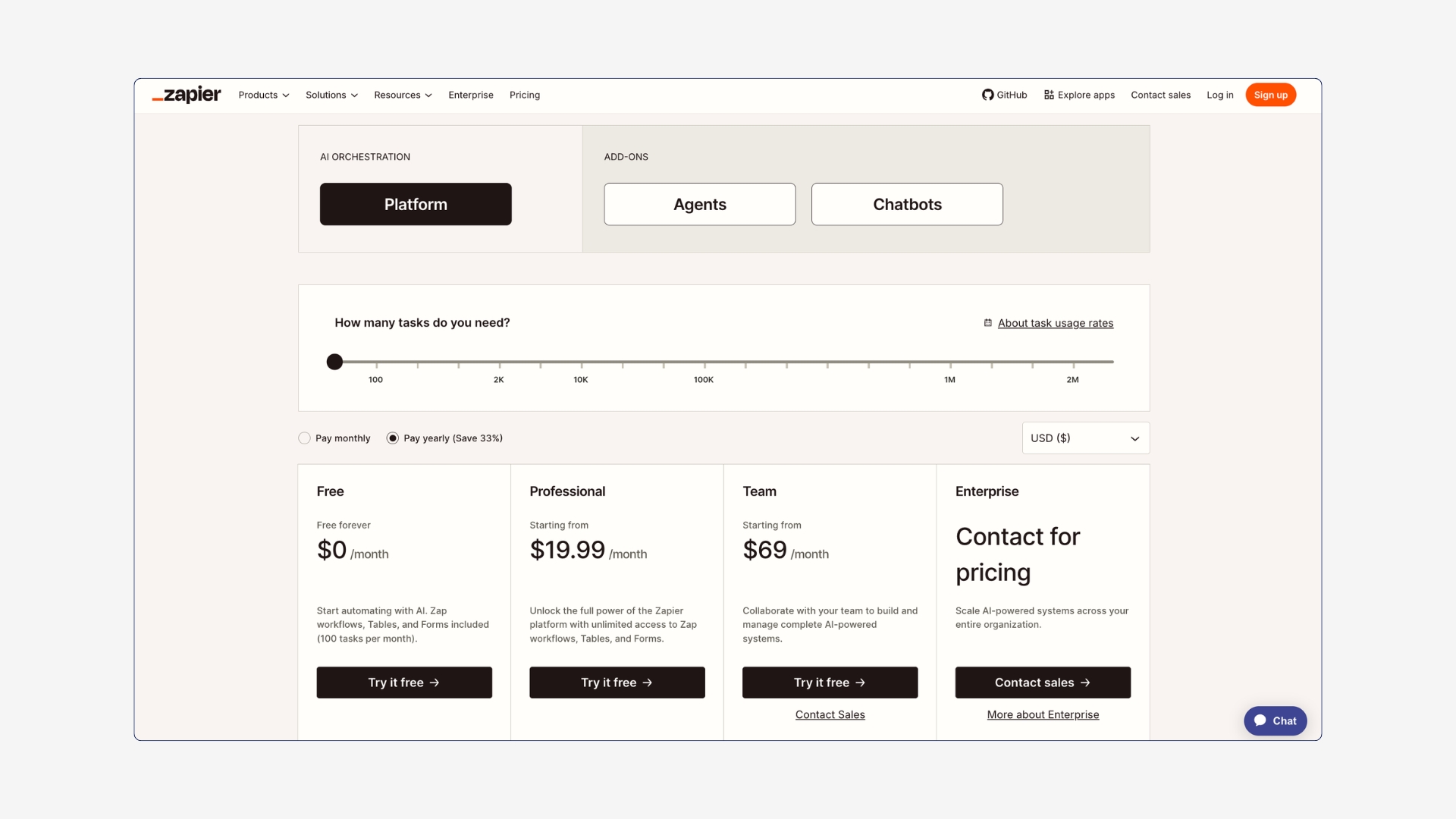
Zapier’s pricing is a valid consideration (source: Zapier)
Read more: 5+ Top AI Chatbots for Businesses
Is Zapier AI Worth It?
The platform offers a comprehensive AI orchestration solution. It is particularly valuable for organizations that want to integrate AI into existing business processes without building custom infrastructure.
When Zapier AI performs well:
- Zapier AI is well-suited for organizations seeking to automate repetitive business processes and integrate AI across multiple applications. Its ability to connect hundreds of AI tools with thousands of business apps makes it useful for streamlining workflows across departments.
- The platform performs particularly well in routine business automation, such as data categorization and support ticket analysis.
- Another strength is its accessibility. No-code users can create workflows, AI chatbots, and automation systems using natural language with tools such as Copilot and Canvas, while developers can extend functionality via the Zapier SDK and the Model Context Protocol (MCP).
- The platform may also provide a strong return on investment by reducing manual work, improving operational efficiency, and simplifying the integration of multiple AI services through AI by Zapier.
When It May Not Be the Best Fit:
Zapier AI is not designed to address deep business intelligence, advanced analytical functions, or research-intensive tasks within the scope of standard AI workflow steps. While AI Agents can support more complex processes, the platform’s standard AI actions are most effective for narrowly defined automation tasks, rather than for sophisticated reasoning or comprehensive research activities.
Cost is also a valid consideration. Because Zapier uses task-based pricing, high-volume automations can increase spending, and more complex implementations may require additional setup effort or integration work.
Top Alternatives to Zapier AI
Below are some leading Zapier alternatives, along with their key capabilities.
n8n
n8n is a widely adopted platform among technical teams that require enhanced flexibility and control over AI workflows. It integrates a visual workflow builder and support for writing custom JavaScript or Python, making it suitable for complex automation scenarios. The platform also offers flexible deployment options, including self-hosting and on-premises infrastructure.
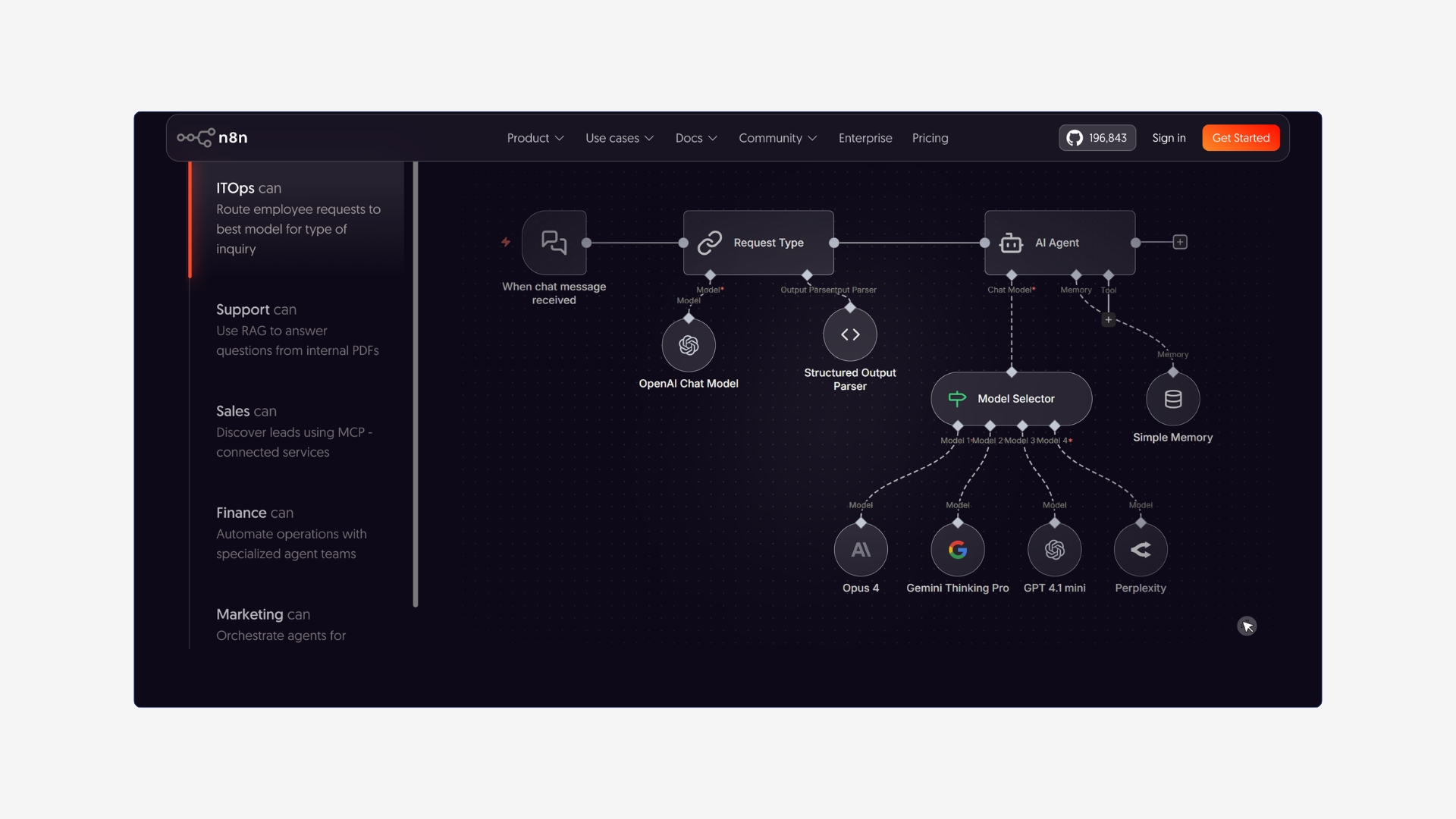
n8n is a good option for organizations seeking to implement sophisticated AI automation (source: n8n)
Make
Make is a visual automation platform that delivers AI-powered workflow orchestration across more than 3,000 application integrations. The platform provides a visual interface in which each step of an automation is both visible and manageable.
Key features include AI Agents, support for the Model Context Protocol, a library of pre-built AI agents, AI application integrations, and natural language automation creation through Prompt-to-Build.
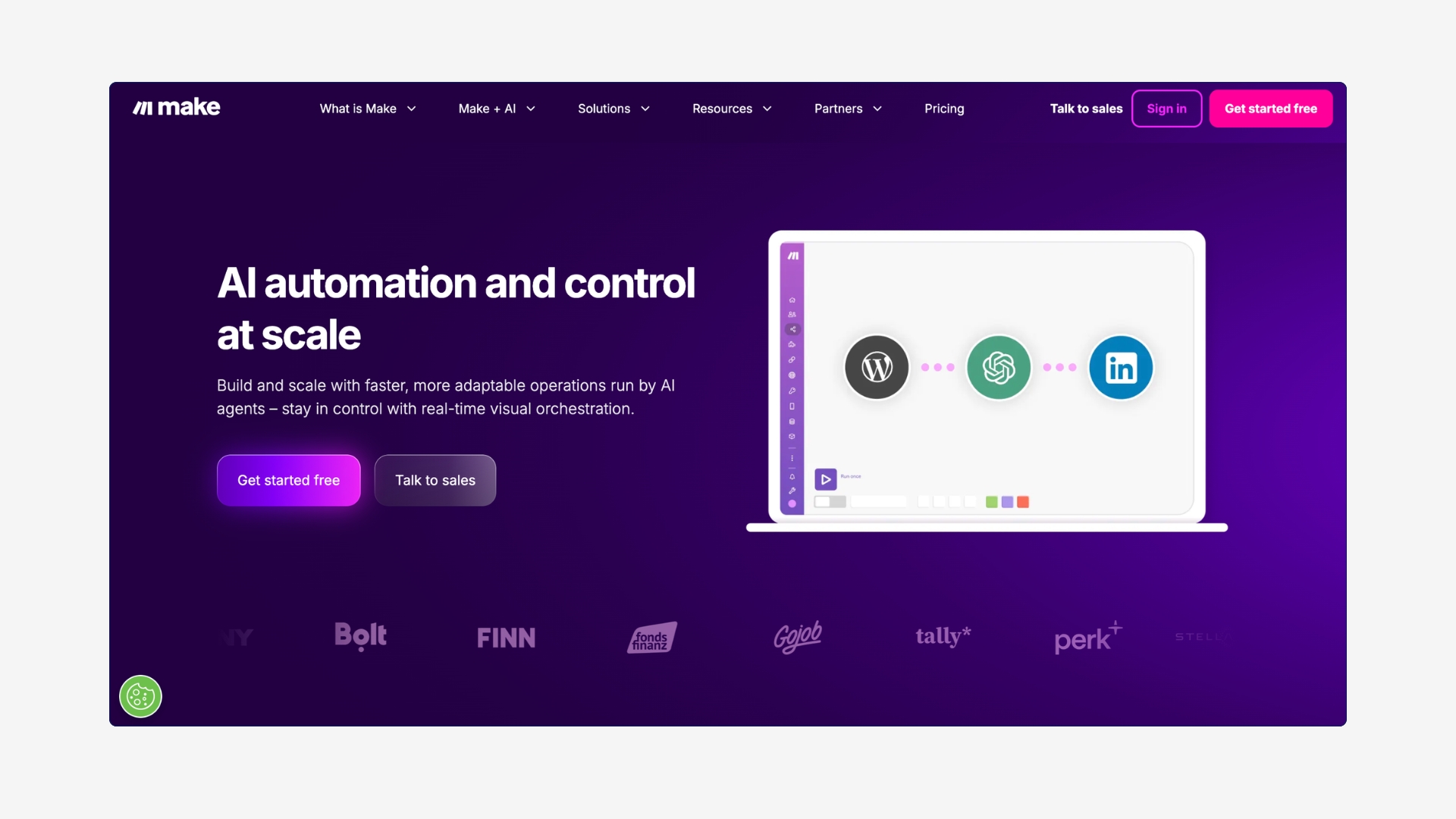
Make is well-suited for organizations seeking scalable, visually managed AI automation across marketing, sales, finance, and customer experience (source: Make)
Lindy
Lindy focuses on AI-powered personal and administrative assistance. It automates tasks such as email management, meeting scheduling, meeting notes, and action item tracking, while integrating with hundreds of applications including Slack and Gmail. Lindy also enables users to build custom AI agents for workflows such as prospecting, recruiting, and follow-up automation.
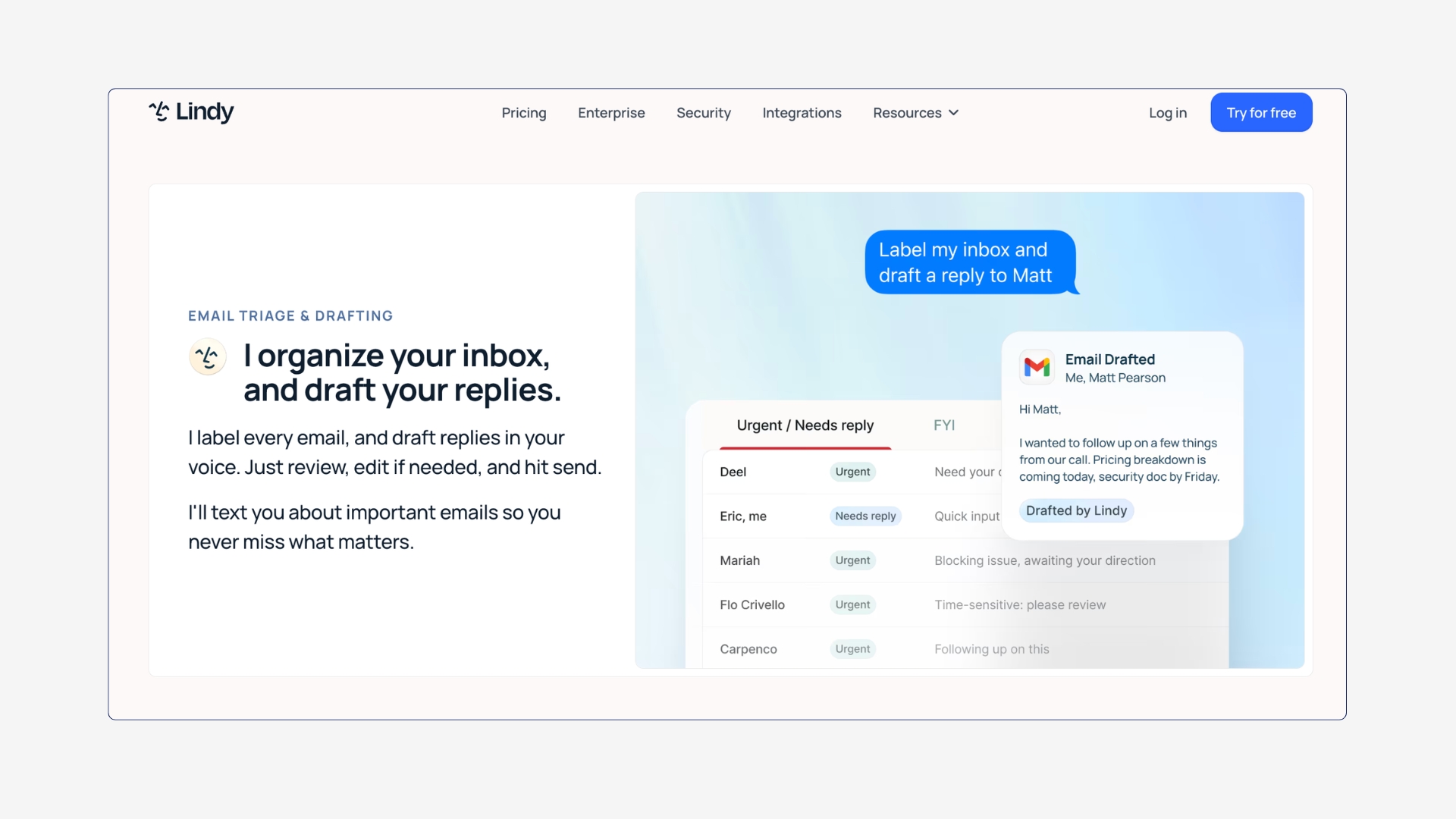
For those seeking to automate daily administrative tasks, Lindy represents a viable solution (source: Lindy)
Read more: Top 5 AI Trends Shaping the Future of Business 2026
Conclusion
Zapier AI has become a leading no-code automation platform for businesses. With its extensive app integrations, AI-powered features, and user-friendly interface, it helps organizations save time and improve productivity.
FAQs
Can beginners use Zapier AI without coding?
Zapier AI is designed for users with little or no programming experience. Most workflows can be created through a visual interface using drag-and-drop tools and natural language prompts. Features such as AI by Zapier, Copilot, and pre-built workflow templates help beginners automate tasks quickly.
Is Zapier AI free to use?
Zapier AI offers a Free Forever plan that includes access to the platform’s core features. However, advanced features, enterprise security controls, and premium integrations require paid plans.
Does ChatGPT integrate with Zapier?
Yes. ChatGPT integrates with Zapier AI through its AI orchestration platform. Zapier enables ChatGPT to connect with thousands of business applications and automate workflows.